Milwaukee – Pabst Mansion

My Grandfather was so into Pabst beer that he named his dog after it.  This supposedly scruffy little mutt had a sharp personality.  So he fit well with his originally rough Milwaukee based namesake brew.  I think this also explains much of my obsession with all things beer, much to my detriment at times.

I suppose both my Grandfather and his dog would be rather troubled to see what’s become of Pabst now.  For you see, the tale of Pabst beer and of Frederick Pabst himself is a winding journey.  I think it emphasizes some of the best, worst, and weirdness of modern America.  I don’t know why all this fascinates me but please bear with my degenerate mind for this post is going to be a long one.

The man

Pabst was born in 1836 Prussian Germany to a poor local farm couple.  When he was 12 they immigrated to the American Midwest during a time where nobody was checking papers at the border.  This was still a time where America was a harsh, dangerous, and backward place.  Within a year Pabst’s mother died of cholera.  Pabst spent his teenage years working menial odd jobs just to survive and eat.  Somehow, he ends up with a lucky gig onboard a Great Lakes vessel.  Without an education or connections, he works his way up the maritime ladder and by 21 he’s a steamship captain with a name people know.  If you want yet another example to understand how American economic mobility is different nowadays, imagine what it would take for a 16 year old high school dropout waiter to become a ship captain within five years.

Pabst remained close to his roots and the German émigré community.  He spoke German at home his entire life.  He thus meets a fellow German in Phillip Best, marries his daughter, and ultimately uses his equity in the steamship trade to buy half of Best’s brewery.  From then on, Pabst is a brewer, though he maintains the title “Captain” Pabst for the rest of his life.  Thus proving once again that it’s awesome to be a captain, just ask Patrick Stewart’s ghost.  By the end of the Nineteenth Century the brewery is one of the planet’s most successful.  Pabst is Milwaukee’s leading citizen, he owns properties, resorts, banks, a theater, and on and on.  Though he came from nothing, he’s literally at the peak of American society.  He checks out to the next realm in 1904 as one of the more respected men on the planet.

The beer

By 1874 thanks largely to Pabst’s genius the brewery was the largest in America.  You could likely make the argument that by volume this meant they were the largest in the world.  Though I’m sure this is not provable given the dearth of statistics at the time.  I’m positive some dude in Bavaria was brewing ten times that amount in his basement closet alone.  In the traditional American style Pabst maintained their signature lager which ultimately became known worldwide as Pabst Blue Ribbon (PBR).  Of note, they never won a blue ribbon or anything.  Pabst being the businessman he was just put a blue ribbon on the beer bottle as a marketing gimmick to indicate quality.  This gimmick has survived over a century and a half so I guess it worked.  It is also for this reason that if your local mayor or councilor tells you they’re solving a problem via a “blue ribbon” committee that you should immediately impeach them.

The PBR name and style survived prohibition as well as the post war era.  As the light American lager that it was, you can count on all the goods and bads that come with that designation: reliability, consistency, quality, safety (which was a big deal back then), but ultimately a relative lack of taste and variety.  In our new modern beer era folks tend to hammer this style of beer.  I don’t go that far.  It’s good for what it is.  It’s my preference for drinking on weeknights.  And it’s important to remember in our over-hopped, lunatic beer world of today, that once upon a simpler time folks were just happy to have decent, quality beer before they had to wake up in the morning and clock in at a tire factory.

Eventually though, things began to fall apart for this legendary company.  In a timeline of horrors not uncommon to other Midwestern businesses, in 1985 Pabst is bought in a hostile takeover by another self-made man turned beer baron Paul Kalmanovitz.  One can imagine that Kalmanovitz would have run the brewery well, but instead he died two years after the sale and it appears his trust made a true hash of it afterwards.  Sales plummeted and by 1996 in a nightmare haze Pabst brewing enters the contract brewing stage and the original Milwaukee brewery is closed.

For those unfamiliar with contract brewing, this is where the brand doesn’t actually own the brewery and hires some guy outside their company to actually make their beer (usually under the supervision of the brand’s brewmasters).  Lots of companies do contract brewing well, such as Sam Adams or various Japanese brands for their American sales.  But it can also be a true descent into frat boy style poor quality.  For example, at the recreational football league I play in somebody brought a 30 pack of Kirkland Light Beer (read Costco) as their contribution.  This was made for Costco by a contract brewer in Wisconsin and was awful.  Though beer being beer, and football being football, we did drink it.

Many will be well familiar with Pabst’s recent return to prominence via the hipster rage of going back to do things which were once cool.  This bizarre trend has enabled PBR to become somehow high quality whereas say Budweiser is perceived as not.  I don’t entirely understand this way of thinking but acknowledge that it does exist and has a somewhat legitimate feel to it.  After all, if my Grandfather loved this beer and named his dog after it, why not me too?  But it’s important to remember that Pabst basically isn’t in touch with the roots that the hipsters worship.  PBR circa 1968 is not PBR today.  What Pabst exists as today is its own independent LLC, headquartered in Los Angeles, financed by a private equity firm, and still only a contract brewer.  One wonders what Captain Pabst would think about this arrangement?  Where it has essentially no ties to Milwaukee, no basis in the self-made path he walked, and only a facade of the identity it once had.  And yet, still immensely popular.

Pabst Entry.JPG

Pabst Mansion Entry.

The house

In 1892 at the pinnacle of his life Pabst decided to build his retirement home.  After two years of construction he moved into Pabst Mansion still located at 2000 West Wisconsin Avenue in Milwaukee.  In Pabst’s day, Wisconsin Avenue was called Grand Avenue and was home to the dozens of mansions that housed Milwaukee’s elite.  The other mansions are gone now and most of this stretch is home to Marquette University.  The Pabst Mansion remains intact largely due to its purchase by the Archdiocese of Milwaukee which bought it from Pabst’s children in 1908 and occupied it through 1975.  Following that, a bunch of truly dedicated and scrappy historical preservationists put their time, money, and reputation on the line to preserve the mansion.  These same people are mostly at it today.

The house itself is not fully renovated and in many ways isn’t quite the pristine piece of history that one wants when visiting such a place.  But they do a mostly great job of making it happen given their limited financial resources and the actual state of the house.  The Catholic Archbishops made extensive changes during their time including the painting of all walls, bathrooms upgrades, repurposing of rooms, and so on.  In order to acquire cash to progressively reconstruct the house back to its original condition, they’re forced to do some weird things like host weddings and receptions on the second floor in the old master bedroom area.

Photography isn’t permitted inside the house.  If you want to see what it looks like, the Internets offer you a variety of clean images.  I’ll roughly paraphrase here.

The tour begins on the ground floor reception hall with its adjoining parlor and music rooms.  There’s also the kitchen (tiny by today’s standards), dining room, and Pabst’s own office.  They advertise the mansion as 20K square feet of space.  I don’t think this is an accurate number unless you include all the closets, basement, and attic.  I think the true amount of livable space is less than half that.  My first impression was how relatively small the place is.  Don’t get me wrong, this is a massive house, but the dining room would barely seat a dozen folks in tight quarters.  The parlor about the same.  Pabst’s office is only slightly bigger than my cubicle.  I get the idea that this house reflects the style and temperament of Pabst and his family.  He came from nothing, so he wanted a tight, intimate existence.  Not the massive, airy, aloof nature of say a British country house of this era.  The wealth is instead displayed not in the house’s size but in the way it’s decorated.  The painting of the walls, the trim, the intricate wood carvings, the touches of silver or gold all give each room an immensely unique character.

The second floor houses the rooms of Pabst’s daughter and granddaughter, the family sitting room, and the Pabsts’ master bedroom.  Almost all of this second floor is renovated as well, though because of their renting requirements the master bedroom area is almost entirely empty.  In a shocker for the 1890’s, but what we’d mostly take for granted today, the house was unique in having a bathroom assigned to almost every bedroom.  Hot water and heating came via natural gas.  However air conditioning was a long future invention, the house is designed to funnel heat up and out an intricately designed trap door in the attic.  In a uniquely American touch that would appall the British counterparts of the day the servants quarters are toward the back of the house but on the same second floor where the Pabsts slept.  The third floor is populated by a series of bedrooms that were meant for the guests and for Pabst’s grown sons who would occasionally stay there.  Most of the third floor is not reconstructed and there’s just not much to see up there yet.  Though they have a vision for how it’s all going to look.  They said it’ll take years if not decades before the house is entirely reconstructed toward its original look.

Pabst Back.JPG

Pabst Mansion from the back.  The backyard (where the coach house once stood) is now a hotel parking lot with satellite dishes from the local ABC station.

The present

What are we to make of Pabst?  If a man’s primary purpose in life is to provide for his family’s future Pabst wins that unreservedly.  His children, grandchildren, and ancestors never had to struggle the way he and his parents did.  There’s not much to read on the current Pabst family.  Though if the tour guides were any indication they all seem fairly well off and help maintain the Pabst mansion with occasional support and the return of old artifacts.  Even if Pabst’s descendants aren’t at the pinnacle of society anymore, you can surely count it a success that the family rolls on.

The beer company is entirely different.  Its legacy is nothing along the lines of what he’d imagined except for the blue ribbon.  One of things that capitalism engenders is the idea that nothing is sacred.  Companies, brands, names live and die like it’s nothing.  It’s why the companies that have been around for centuries are so special and held with such awe.  But for the other 99% of brands or ideas, they’re all going to eventually die.  Pabst’s beer was a vessel for the success of his family, and then he and his family moved on, and now only its shell remains.  Not as a means to perpetuate the Pabst brand or ideas, but as a means for an LLC and private equity to make a ton of money off an identity somebody else created.  This is the reasoning that forced me to conclude that if I ever started a business of my own, that I had to have in mind to discard the sucker in a heartbeat without losing my mind.  Modern capitalism means you have to essentially not give a damn because you or your neat brand or cool idea will almost always eventually get bought out, you sell out, or it dies or fails.

I wonder, if because of this, a great amount is lost to the American ideal though.  The distance of modern capitalism to the ideas of Pabst’s day goes a long way to explain in my mind why we have such a disconnect between the elite and everybody else.  Pabst had a global brand, but was a Milwaukee man.  He had business and charitable interests throughout the city.  He helped improve the town and make it modern.  When he died and his brand left the city, a connection was lost.  I sincerely doubt the current Pabst LLC gives any damn whatsoever about Milwaukee from their LA headquarters.  Corporate tax methods, overseas profits, quarterly earnings, leveraged buy outs, faceless private equity firms & hedge funds, and whatever do not lend themselves to the type of community capitalism that Pabst practiced.

It’s one reason (among many, many) why so many of the Midwest’s businesses have failed in the last fifty years.  It explains why Pabst is no longer brewed in Milwaukee.  And, I dare say, it also explained (at least in some part) the black lives matter protest that was walking down the street as a exited the Pabst mansion tour.  I couldn’t help but think that if Pabst had been alive looking out his own window and seen that?  That his reaction would have been to tackle and battle the problems afflicting the city that he lived in, built, and loved.  That he would have had the temperament and clout to bring all the sides together, to forge a tough compromise, bang heads, to put his name and effort on the line to move the needle of society a little bit in a better direction.  We could do with some more of his kind today.  I think we desperately need it.

Pabst Front.JPG

Pabst Mansion from West Wisconsin Avenue (with the protest behind me).

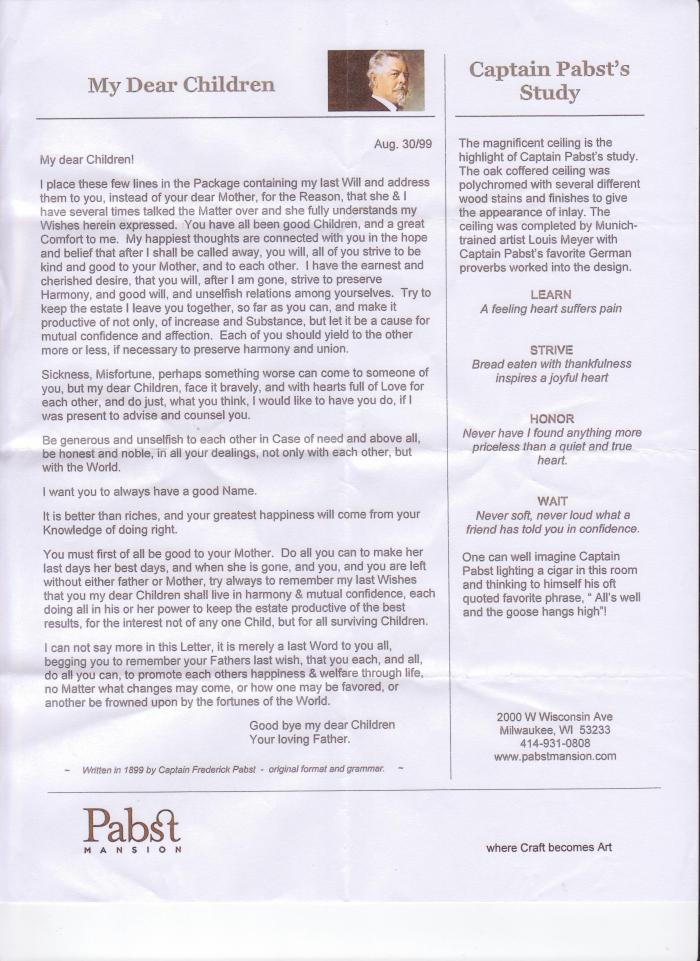
This is Pabst’s letter to his children, read after his death.  It gives you an idea of what I’m talking about.  They hand these out on the tour.  Well worth it.
Pabst Letter.jpeg

Nautilus Kitty revealed

I’ve been trying to get a shot of this cat for years.  I don’t know exactly how long, but it’s been a long, long time.  Then for whatever reason cat sits down next to the car and decides not to move.  This is after continuously running away from me forever.

No idea why.  Didn’t care.  But rather than snapping this with the phone, which has a megapixel count worthy of the original Nintendo, I pushed my luck and got the camera.  Kitty was still there.  Somehow it worked out.

All Hail Nautilus Kitty.

Nautilus Kitty.JPG

Busan – hiking and the monk’s car

Some of the best days are the ones where you wake up and have absolutely no idea what you’re doing.  I’ve gone through these phases.  I used to plan nothing for trips, then I planned everything, and now I’m back to planning almost nothing.  Busan was the early days.  It was Korea, that was enough for me.  So we scheduled nothing in advance.

We wake up one day and the rest of the group doesn’t want to do much of anything.  Probably because they were hungover.  I’m sure I was too, but I was young then and didn’t need to lay around suffering.  So Tim and I decide we’re just going to leave everyone and go, somewhere.  I think we just picked some random temple off a map in the suburbs north of downtown Busan.  It was December, but not a completely freezing typical Korean winter just yet.  So we bundle up and roll out.

We had to take the train and then the bus to get there.  Neither of us spoke anything above bare bones Korean.  We quickly got lost and are just standing there on some random suburban street corner trying to figure out what bus to get on.  Then this middle aged woman walks up and in halting English asks us where we want to go.  We show her the temple on the map and she agrees to help us.

But she refused to give us directions.  Instead, in one of the most generous things I’ve ever seen in my life she decides to ride the buses and escort us to this temple.  Then she says she knows a good place for lunch next door to the temple.  So she walks us there and explains to the owner in staccato Korean probably how these two American idiots didn’t know what they were doing.

The two women essentially shrug and our kind escort wishes us luck and carried on with her day.  We couldn’t thank her enough but she treated it all very matter of fact, smiled, and was gone.  The lunch was incredible.  In the Korean style we each had the ten or so little bowls of various meats, vegetables, and sauces.  It’s probably in my lifetime top ten of meals.

shrine

I think this is the temple, I’m not so sure.  The shot is logged wrong by how my memory remembers this trip.  So who knows.  But I’m pretty sure this was it.

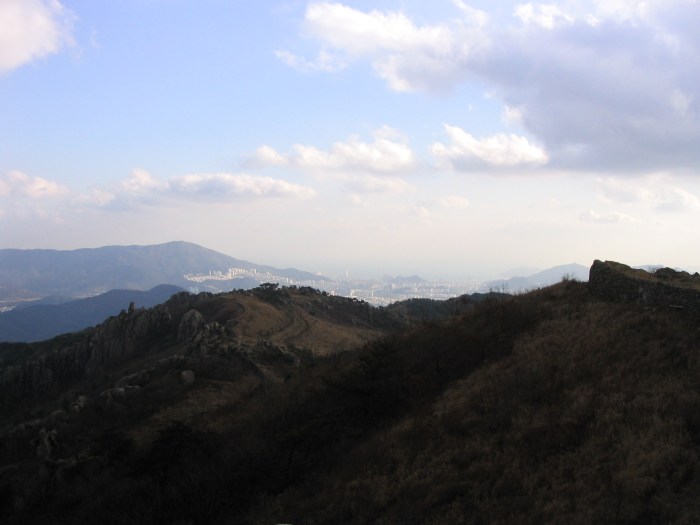
We walked around the temple for a bit and then Tim being the far more adventurous of the us simply states we should stroll up the nearby mountain.  So we point ourselves toward the hill and just start walking.  As we got higher we realized we’d stumbled upon a routed hiking trail and so we continued to follow it on up the mountain and across the peaks.

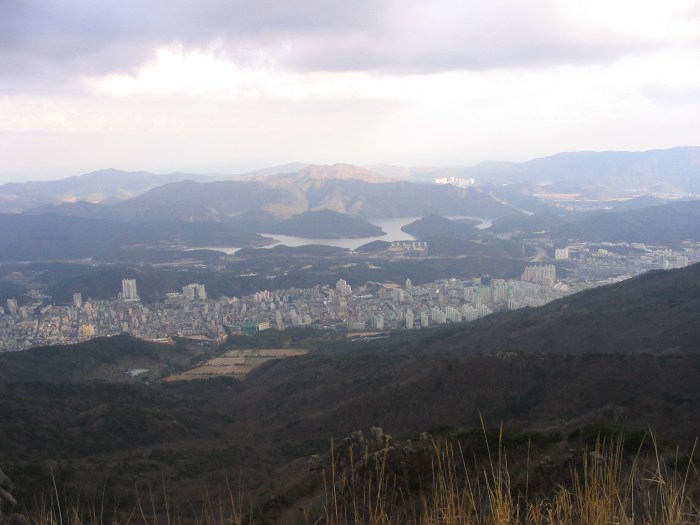
It’s hard to describe how mountainous a good chunk of Korea is.  Cities are perched precariously along the coast with ribbons of suburbs rolling out in the valleys.  The inclines of the hills are quite steep and it’s rather sobering to think that when Busan was the last holdout against the Communist siege in 1950 that these mountains held hundreds-of-thousands of young men who would decide the fate of Korea.

Looking Back.jpgLooking back toward Busan from the hills.
valley

Ribbons of suburbs and the Nakdong River.

back-downhill

We walked for miles and miles, probably at least over ten miles.  It’s a blast, the weather cooperates, the trails are dotted with other friendly hikers, and oh, ah, it’s getting into the late afternoon.  We’re in trouble.  There’s no way we can go back the way we came in time.  We have no desire to hike back on the trail in the dark lest we fall off the darn mountain.  Fortunately we happened upon a temple nestled up there that’s near the trail.  We figure if nothing else we can call a cab from there to take us back downtown.

Temple From Above.jpg

Temple Gate.jpg

I walk around a while admiring the temple while Tim somehow strikes up a conversation with a monk who speaks immaculate English.  Decked in pristine Buddhist orange and thick glasses he says there’s no need to call a cab because he’s driving downtown anyways and he’s glad to give us a ride.  He asks us to wait for a bit while he gets ready and he’ll go get the car.

I’m raised in the Catholic Church, and so I have this idea of poor Trappist monks on a farm like my Dad used to visit.  I expect this to be a hair raising ride through twisting mountain roads in a Yugoslavian knockoff beater.  Instead, the monk rolls up in a pristine black BMW that easily cost north of $50K.  Tim and I were just cracking up.

It was nearly dark as we set off for downtown.  Tim sat up front with the monk while I dozed in the back.  Tim and him chatted away about everything.  I wish I remembered more of their conversation but I was exhausted.  I do recall the monk was headed downtown to party with his friends.  I never did catch the reasoning for the dichotomy between the wealth, partying, and religious lifestyle of the monk.  In retrospect I just find it hilarious.

Back downtown, we managed to link up with our friends again.  I don’t remember the rest, probably for valid reasons.  But I do remember the hills well, and that monk and his crazy car.  It was quite the day not worth planning.

temple


Boston Harbor – Harpoon Brewery

Some things or locations on my bucket list just kind of sit there and fester for years.  For whatever reason, this doesn’t usually bother me.  I’ll get around to it when I get around to it.  You would think I’d be more deliberate and plan things out.  I used to be this way.  But now unless I’m at work I kind of refuse to let my brain work that way, it’s tiresome.

So despite my worship of beer, I’d just never gotten around to visiting a brewery.  And I never really felt the need to force it.  I would think about it from time to time, but never make the effort to schedule it.  Ending up at Harpoon wasn’t some type of strategy either.  My Brother had been there years ago, so we decided to go again while in town for a wedding.  The discussion that led to this quick trip Downtown lasted thirty seconds, and I smirked to myself and them that this would be my first brewery ride.

dsc00557

He said when he went years ago that they didn’t really have a formal tour.  They just took you straight to the tasting room and asked if anybody had any questions.  From the tasting room you can see the brewery floor.  But now they take you in the front and up some stairs where they have a full bar and waiting area.  You buy your $5 ticket, wait, and drink beer.  They also have custom pretzels.  I know it sounds terrible, but somehow we managed.

DSC00558.JPG

Boston Irish Stout, Scotch Style Ale, & 100 Barrel Series #58 Secret Alloy Ale

DSC00559.JPG

The guide takes you back and she talks you through what I think is a relatively small sized brewery.  I think it took about a half hour.  It’s pallets of beer and monster sized brewing equipment.  I have a general understanding of how beer is made, but don’t really get how it’s done on an industrial scale.  The problem was the tour gal kept talking too fast so that a lot of the time we couldn’t really follow what she was saying.  This was the only downside of what was otherwise a quick, decent look at how these places operate.

dsc00560

I’d had Harpoon many times before.  I’ve always considered it to be decent, but nothing awesome.  Good stuff, but not great.  I’ve had a bunch more since we visited and my original impressions remain intact.  Although the Scotch and Alloy shown above were awesome.  They need to let some of their rarer varieties ship beyond Massachusetts.  They’re far superior to their regular fare.

DSC00562.JPG

After the tour you get about 15 minutes in the tasting room to have 2 oz after 2 oz from about 20 taps.  It’s a neat wrap up.  The walls are surrounded by beer from everywhere on the planet, a very nice touch.

Overall this was a worthwhile visit.  But I feel I can’t really compare or contrast it with anything.  Without visiting other breweries I can’t put Harpoon into context.  I guess I’ll have to visit more of them to figure it out.  Oh darn.

DSC00585.JPG

100 Barrel Series #56 Thunder Foam – I managed to stumble upon this at one of my local shops.  A dark and spicy stout, it was a fine wrap up to my evening.  Hopefully I can manage to find more of their kind at the same place the next time I shop there.

Boston Harbor – sort of

I’ve developed this weird trend lately where I show up new to a place I’ve never been before, but somehow end up with a schedule that allows me only a few hours to initially see places before I’m on my way again.  It happened recently in Milwaukee and Detroit, and now Boston.  I’m not complaining mind you, because all it means is I have to go back.  Oh darn.

In any case, the family only had a few hours before a wedding west of Boston.  So we went down to Boston Harbor and walked around a pier or two and then toured Harpoon Brewery.  Incidentally, as much as I worship beer, this was my first brewery tour ever.  I’ll probably write about that later.  Maybe.

But whatever, here’s some random shots of Boston Fish Pier, right down the road from Harpoon.

dsc00549

Boston Fish Pier is still very much operating.  All the boats there are small craft, as in not the massive trawlers that are literally raping the oceans.  You can tell from the material condition of everything that they’re owners not necessarily swimming in gold.  It all felt very classic, except that the pier itself had been renovated from it’s original creation in the early 20th Century.


DSC00553.JPG


DSC00552.JPG

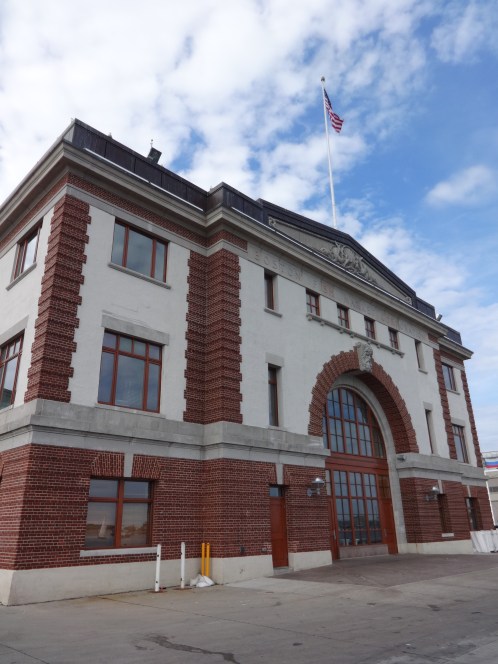
The Exchange Conference Center – Located at the head of the pier.  If you’ve heard me whine about the awfulness of modern architecture, here is an example of a new building I’d consider a great job of creating something that’s not a faceless glass enclosed wonder.


DSC00551.JPG

I have discovered the fattest seagulls I’ve ever seen in all my global travels are located in Massachusetts.


DSC00554.JPG

A lightweight anchor casually discarded on the pier.  If you look you can see why.


All Hail Nautilus Kitty

About a year and a half ago it was Dead of Winter. Outside I think it was about 15 degrees with eight inches of snow on the way. I get home and there’s this cat on my doorstep, hanging out, and meowing. I love my dogs, my brothers both have cats, but I don’t know anything about cats. Cats baffle me because I’m so used to dealing with dogs.

My neighbor is a kind retired doctor. So he and I figure out the cat’s without valid identification, kitty’s papers were apparently expired. So we get the idea we should at least feed the cat. Somewhere in my memory I had heard that if you feed a stray cat it becomes your cat. Seeing as how I didn’t want a cat, I worried feeding the cat was a bad idea. Nevertheless the cat seemed hungry and thin. So my neighbor gave him a little canned tuna and I gave him a little of my dog’s kibble. If you’re a cat owner, and are horrified by these meal choices, I once again reaffirm I have no idea if these are valid cat nutritional options or not.

Anyways, after the cat’s done eating, he and I begin to wonder what to do to prevent kitty from freezing to death or dying in the forthcoming snowfall. Kitty’s running around like a crazy person, and eventually sets up shop underneath my still warm car frame. My neighbor eventually lost interest. So I’m outside freezing and alone with this cat under my car. And I get it into my head that unless I get this cat indoors, it’s going to die overnight and it’ll be all my fault. But I don’t know nothing about cats. And I can’t keep a cat in my place because my dogs will kill it or the cat would kill them.

So I spend an hour calling cat shelters or whatever. Nobody wants to pick up their phone. Or they are of the mentality of, we’ll take the cat from you, and then kill it. Holy shit! [slams phone receiver] For the uninitiated, slamming your phone is the most popular smartphone app of 1987. In the meantime, kitty is either underneath my car or on my doorstop meowing constantly. Finally the local city animal control calls me back. This kind young woman is all helpful, but offers a weird solution. She’ll take the cat, but nobody ever claims cats, so you should just leave the cat alone otherwise it’ll never get home, if it has a home. Oh, uh, …

Remember, I’ve got it in my head at this point that this cat is going to literally die unless I save it. So I tell the woman thanks and I keep dialing. Finally I get a hold of a shelter that will take the cat, not kill it, and get somebody to adopt it if nobody claims it. They are a half hour away. It’s getting dark, my escapade with the cat is now two hours old, I’m freezing, my dogs are hungry, but with this news from the shelter my heart soars. The cat will live.

Anybody ever try and get a cat to go somewhere it doesn’t want to go? I hadn’t. Kitty would not let me pick him up. Kitty had to be bribed with more dog kibble. Then I could pick up kitty. But kitty kept trying to scramble out of my hands and I was worried kitty would claw my eyes. I could get kitty in hand, get close to my car, and chuck kitty in the backseat. But kitty was so quick, he would always manage to jump out of the car before I could shut the door. Cat was literally a blur of fur the dude was so fast.

Eventually after an hour of this I could no longer feel my frozen hands. It’s pitch black now. And kitty jumps out of the car for the twelfth freaking time, and runs off. Cat’s gone. So I walk around for a half hour trying to find the cat. I never did. After three and a half hours I went inside, defeated, certain kitty was not going to last the night. I had failed kitty, it was on me. I think it snowed ten inches overnight.

Yet a week later, I see kitty gleefully chasing another cat around the neighborhood. I stopped where I was in my tracks, and just started laughing like a lunatic. Darn cat’s alive! It was a true six year old Christmas morning moment. It made my month. I hereby dubbed kitty at that moment Nautilus Kitty, for his ability to survive arctic weather on his own.

I don’t know if Nautilus Kitty is a stray, or is owned by a neighbor. Nobody has ever claimed Nautilus Kitty as far as I can tell. I see him about once a week or so, in all weather. I don’t feed him, I don’t try and save him, because I know he’ll be alright. Occasionally I see Nautilus Kitty conning a neighbor for food. Even my doctor neighbor feeds him every once and a while, I’m not sure if he remembers meeting Nautilus Kitty originally or not?

But Nautilus Kitty never begs me for food or says hi. I guess he’s still angry at my failed kidnapping attempt. I’ve tried to take Nautilus Kitty’s picture for years, but he’s too quick, and runs when I approach him. So this shot is the best I could do recently. So you play Where’s Waldo and find Nautilus Kitty’s blur in this photo. For the uninitiated, Where’s Waldo is the most popular smartphone app of 1993.

Nautilus Kitty.jpg

All Hail Nautilus Kitty! Who cannot be slain by weather, or dogs, or other cats, or dragons, or whatever. Turns out the animal control woman was right after all. Nautilus Kitty endured.

Detroit – because work said so

Someday somebody way smarter than me is going to write a book where Detroit is a metaphor for all of America. You can trace the tale from the earliest French settlers, to British rule, frontier America, transition from an agrarian to industrialized economy, full blown dominance (Detroit probably single handedly out produced Nazi Germany), followed by collapse & depopulation, followed, by what?

Well, one would hope rebirth. Rather than continued slow decline. Since 1950 Detroit has lost almost 2/3 of its people. A similar trend stalks Cleveland, Milwaukee, and countless other Midwestern cities. Literally, Detroit used to be the center of the world alongside New York and London. Will it ever return to its former glory? Is it even possible? I’m not sure. So much of what drove this greatness no longer exists. What America is and does is so very different than in 1950.

Maybe I’ll try and write about it later on. But for now I’ll let the photos speak for themselves. Or at least to also offer that Detroit has some of the worst traffic I’ve ever experienced, which says a lot considering the parking lots I’ve driven in (Tokyo, Washington, New York, LA, etc). And also Detroit’s suburbs have some of the best Lebanese food on the planet, truly legit awesome stuff.

Work sent me to Detroit for all of three days. I only ended up snaking a few hours to drive around. Sadly I didn’t get to do anything reasonably fun. So I guess that means I’ll have to go on back on my own dime.

Woodward & Guardian

One Woodward Avenue (left) and the Guardian Building – One Woodward was completed in 1962, note its applicable stale awfulness.  Guardian Building dates to 1929 and is apparently beautiful inside.   Also note the weirdo sky bridge which linked the two since the 1970s.  In 2012, Rock Ventures LLC bought One Woodward.  Rock Ventures owns Quicken Loans, a bunch of sports teams and casinos, and about a 100 other companies.  I suppose it’s an example of the types of companies that Detroit has to attract in order to rebuild.


Ambassador Bridge.JPG

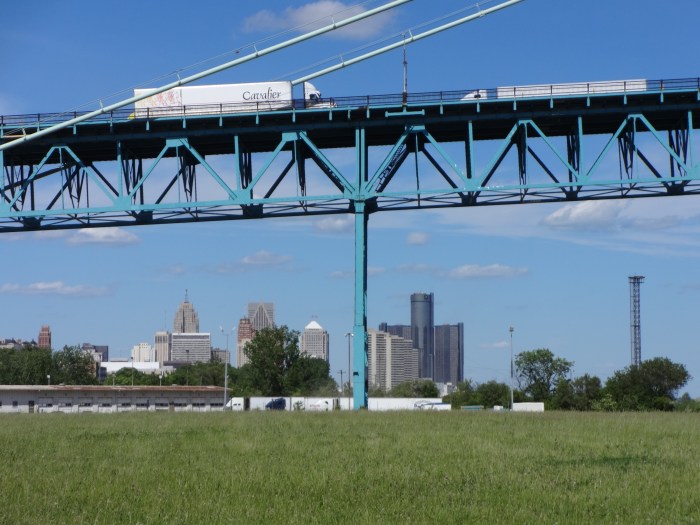
Ambassador Bridge & Downtown Detroit – The busiest border crossing in North America, the bridge carries 1/4 of all trade between America and Canada.  The separate Detroit River Tunnel carries rail traffic.  In a bit of weirdness the bridge is actually privately owned by a guy who appears to behave like an evil monopoly man cartoon caricature.  A second bridge is scheduled for completion by 2020.


Windsor.JPG

Detroit River & Windsor, Canada


GM Building.JPG

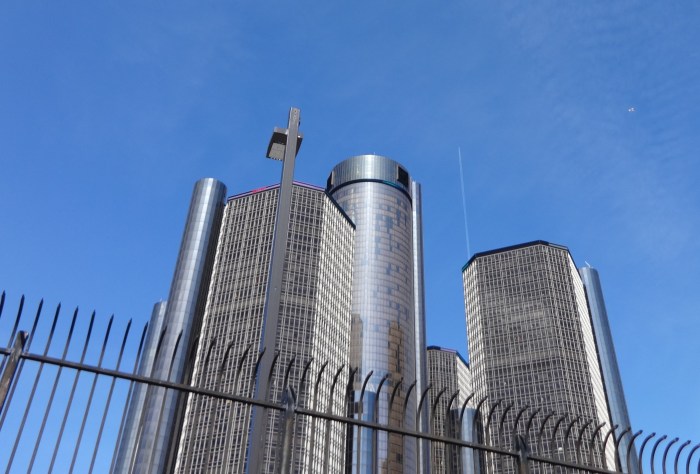
GM Renaissance Center – appropriately enchained behind a fence for GM’s cheating death off the backs of the taxpayer


Packard Plant.JPG

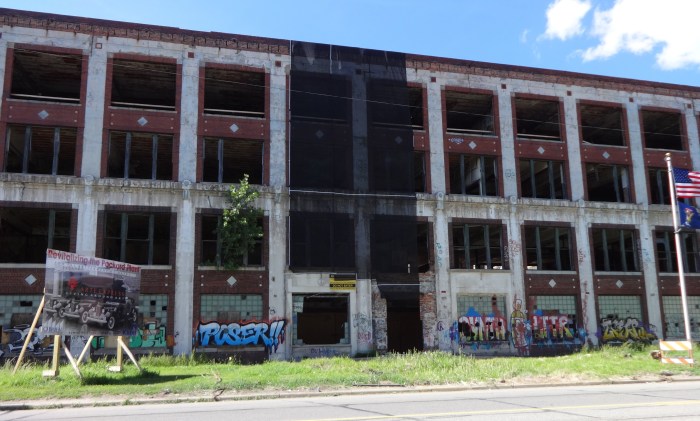
Ruins of the Packard Automotive Plant – Completed in 1911, it built cars until 1958.  By 1966 Packard had evaporated as a car company.


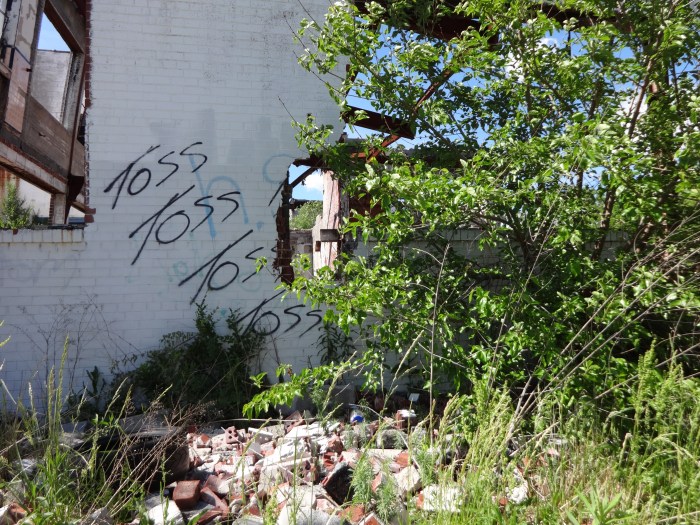
The next three shots are of ruined houses just a few blocks away from the Packard Plant.  Once upon a time, an American farm worker could move to Detroit and get an entry job at the Packard Plant.  Thirty years later he could retire as a supervisor with a decent pension, and go buy himself one of these beautiful houses to live out his days as a grandfather.  Now it’s all gone, the Plant, the house, and this very concept of employment as part of the American Dream.  I wonder if they could have ever imagined how bad it would get?  Understanding why this all came about, and where to go from here, is central to Detroit’s future.  And perhaps America’s as well.


House


House1


House 3.jpg

get more pegs

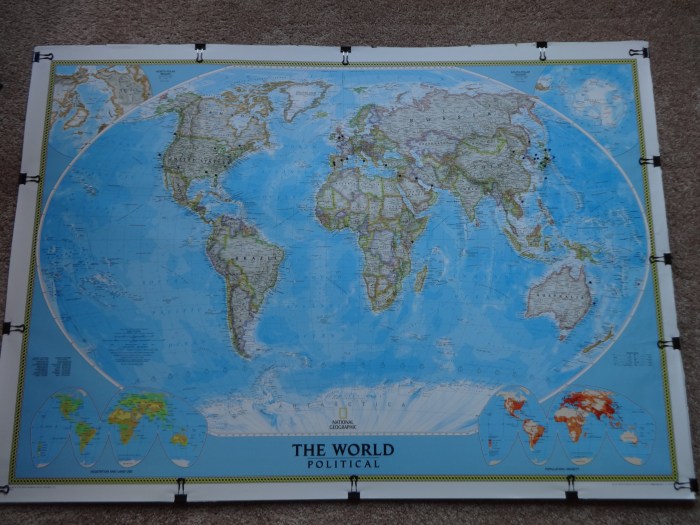
My very first boss, who is probably still the best even after all these years, had one of these maps on his office wall.  I’ve never forgotten about it.  But for whatever reason it’s taken me forever to bother with this.  And even then it was no deliberate plan.  It’s like I just woke up one day recently and decided it was going to happen.  So I did.

DSC00544.JPG

The pegs are hard to see in this shot, but they’re multicolored to define length of stay, purpose of trip, etc, etc.   For those of you who unfortunately read this degenerate blog on a regular basis, you might recognize some of the pegs from previous travel themed posts.

I just added another peg last week, from a recent work trip.  I might get around to posting about it shortly.  I also probably need to get around to planning another trip, just for fun, without the insanity of work telling me where to go.

Either way.

Get more pegs.

Jacques assists my brain decompression, his way

I’ve been horrendously busy lately with no sign of it letting up. So I’ve had to take a step back in planning what I’m going to cook. For quite a good long while, I’ve been on this kick to try ever harder recipes or techniques. I guess just to prove that I could do it. Or also that hanging out in the kitchen for hours with the dogs, cooking, drinking beer, and/or listening to music is my way to decompress from stupid reality.

I don’t have time for that now, but a man’s still got to eat. So lately I’ve transitioned back to some of the early cookbooks I bought, in particular Jacques Pépin’s The Short-Cut Cook and Fast Food My Way. You go buy your stuff, spend less than 30 minutes, and you’re done. This has certainly helped my schedule, but it’s also been a delightful return to basics. Something other than a massive list of ingredients with perhaps needless complexity.

It’s been kind of a return to roots, in the sense that if you’re only involved with a half-dozen items and a half-hour, you’d better get it right. You can’t hide anything if you screw it up. In many ways, this simplicity is better. In this hour long interview with Anthony Bourdain (you should watch the whole thing), go to the ten minute mark to hear Jacques lay this philosophy out, “…take away, take away…”

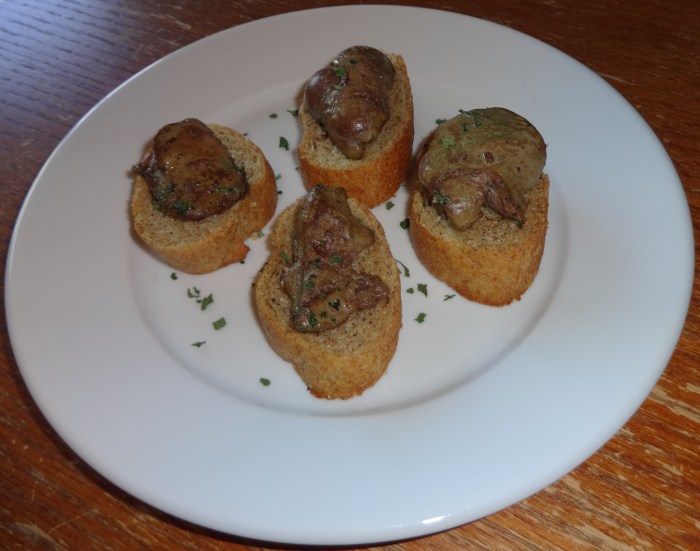
It’s also given me a chance to mess with things that have been on my mind for years, but just never got around to doing. In this week’s case, it was playing around with chicken livers and sardines, both from Short Cut Cook:

Chicken livers persillade

Most folks hate these things because they’ve got a weird texture and look terrible when you break them out of the package. So I think I was well north of 20 years age when I first had them in Asia. Since then, I’ve never turned them away and tried them all over the place. But I haven’t ever worked with them in the kitchen. So Jacques steps in, and essentially offers you the opportunity to serve them with some toast and call it a day. Overall kitchen time is less than ten minutes.

Things did not go well at first. As I was trying to get the liver tub open and I ended up spilling liver blood/juice/whatever over a good portion of my counter and floor. My youngest was more than happy to help me clean up, so I had to scramble to contain her happy doggy tongue with one hand while I wiped it all off the floor with the other. Then you’ve got to clean the livers by trimming off all the connecting veins and all those lovely weird black parts that you’d rather pretend don’t actually exist. I’m not sure if this is typical, but I ended up discarding about half the biomass in trimming them down to the cook ready parts. After that, I was a bit demoralized, and wondering what I’d gotten myself into.

Yet all you have to do is roast some baguette slices for ten minutes and sauté the livers. The livers themselves take one minute per side, really high heat, and that’s it. Take your liver, take your bread, eat, and it’s well worth it. It’s probably not for everybody, but it worked for me all right.


chicken livers

finished product, they were liver-rific!

did ya get it?  I did a thing there?

[cricket, cricket, cricket]


Sardines in tomato sauce

I don’t know whether this is accurate or not, but I always had the impression that folks tend to turn away sardines or anchovies because they don’t like the little small fishy, and the overall oiliness, fish odor & taste is too much for people. So you don’t really see these two dudes make much of an appearance in typical American cuisine (whatever that is). I’ve always loved them though. So when I came upon Jacques’ instruction to buy a whole freaking 16 ounces of sardines, I was sold. So because I’m a lunatic, I went and bought four tins, just to be safe. All he has you do is throw them on some greens with vinegar, parsley, salt & pepper, and some fresh tomato. So if you don’t care for sardines, this is repulsive because you’re eating them right out of the box as is. But for me this was a win. I took five minutes to make.

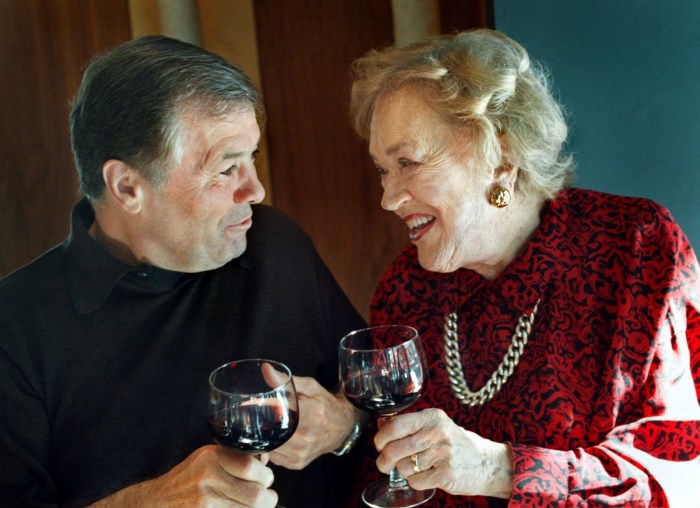
I love Jacques’ mentality on food. I guess he’s technically considered a celebrity chef, but in my mind he’s one of the originals alongside Julia Child who is not really a celebrity chef. I mean, sure, Jacques has made a boatload of gold throughout the years, but he’s always carried himself with the same humble simplicity that Child also had. There’s a reason those two were friends. It’s always a breath of fresh air from the current modern machine manufactured chef crowd. Jacques still cooks for public television, folks.

So thanks Jacques, for helping me get through this crazy busy time of my life. While also still eating well. And learning something new every day.

pepin and child.jpg

yep

Milwaukee – for just a few hours

I’ve pretty much gotten to the stage where I’m beyond planning anything for travel not dictated by those who employ me.  This is just about the exact opposite from a decade ago where I had a tour book, ledger, and a timeline.

I wish I could say this was part of some kind of mystical theoretical journey where I’ve cast off the toolbox shackles of a younger age, but truly it’s just because I don’t have enough energy to care.  It’s the mentality of, eh, it’s just for fun, whatever.  Show up, and see what happens.  I like this, it takes less effort.

For those of you unfortunate enough to be a regular reader of this degenerate blog, I now end up traveling to Chicago regularly now.  But I usually fly into Milwaukee for this is cheaper to the bottom line.

A hint perhaps, for those of you looking to head to Chicago.  If you fly into Milwaukee both in terms of flight cost and rental car, you’ll save at least $100.  And your trade is about $8 in interstate tolls and an extra hour’s drive.  You decide if this is worth the tradeoff.

Anyways, I usually have zero time, and so turn south from Mitchell Airport bound for Chicago.  This last week though I had a few hours since I got there very early in the morning.  So instead I turned north and decided to spend a few hours in Milwaukee.

With zero upfront planning I ended up in downtown, parked, and just walked around for a few hours.  This was a good idea.  However, it didn’t help that I felt terrible that entire day, but there was nothing I could do about that.  So I decided to carry on.

First I walked around like a lunatic until I could find breakfast, I ended up at a local Greek diner:

Mykonos Gyro & Cafe

1014 North Van Buren Street


This was a wise, fortunate, rendezvous.  They do two things I’ve never seen before, they put gyro meat in an omelet, and you get tzatziki in a squeeze bottle.  Both of these are wise decisions.  But be warned, for about $8 you’ll get enough food that you feel compelled to walk it off for hours.  So in other words, this was a huge win.

Then it was few blocks east down to the Lake.


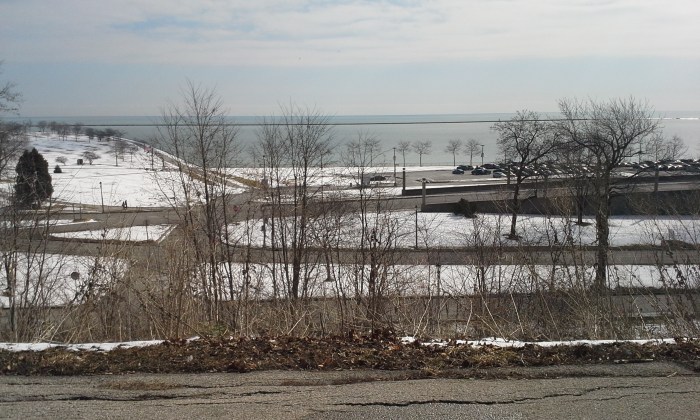
Lake Michigan

Lake Michigan from the bluffs of Juneau Park.  As is typical for Eastern or Mid-Western cities, those damn highways are in the way of water views.  If you didn’t know, this was a deliberate decision of city designers in the early car era.  Highways, or parkways, were put along the water to give casual driver’s a good view.  This is the lunacy of getting fully dressed up and going on a drive in the 1930’s, because that was considered recreation.  My Granddad used to chuckle about that, you would go on a drive for fun.  So back then, having the road along the water was an advantage, now they just kill our view.


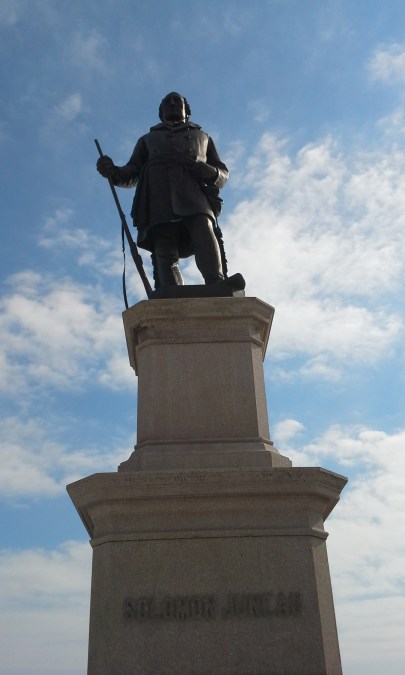
Soloman Juneau

Soloman Juneau.  First mayor of Milwaukee, and it seems an all around decent guy.  An explorer, trader, and trailblazer of the American West who seems to possess a rarity in that he has little or no blood on his hands.


Bad Day

At the base of Juneau’s statue.  At first I was like, “is this some type of weird local offering to Juneau’s ghost?”  But in reality, I came to the conclusion that this was somebody’s really, really bad day.


Then it was  a short walk to the East Side of downtown, separated from the West Side by the Milwaukee River.

Milwaukee Federal Building

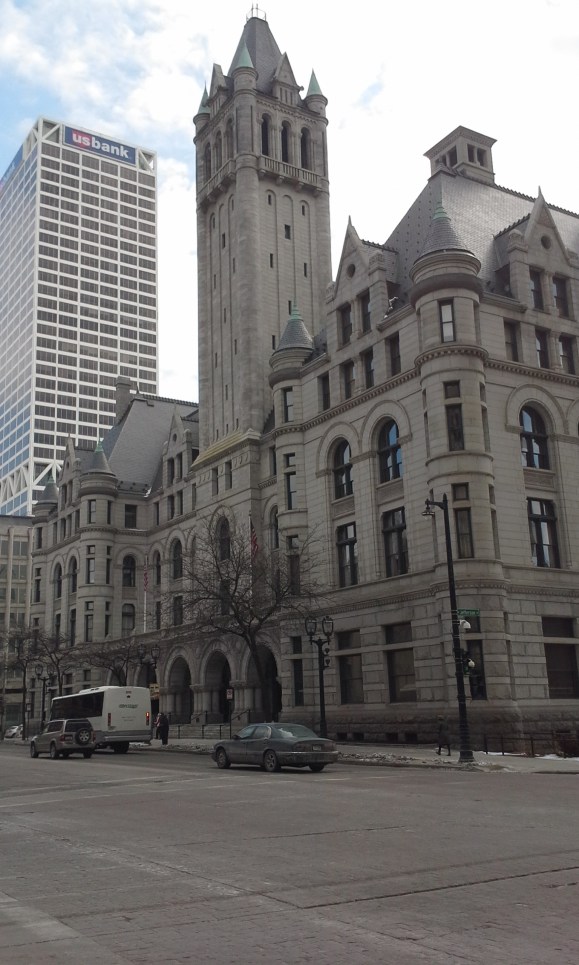
Milwaukee Federal Courthouse.  Once a regular federal office building, is now a place where dreams are destroyed.  A classic piece of late 19th, early 20th century city building architecture.  I hate new office building designs, all glass, all stale awfulness.  At least back then they built things they looked like they actually cared.


The Pfister

The Pfister, one of the oldest hotels in Milwaukee.  A broader American hotel icon, and recent setting in Space Cop.  An interesting note is the property on the right-side street corner is for sale.  Their pitch in the window is it hasn’t been available for purchase since, “The Dow was at 500 points.”  I don’t know what year that was, but that’s a pretty awesome sales pitch.


Milwaukee River

Milwaukee River.  It wasn’t as cold as it looks, but it usually is, apparently.


Milwaukee Public Market

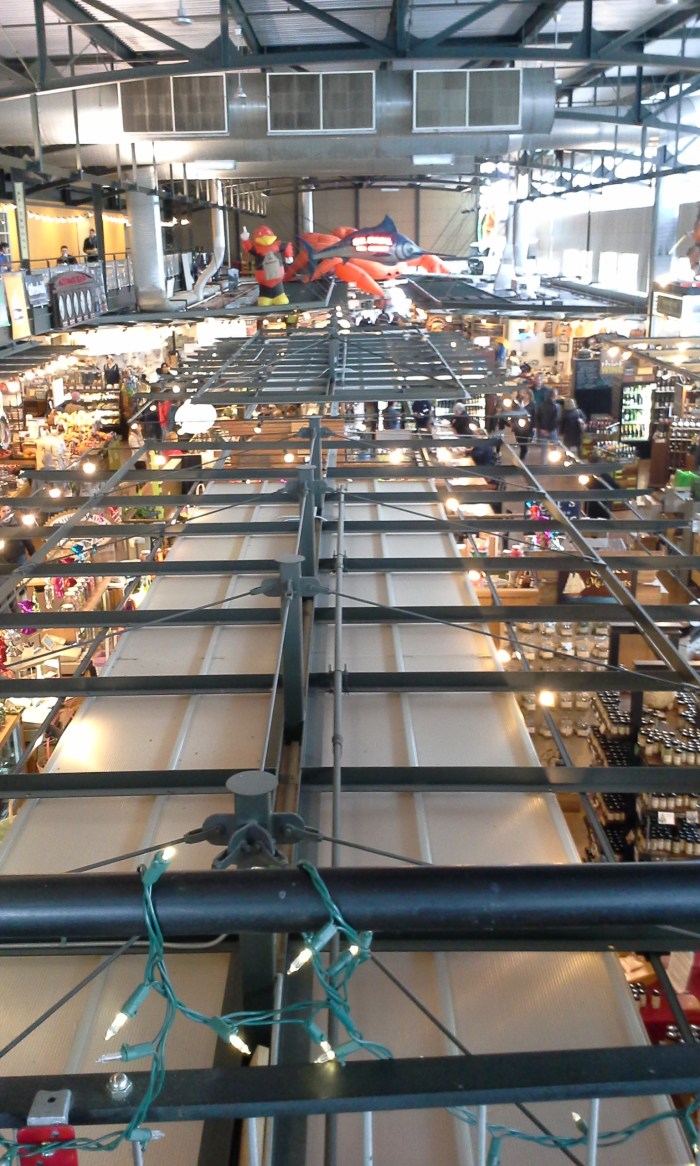
Milwaukee Public Market, in the historic Third Ward.  An awesome place.


At this point, that I felt horrible, and that stole the rest of the journey out of me.  So I briefly had lunch at this place, another win:

The Wicked Hop

345 North Broadway


And then I had to basically get out of there, drive south, and find a way to get to bed early.  It helped because I felt better in the morning for work.  But it’s only left me wanting to go back to Milwaukee again soon, and get more in depth, to a city that has a lot of offer, but who’s surface I’ve just barely scratched.