oh, no

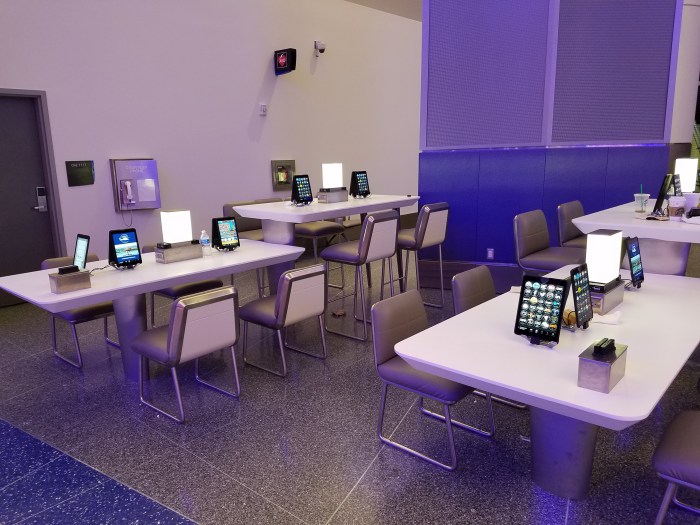
I’ve connected through Houston Bush before, but that was years ago.  So I deplane and as soon as I get out the gate I notice there’s a bunch of small screens everywhere.  The normal waiting areas with rows of chairs were apparently replaced with tables.  Each individual seat had a tablet in front of it.

I didn’t think much of it at first.  I had a quick hour to grab food before the next flight.  I ended up at a place called Bam Bam for Vietnamese.  I sit down at the bar, and I’m face-to-face with another tablet.

Oh, no.

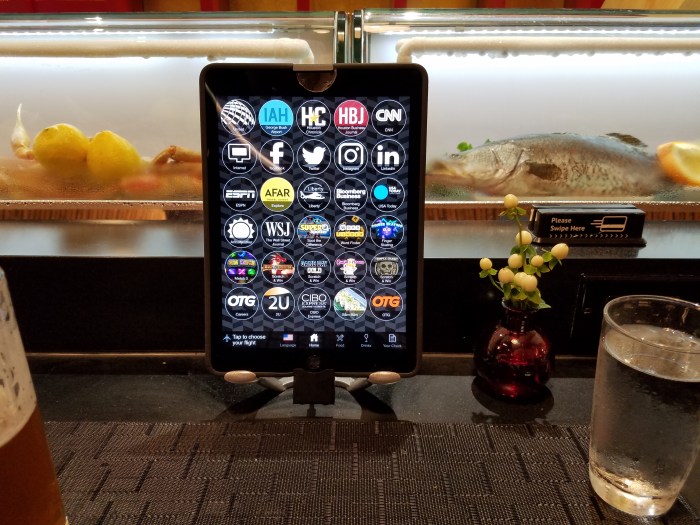
20170410_200120.jpg

It’s the future.  Today!

It took me about five minutes to realize no bartender was coming to see me.  I figured out on my own that to get a beer or order food I had to use the tablet.  Then I had to swipe my credit card right on the spot.

Even after you’re done ordering, there’s this still that evil screen right in front of you.  They continuously bombard you with ads, proposed money games, and whatever else.  You can’t turn the damn thing off, at least not that I could figure out.

The beer was local Texas good, they had a great banh-mi, and a so-so salad.  But I couldn’t get over the darn screen.  I want a quiet beer and meal.  And maybe to watch sports behind the bar.  Not get ads shoved in my face.  Note the company logos on the shot above from the many, many usual suspects of the Giant Octopi.  I should have put a napkin over the thing.

I’m an introvert.  So you better believe it’s a legit problem when I say I actually genuinely missed ordering my food and drink from a real live person.  To actually engage in conversation with a fellow human.

I eventually figured out the screen thing, but almost nobody else did.  Other folks coming in were exasperated with trying to work it out.  And they got frustrated as the one poor waiter had to walk them through it.

Business consultants told Bam Bam and Houston Bush that there would be friction during the “initiation period”.  But that eventually customers will get used to using this technology on a regular basis to order.  Then they can save 47% on restaurant personnel costs once all orders are handled in this electronic manner.

This is the future.  Every single moment of your time is one giant opportunity for somebody to shove ads in your face.  Everyone notice the new gas pumps?  Where they throw ads at you in the 49 seconds it takes to pump your gas?

Machines probably won’t totally take over every job.  You won’t see a full blown robot bartender.  Instead you’ll see various aspects of humanity removed from the equation.  Technology will destroy jobs on the margins.  Instead of six waiters a restaurant will have two.  What are the other four newly unemployed humans supposed to do?

If you believe the wizards of the future, technology will free those four people to go become artists, or learn a new trade like plumbing, or whatever.  What I suspect will happen instead is that society will generally continue to become poorer and more unequal.

When traveling, I don’t think I’ll do this again.  If I see a screen like this again, I’m walking away.  I’ll take my cash to a business that employs humans.  And if every bar stool on the planet has a screen one day?  I don’t know what I’ll do, but that’ll be a sad, sad day.

20170410_202253.jpg

The future can kiss my ass.

Mount Fuji, Part Two – Fuji stick

You’re supposed to bring home at least one item from every country if you can, or at least every trip.  How does one do this though if you’re constrained to one backpack?  For this reason and many others, I don’t really have too many corporeal possessions from my travels.

But sometimes you pick up an item that you find a way home any darn way you can.  I think I shipped my Fuji stick home via 1912 British Imperial tramp steamer.  I made it happen.  It cost me 13 pounds, 6 shillings, and a bottle of my finest barley swill.

Ascending Start1.jpg

If you ascend Fuji, you have the option to take the wooden Fuji stick.  Not everybody does so.  Those who’ve been up multiple times have no need.  Some folks consider it a vicious tourist trap kind of thing.  But I just think it’s too cool.

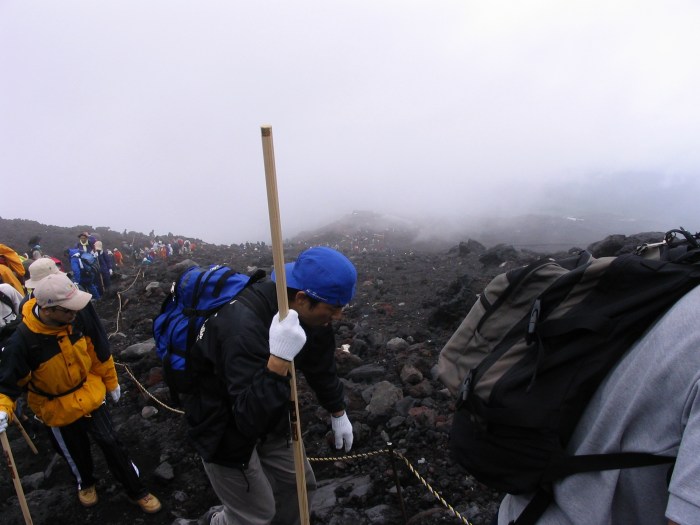
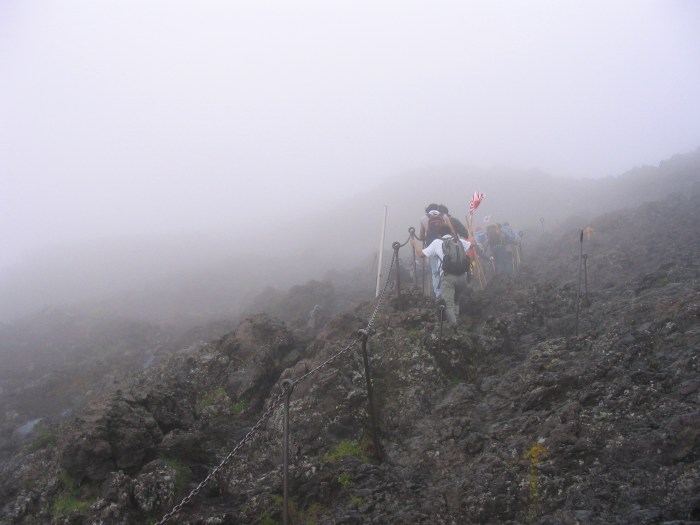
The idea is you start out with this bare piece of wood.  At various way stations on your journey up, they use a hot brand to burn logos into the stick.  Here’s a shot of mine of a local carrying one up where he’s taken the flag off.

Looking Down1.jpg

Of note, whereas I left my Japanese flag on my stick, see how the local has taken his off.  I attribute this to the difference in patriotism between your average Japanese and say an American.

For example, my Parents have always had the Stars & Stripes flying outside their front door.  Always.  You would not see this type of behavior from almost any normal Japanese family.  Patriotism is a very different mindset between the two countries.

The Fuji stick takes this concept into overdrive as the flag that adorns it is not just any flag, but the older Rising Sun Flag of Imperial Japan.  I don’t know why Fuji chooses this over the modern and less controversial single red circle?  But anyways, a lot of locals took their flags off their stick.  Don’t get me wrong, it doesn’t matter to me either way, I just find the concept interesting.

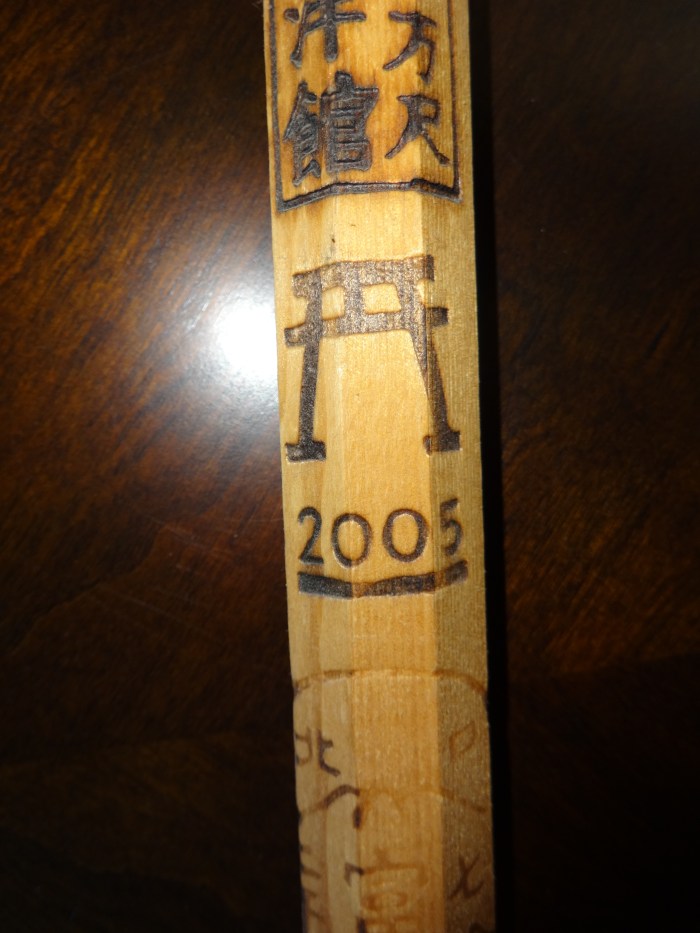
DSC00678.JPG

Here’s a close up of one of the stamps.  A torii gate with the year I climbed, 2005.  Man, I’m getting freaking old.

DSC00683.JPG

A few more stamps, one with 3,400 for 3,400 meters.  Then, above it again the year 2005, and 11,000 feet.  Note feet, not meters.  I think that guy must have had two stamps.  One that did meters, and one that did 11,000 feet for the gaijin.

My Fuji stick sits right next to my home desk, always.  You can actually catch it in the background of an old shot I had for a previous post where I talked about beer.  Win.

I&G1


Mount Fuji – only once?

It is said that a wise person will climb Fuji once, but only a fool will do it twice.  Well, what if you’re not wise to begin with?  And what do you do when you climb it the first time, and it’s a fog filled mess?

I think the answer is you have to climb it again.  Even if that throws my soul out of alignment and curses me.  Then I’d need to enlist the services of Shōki The Demon Queller to cleanse my spirit.  But I’m down with that.

Shōki only takes payment in fine sake.  So he and I can get ripped on it after he’s done slaying the cursed demon that’s bugging my dogs while they troll around the basement looking for crickets.

So I’ll be climbing Fuji again someday.  Just to do it again.  And because I couldn’t see anything when I reached the summit because of all the fog.

Besides, when climbing Fuji I constantly got passed by folks who were probably 73 years old.  They were kicking my ass.  I’m betting (other than the fact that these people are awesome) that this was not their first dance with Fuji.  If they can do it multiple times, so can I.

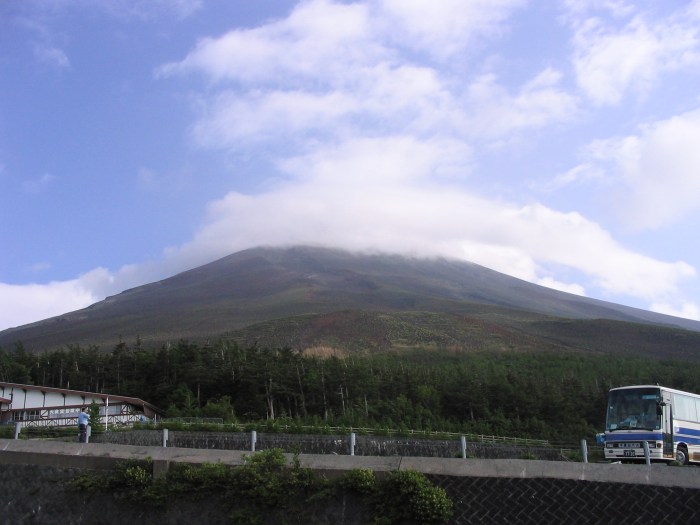
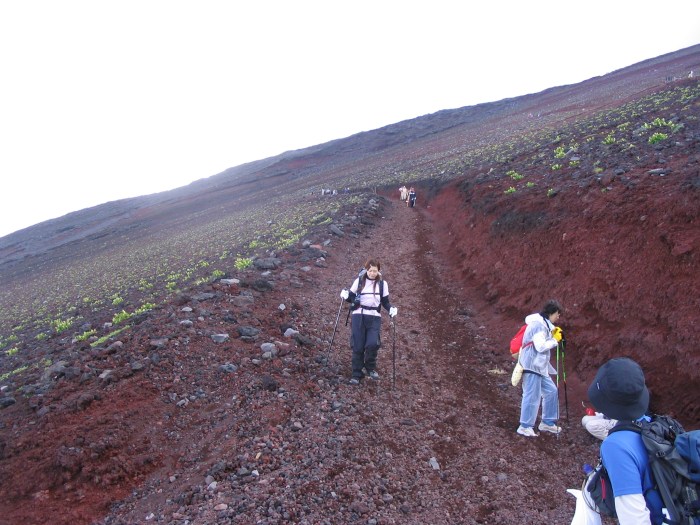
IMG_1018This shot is actually in the early afternoon at the end of my climb.  It’s the only decent shot I have of Fuji that day.  Note the clouds that still owned the summit.

Walking Up.jpg

Nobody should climb Fuji unless they’re in decent shape.  There are no training wheels.  You get a stick, you get the assist lines, and that’s it.  In some cases the path is a total mess.  You’re walking directly on volcanic rock.  I loved it.

Looking Up2

The climb is a series of switchbacks.  At the choke points it can get a bit crowded, but I suppose there is room to slide by if you’re in a hurry or are timing yourself.

Looking Up3

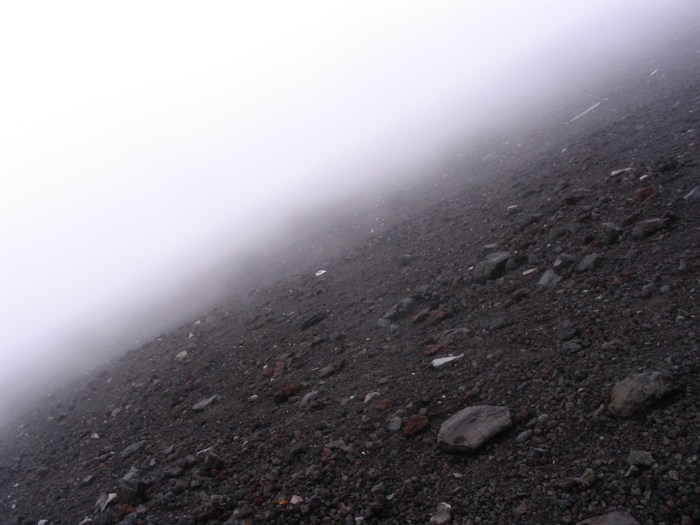
Foooggg.  I did somehwat regret the fog, but honestly, since I know I’m going up again it was actually a lot of fun.  It added to the mystery of Fuji.  It’s like walking on a mystical moon.

Looking Up4Unrelated photo of climbers who are better than I.

Descending.jpg

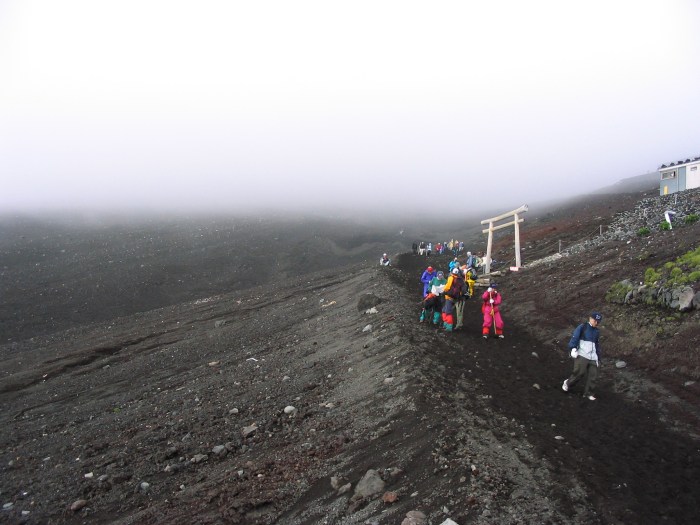
I don’t have any shots of the summit.  There some shops and such.  But we couldn’t see anything up there.  Here is a shot right below the summit upon beginning descent.

IMG_0998

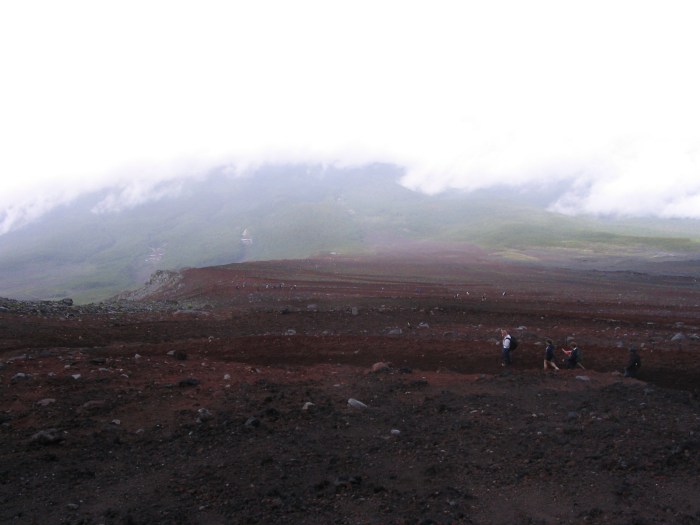
Descent is just as much a challenge as ascent.  You’re using different muscles and the switchbacks are over different ground which is looser.  Note in this shot the slow descent from volcanic wasteland until it’s ultimately the greenery of lower altitudes.

IMG_1008

Nature begins to return with some green here and there.

IMG_1014.jpg

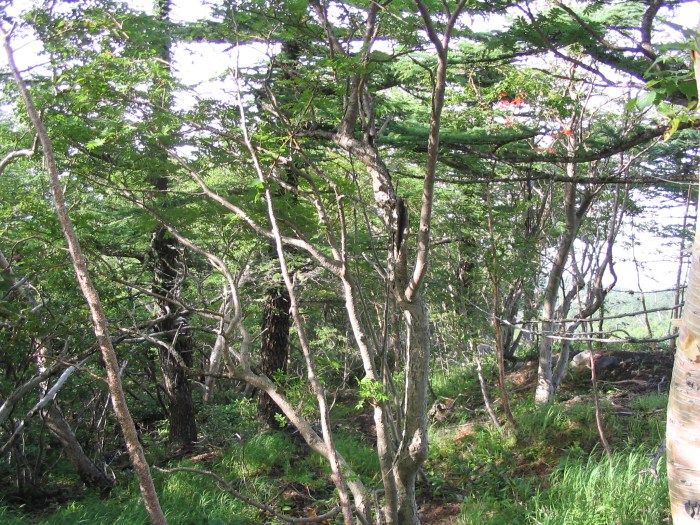
One of my ubiquitous random forest shots at the end of the descent.  I’ll also go back to hike the forests around Fuji itself.  They’re beautiful, and a sharp delightful change from the overwhelming concrete of urban Japan.


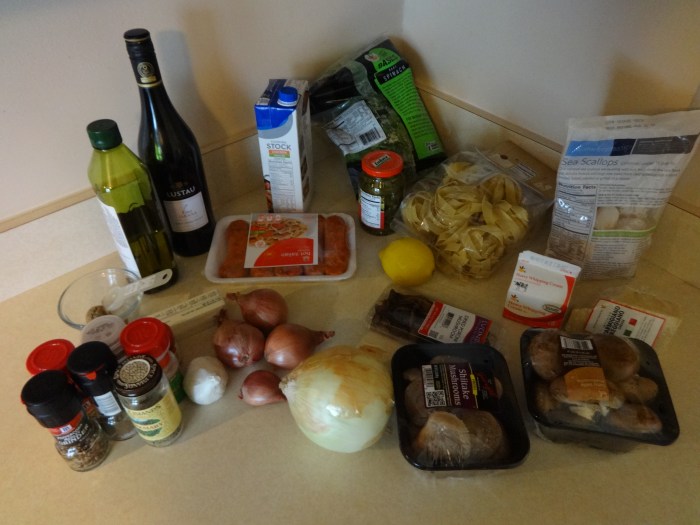
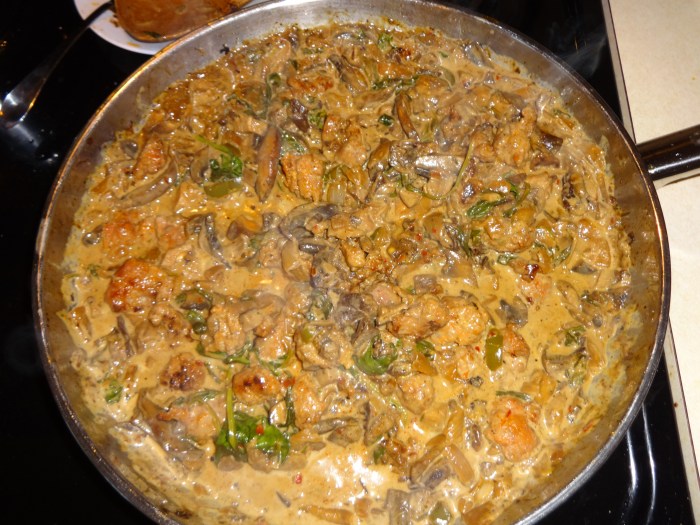
three mushroom pappardelle

When you throw three different kinds of mushroom into a dish, the only question that comes to my mind afterwards is why didn’t I use four?

DSC00666.JPG

three mushroom pappardelle

2 cups chicken stock

dried porcini mushroom pack

1 Tbsp olive oil

1 pound hot Italian sausage, diced

4 shallots, minced

1 sweet onion, chopped

1 Tbsp brown sugar

12 oz baby bella mushrooms, sliced

6 oz shitake mushrooms, diced

4 garlic cloves, minced

pinch nutmeg, rosemary, thyme, crushed red pepper, cayenne, garlic powder, salt & pepper

1/2 cup dry sherry

1 lemon, juiced

1/4 cup pickled jalapenos, chopped

1 Tbsp pickled jalapeno liquid

1 spinach bag

1/2 cup heavy cream

1 pound pappardelle pasta

parmesan reggiano, grated

in a pot, warm the chicken stock, add the dried porcini & soak for 20 minutes, strain & chop porcini, reserve the stock

in a stainless steel pan warm 1 Tbsp olive oil over high heat, add the sausage & brown, use a slotted spoon to remove the sausage, set aside

stir in shallots & onion, saute until softened, then add brown sugar & caramelize onions over low heat

increase heat to medium, add the baby bella, shitake, garlic, and the spices to your taste and cook until they begin to stick to the pan, then add dry sherry, scrape pan and reduce until all brown bits are absorbed and most moisture is gone

add reserved chicken stock and reduce until all liquid is gone

add lemon juice, jalapenos, and jalapeno liquid, cook for a few minutes, then stir in the spinach and wilt it

add chopped porcini and heavy cream and simmer until a thick sauce is created, return sausage

separately cook pasta, in a large serving bowl add pasta, then add sauce, mix until combined but don’t aggressively stir

serve in bowls with grated parmesan reggiano


Let’s begin!

DSC00645.JPG

Soak the dried porcini mushrooms in the chicken broth, then strain and chop them after about 20 minutes of hanging out.  Keep the chicken broth, we’ll use it’s mushroom infused tastiness later.

DSC00657.JPG

Sausage improves any dish.  I shall duel anybody who claims otherwise.  But honestly, this is just extra credit.  The dish will do just fine without the sausage if you want to go the meatless route.

DSC00647.JPG

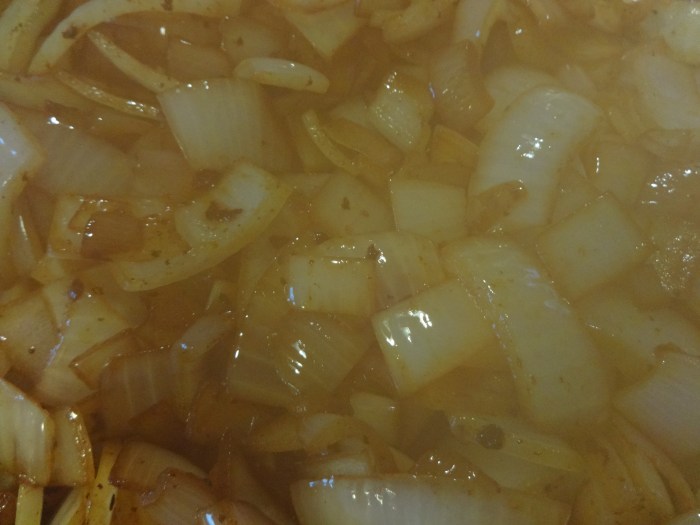
Whoever discovered the concept of slowly caramelizing onions should have been appointed Emperor of All Humanity for at least one day.

DSC00651.JPG

After you’ve added the other mushrooms, garlic, and the spices, you really want them to get a nice golden brown look throughout.  As they start to stick to the pan, this will help give it a nice deeper flavor.

DSC00659.JPG

Then we use the dry sherry to deglaze the pan and start the sauce.  You can use white wine instead of sherry if you want, but really you should go with sherry if you can get it.  It gives the dish a unique flavor.  And if you take the trouble to buy it, try and get the better sherry that is like $20 a bottle.  It’s remarkably better than the $10 bottle.

DSC00661.JPG

While you’re cooking the pasta, slowly reduce the cream until you’ve got a nice, deep sauce.  The recipe calls for pappardelle, but any long pasta of your choice will work great.

DSC00663.JPG

You can eat this by itself or serve with a side salad.  Either way works, but most people would like to have the salad with it too, as the dish can be a bit heavy for some folks.

DSC00667.JPG

Most of my recipes come straight from my silly brain.  But where I am inspired to steal the ideas of others, I shall always try and give credit where credit is due.

In it’s original form, years ago, it was based on this decent Giada De Laurentiis recipe.

But it evolved after I had the Pappardelle con Funghi e Capesante at Vigiluccis in Coronado.  Work made me go there with the bosses, the food made up for the otherwise weird evening.  It was one of those moments where you eat something, and you’re like, “I wonder if I could do that?”  So I did.  But theirs is much, much better than mine.

controlled dreams

I remember few concrete things from the wacky Jetsons cartoon.  But certain things remain sharp.  They had robot football, this angered me.  They also had a machine that could control dreams.  You got to dream about whatever you wanted.  How cool would that be?

I find the older I get the more garbage my dreams are.  It’s a mess of bad nonsense.  I can barely remember a thing.  I think a pet dinosaur stole my television.  Whatever.

But Japan is there quite often in a way nowhere else is.  I have no idea why.  I haven’t been to Japan in ten years.  Money and time keep getting in my way.

I think it’s because I lived there.  I suppose I equally dream about places I lived growing up and just think nothing of it.  Japan’s different because it’s the outlier.

I’m usually like scaling mountains, or somewhere near the water, and always roto-sushi.  I’m always wandering around crowded streets trying to find a place to eat roto-sushi.  If I was a billionaire I’d first open my own brewery.  Then I’d open my own roto-sushi place so I could visit it forever.

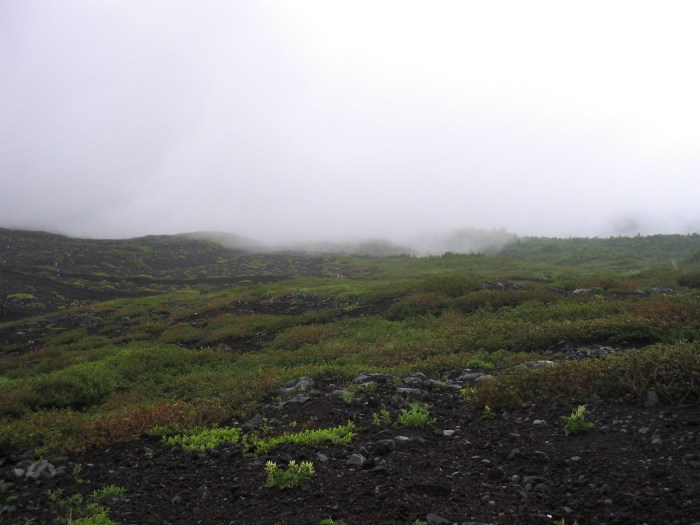
I don’t know what all this means.  Don’t really care.  So whatever, here’s a shot of Fugi in the fog I took back then.  This seems dream-like.  Win.

Looking Up.jpg

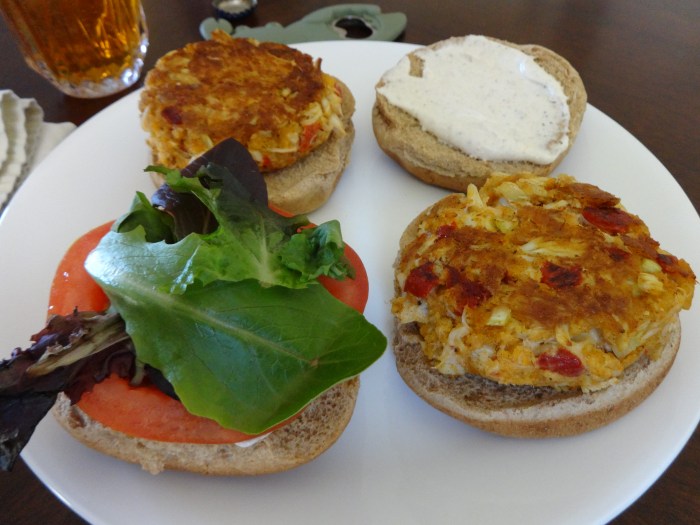
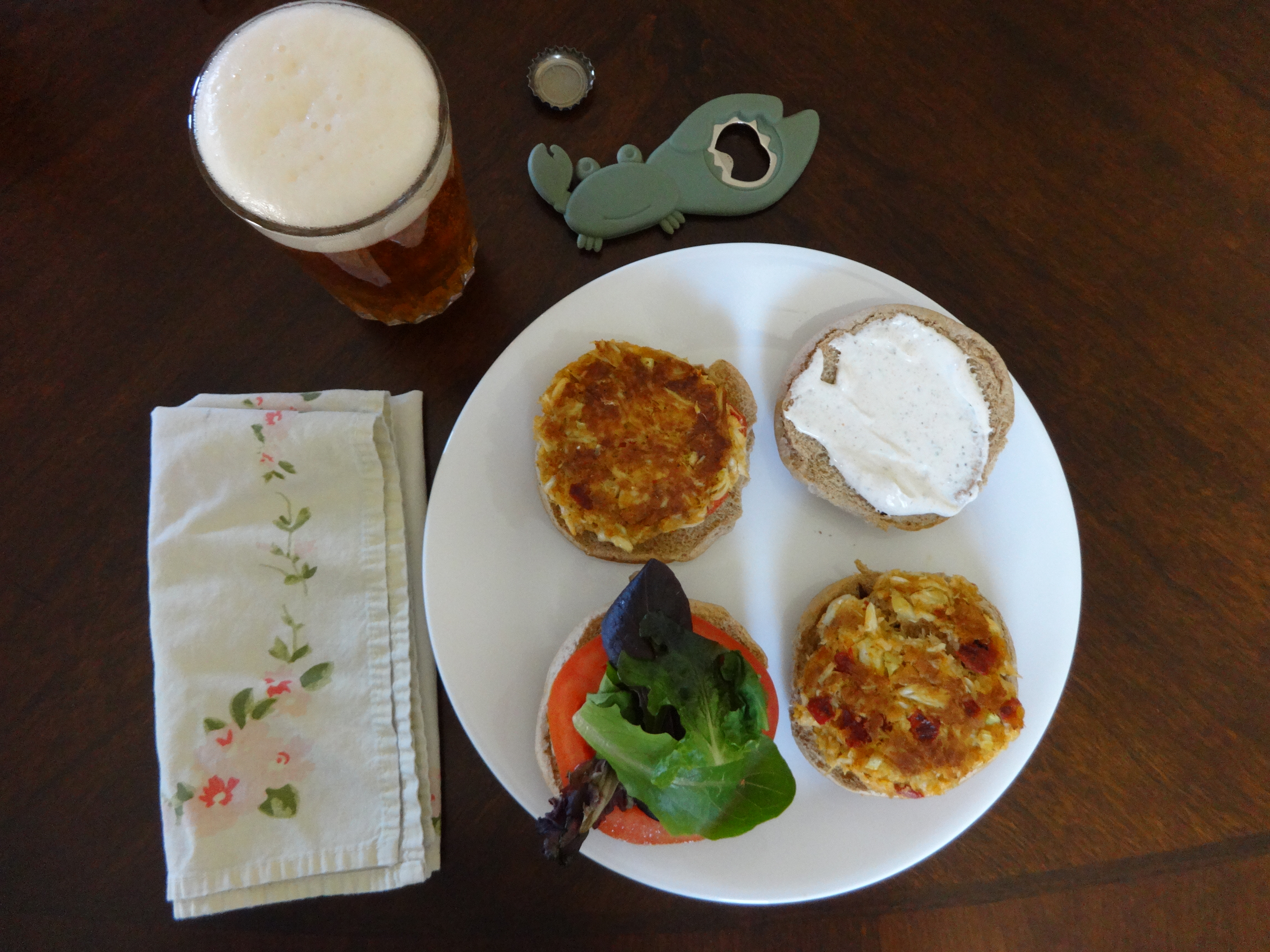
spiced crab cakes with lime cream

We break several cultural rules by melding a variety of the planet’s tastiest spices into your usual crab cake.  The crab thus becomes happy.  Which will make you happy.  Which will make everybody happy.

dsc00640

spiced crab cakes with lime cream

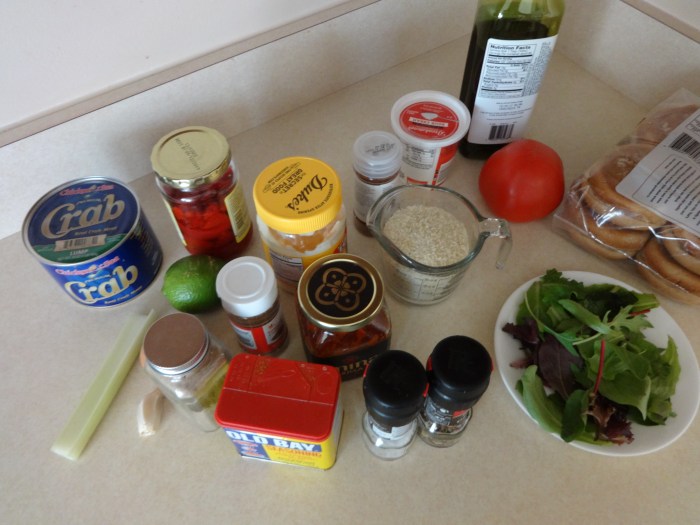
crab cakes

1 pound crab

1/4 cup roasted red pepper, small diced

1 celery rib, small diced

2 garlic cloves, minced

1/2 cup mayonnaise

1 cup panko bread crumbs

2 Tbsp harissa

1/2 lime, juiced

salt & pepper

1 Tbsp Old Bay

1 Tsp cumin

1 Tsp cardamom

1 egg

lime cream

1/2 cup sour cream

zest of 1 lime

1/2 lime, juiced

1/4 tsp nutmeg

1 tsp Old Bay

cooking

1 Tbsp olive oil

bread or buns

1 tomato, sliced

greens

Combine all the crab cake ingredients in a large bowl. Form eight patties, place on a plate, cover with plastic wrap, and let sit in the refrigerator for at least one hour.

Combine all the lime cream ingredients in a small bowl. Cover and let sit in the refrigerator with the crab cakes.

Heat the olive oil in a nonstick skillet over medium-high heat. Cook the patties for about four to five minutes on each side or until golden brown.

Or, grease a baking pan, and bake the crab cakes in a 350 degree oven for 30 minutes or until light brown.

Serve on toasted bread or buns, with tomato, greens, and the lime cream.

dsc00627Let’s begin!

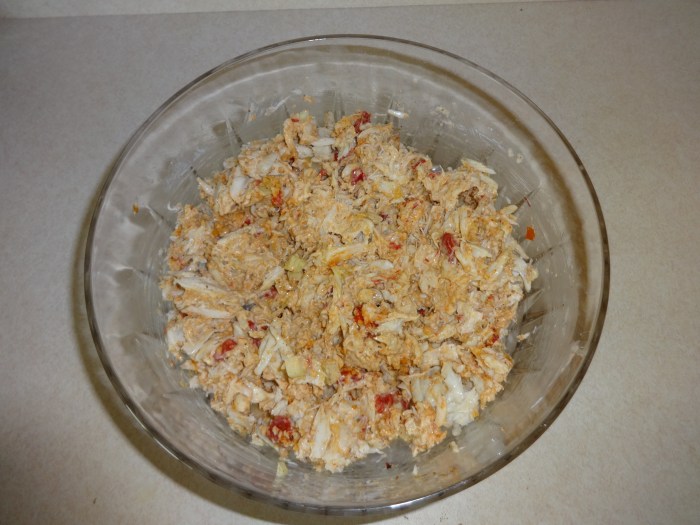
dsc00629Throw all the crab cake ingredients into the bowl and mix with a spoon.  Don’t stir too hard or too much.  You want the mixture to stay a little loose.  Too much moisture is not your friend here.  It using canned crab like I do, make sure you drain out the excess liquid.

We use the necessary awesome Old Bay, but also add harissa, cumin, and cardamom for an extra special taste.  Harissa is a Moroccan chili paste that you can make yourself very easily.  But more and more I see it in the grocery store which is a win for all humanity.  Crab cake enthusiasts or Moroccan traditionalists probably might not agree with this combination of spice.  But to me, breaking the rules is fun.

dsc00634

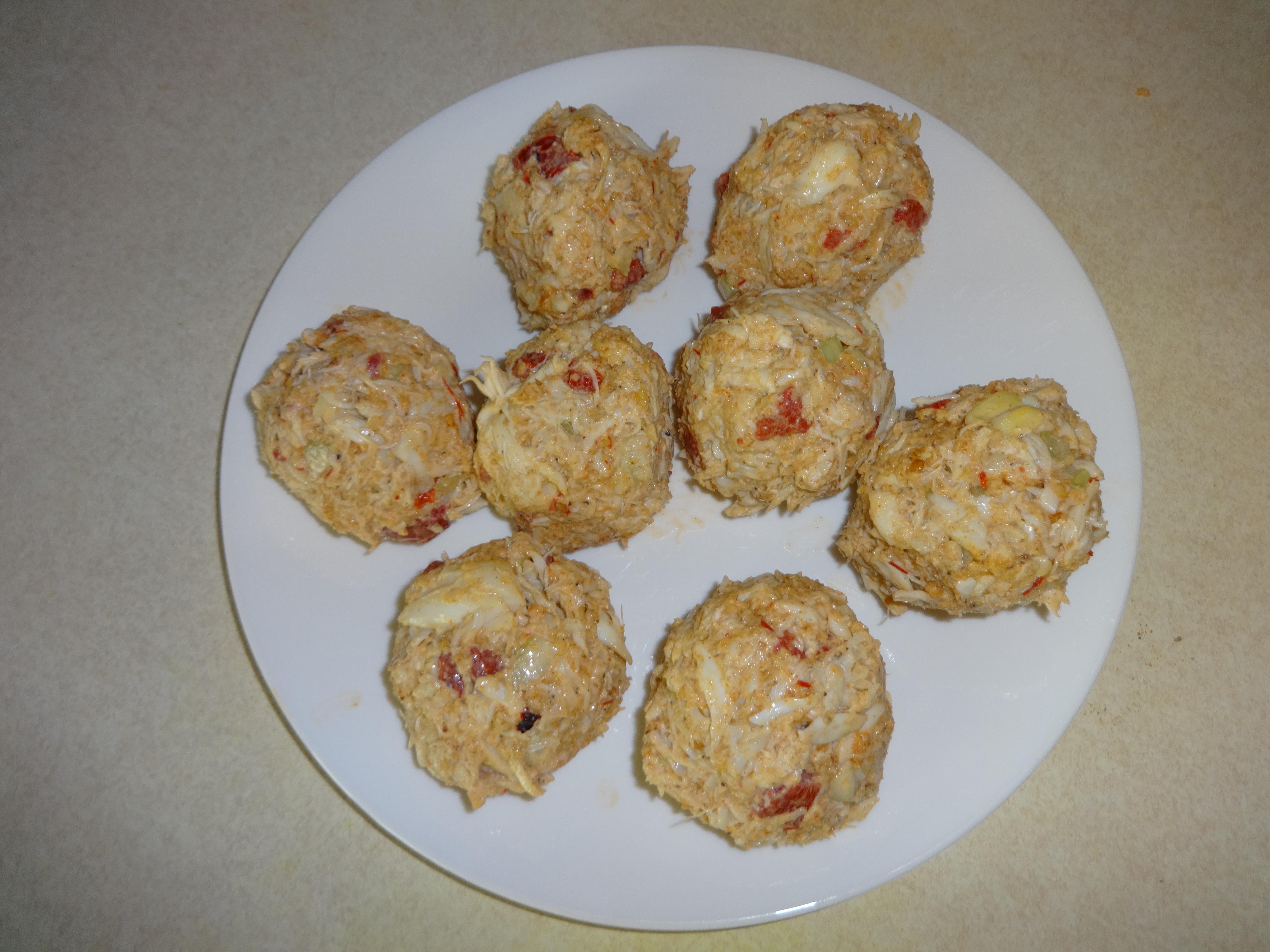
Make eight balls with your hands.  Don’t pack them too tight, you want to leave some of the air inside the cake.  If the balls are too wet, you can add more bread crumbs.  If they won’t stay together you could add a second egg and remix it.  Put them into the fridge for at least an hour so they can set.  You can use plastic wrap to cover or (blasphemy) since it’s only an hour you can just leave the plate as is like I do.

dsc00631

The lime cream ingredients are just put into a bowl and stirred using a fork until it’s all combined.  It’ll be loose at first, but after an hour in the fridge it’ll make a nice and easy spread.

dsc00636

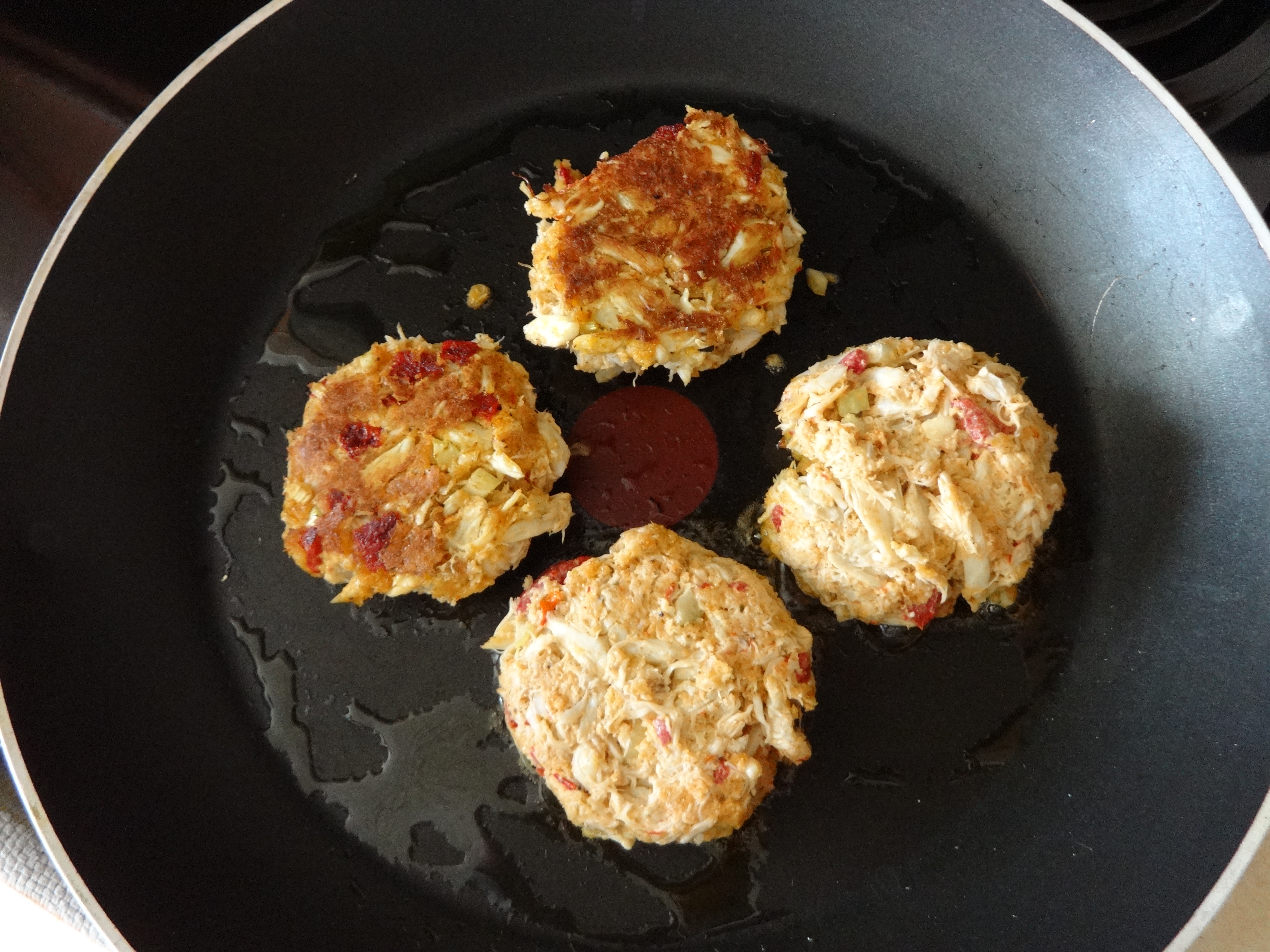
A little olive oil and a nonstick skillet is all you need for less than ten minutes of cooking.  Use a spoon and spatula when turning over the cakes to keep them together as they should be a little loose.

dsc00644

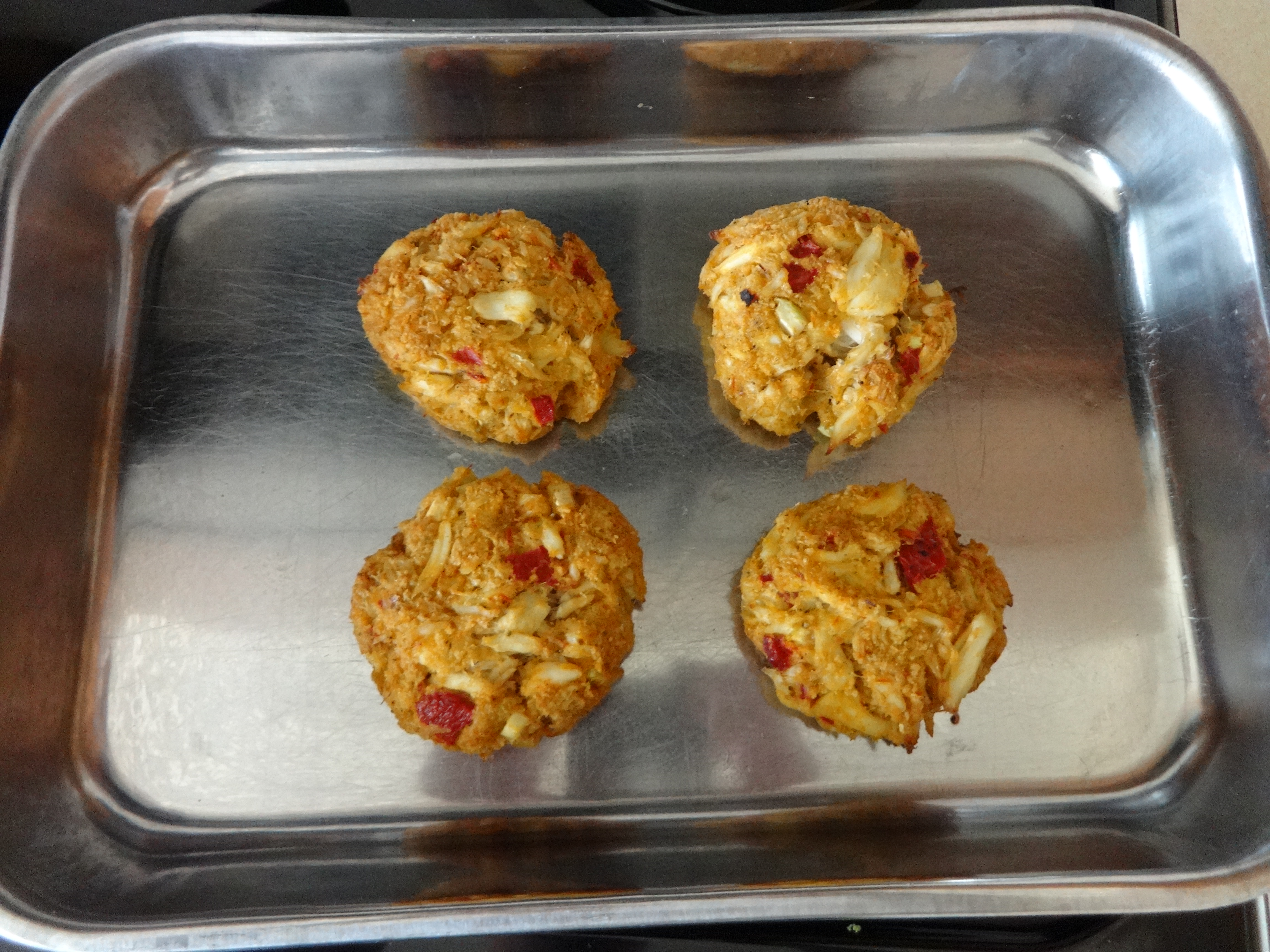
A slightly healthier and easier way is to just bake them for a half hour.  You’ll get a lighter brown color, but it’s less work and the cake will stay together easier.  I use both methods, but usually prefer the skillet.  Try both, and see what works best for you.

dsc00637

You can eat the cakes with the cream on their own.  But I usually toast some bread and add tomato and some greens.

dsc00641

Enjoy life!

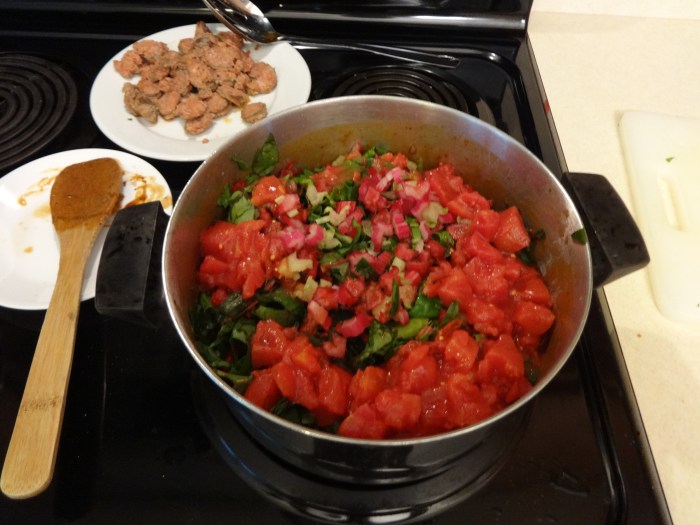
red risotto with chard

This degenerate blog is just a little over three years old and slowly approaching 400 posts laced by the ramblings of an insane man.  But we’ve never done a recipe before despite the role food plays as one of the delightful pillars of my life.  Don’t know why it took this long, probably cowardice, but now it’s done.  There are others.  They’ll eventually make it up here too.  Good times.

DSC00625.JPG

Recipe:


red risotto with chard

4 cups chicken stock

1 tbsp olive oil

1/2 pound sausage, sliced

1 red onion, roughly chopped

3 cloves garlic, minced

1 tsp sugar

1 cup arborio rice

1 cup red wine

2 tbsp tomato paste

salt & pepper

1 tsp paprika

1 tsp oregano

1 tsp crushed red pepper

1 15 oz can diced tomato

1 bunch chard

1/2 cup parmesan, grated

in a pot, bring the chicken stock to a boil and then let simmer

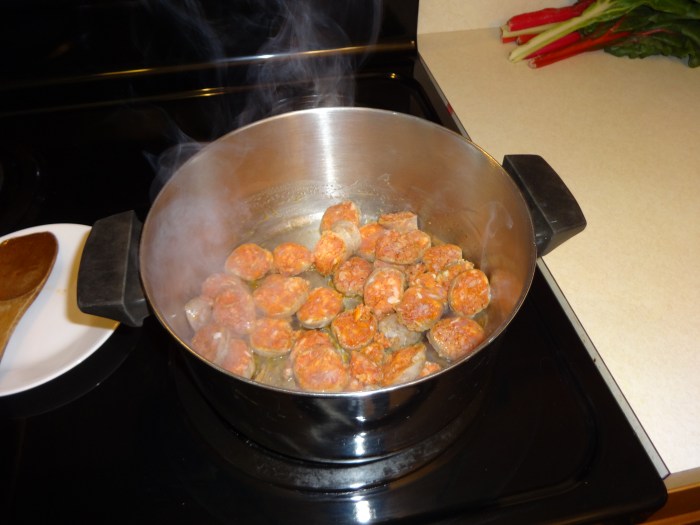
in a separate medium pot or dutch oven, heat olive oil over medium-high heat, add the sausage and cook until brown, remove the sausage and set aside

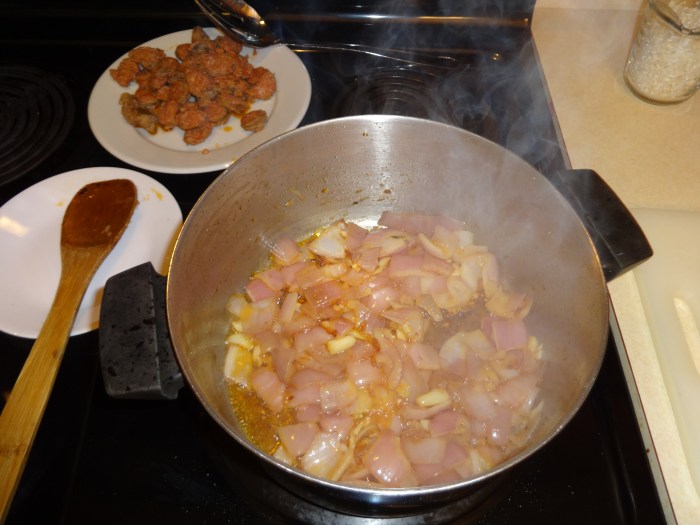
reduce the heat to medium, add the red onion and garlic, and cook until the onion begins to wilt, add the sugar and continue to cook the onion until it’s very brown

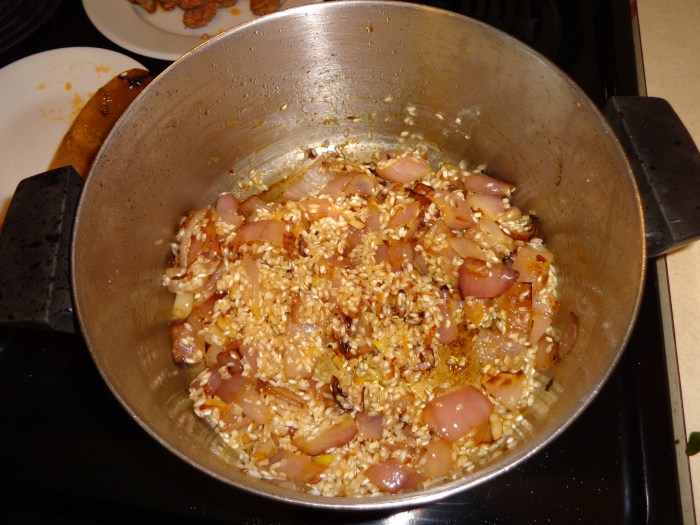
add the rice and stir so that all the grains are coated, cook for one minute

add the red wine and stir, scraping the bits off the bottom of the pot, add the tomato paste, salt & pepper to your taste, and all the spices

when most of the liquid has absorbed, add 1/2 cup of the chicken stock and stir frequently until the rice is just starting to stick to the pot again, repeat 1/2 cup at a time with the remaining stock

while the rice is cooking, roughly chop the chard leaves and dice the stems

when all the stock has been used, add the chard leaves, chard stems, and diced tomato, cook for about five minutes until the dish has a creamy texture

return the sausage, remove from the heat, add the parmesan, stir, and serve immediately


Lunatic Breakdown:

DSC00600.JPG

Let’s begin!

DSC00601.JPG

The recipe works best with any kind of Italian sausage.  Pick your favorite and run with it.  Use a slotted spoon to transfer the sausage to a plate after it’s browned.  You can skim off some of the remaining fat before you add the onion if you want, you know, if you’re crazy.

DSC00607.JPG

We’re using the onion, garlic, and sugar to get a nice brown and rich mixture.  You can turn the heat down and really let this process play out if you want for as long as a half hour.  Until the onion has a brown sheen that blinds you with it’s deliciousness.  But that’s not required, you can get it done in ten minutes, just keep cooking the onion until you get the browning you like.  If it starts to stick to the bottom of the pot, run with it, we’ll get that stuff off later.

dsc00608

When you add the rice it always strikes me how little all that looks.  But then that rice will grow into tasty fun.  Make sure you coat every grain with oil, let it cook there for just one short minute.

DSC00611.JPG

Get the red wine in there and start scraping the awesome stuck bits off the bottom of the pot.  Stir once every few minutes to make sure the rice doesn’t stick to the bottom of the pot anymore.  Use whatever red wine you like.  Whatever you do, don’t drink the rest of the box or bottle with your friends and family.

DSC00609.JPG

My little cooking buddy.  She likes to wrap herself around my feet while I’m at it.  She enjoys being close, and it’s prime real estate for mistakes that result in food falling on the floor.

DSC00618.JPG

Ladle 1/2 cup of the stock in at a time, keep stirring so nothing sticks, and just slowly let the rice do it’s thing.  Risotto is actually really easy to make, it’s just that you can’t leave it alone for more than a few minutes.  You can’t stir it and walk away for twenty minutes to chase the dogs or kiddies, do your taxes, contemplate the concept of dark matter, or binge watch the latest drama where everybody dies.

DSC00614.JPG

I love chard because of it’s bitter notes and the color.  If you don’t like the bitter, you can just dump in a bag of spinach from the store, it’s all good.  Just get something green in there.  I dice up the chard stems and then add them too.  This gives the risotto a little crunch, and also is of the mindset to never throw out any part of the ingredient you can use somehow.  But, if you don’t want to go down this road, it’s perfectly okay to just use the chard leaves and cut off / around the stems.

DSC00619.JPG

Toss in all those leaves, stems, and the tomato can contents.  Stir quickly and thoroughly until it’s all combined.  Be careful, at this stage the rice can really stick fast if you don’t get that chard’s liquid sweated out, so keep on stirring as required.

DSC00622.JPG

Cook for about five to ten minutes or until the rice is starting to stick no matter how much you stir.  Get the tasty sausage back in and remove it from the heat.  Add the parmesan and stir it all up.  I used bagged parmesan here.  The best is probably to grate it off the block if you can but the bag works just fine.

Serve the risotto immediately while it’s nice and hot and before it starts to seize up.  For leftovers, you might need to add a little water back into the risotto before you reheat or microwave it.

You can eat this as a main dish, or as a side dish alongside other Italian type cuisine.

Enjoy life.

Turkey – Ephesus

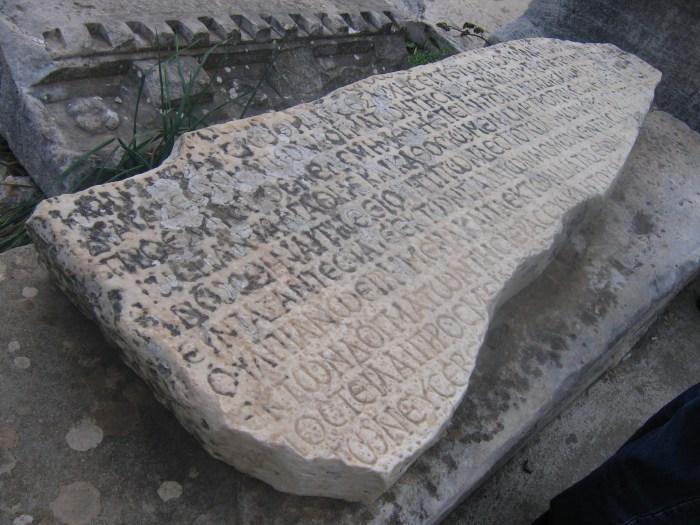
In 262 AD, having already raided large portions of Asia Minor, a Goth force descended upon Ephesus. Outnumbered (and by this point probably also outclassed) the Roman military was unable to offer any substantial opposition. The Goths sacked Ephesus and burned the Temple of Artemis to the ground. One of the Seven Wonders of the World ceased to exist alongside many other major structures within the city. It’s likely that a substantial portion of the population was killed, scattered, or enslaved. Ephesus never recovered.

It is as if aliens descended upon Europe tomorrow and sailed up the Thames or Seine to gut Paris or London alongside millions of people and all their major landmarks. Only in Aleppo could you find a rough template today to compare this to. Except that with Ephesus it was a factor of time. It has taken five years to lay waste to Aleppo, it’s people, and its historical landmarks. It probably only took a few days to burn Ephesus. All that’s left now is broken stone, rubble, and a ghost of what was once one of the major cities on Earth.

Trees grow on bare grass that was the ground floor of some rich trader’s mansion. The fallen columns of one of the greatest architectural masterpieces ever made were ground down for plaster to make lesser buildings. The written knowledge and cultural history of one of the great cities of history is so completely destroyed, so burned, so reduced to waste that it’s actually disputed which year (not which day or month) Ephesus was attacked by the Goths.

ephesus

When you go back and look at places such as Ephesus I’m inclined to divide the history of the human race into two geographic categories. You either live in a town, city, or country that has been a doormat of history or you do not. Those that caught the doormat category, even to this day, have to overcome the problems that trace their roots back thousands of years.

Despite turmoil, wars, and bombing raids, London was completely destroyed only once in 60 AD by Boudica during her revolt. Paris has never been razed to the ground. Depending on how you count, Ephesus was demolished at least seven times over thousands of years. It’s hard to build a long standing, secure culture, language, commerce, and politics when somebody shows up once every few hundred years and devastates it all. I think this goes a long way to explain why Britain and France are relatively stable democracies while Turkey’s still attempting to discover its identity.

London had the Celts, Romans, Saxons, a few Vikings, even fewer Normans, all eventually melded into English. Ephesus by contrast had to deal with this journey through history:

Arzawans

Hittites

Mycenaean / Ionians

Cimmerians

Greeks

Persians

Macedonians / Seleucids

Romans

Byzantines

Arabs

Seljuk

Ottomans

Turkish

Good luck trying to wrap your brains around how all that is supposed to create a stable safe place to live for multiple generations. Sometimes a sustained melding of cultures can create a truly special blend of humanity that enriches a people. Think of the unique joining of Moorish and Christian that Spain traces its roots. But other times there is no blending, there’s just history’s great eraser that does away with the old, and sometimes never replaces it with the new.

Kemal Atatürk’s vision was that history would be undone, his country remade. He wanted to wipe away the chaos described above. Turkey would be reborn into something new. Whereas religion was the one great binding principle, Turkey would become an ultra-secular state. The Turks would even get a brand new alphabet. What people could and would wear would be dictated. Those who lived in Turkey would become singularly Turkish, one way or the other. The Kurds were oppressed and the Armenians simply liquidated.

In retrospect, it seems clear that this was never going to work. It relied entirely on the personality of one man, and the ability of those with guns to enforce it. Whenever things got out of hand the army would simply step in to preserve Ataturk’s legacy. Turkey suffered more coups than most African states. If the planet’s last hundred years or so have shown anything, it’s that you cannot build long term prosperity in a country where the chief method of civil institution is violence. Eventually things come off the rails. But in the interim, folks can generally muddle through.

So in this sense, Recep Tayyip Erdoğan’s rule is actually the direct successor to Atatürk’s legacy. In that he’s running the show simply because he controls the most guns. The recent coup, while dramatic and bloody, never had widespread military support. Erdoğan controls the army, so he controls Turkey.

Modern democracy and prosperity require many civil institutions that were built up over centuries such as freedom of speech, rule of law, freedom of the press, and so on. How exactly would these have emerged in Ephesus when every once and a while every civil institution was doused in flames?

I’ll roughly wrap up this line of thinking, because I want to talk about Ephesus’s golden age, by saying I’m not optimistic about Turkey’s immediate future.

In the short term it’s the Erdoğan Show. This week he submitted to parliament constitutional amendments to give him unchecked executive level powers. He will get them. He will get them because he wants to be Sultan and Atatürk II. He will get them because he controls the guns. And the guns control the voting, education, media, and just about every other aspect of Turkish civil society. The Erdoğan Show will continue until he dies. After that, what?

It just depends. Sometimes a country can right itself after incompetent one man rule departs. But even if everybody realizes the nightmare was indeed a nightmare, it’s hard to fix things. Just look at what Venezuela, another broken democracy, is going through even though Hugo Chávez is long since dead. Even if Turkey’s ultimate future is bright, I think Erdoğan will ultimately set back progress by fifty years. What comes after that, is up to Turkey’s people.
ephesus-2

The ruins of Ephesus are at the foot of Selçuk, the modern Turkish town. In ancient times Ephesus was on the Aegean Sea. But over the centuries the Cayster River silted up and now the entire area is several miles inland. If one takes a more nuanced view of history than I describe above, you can simply make the argument that Ephesus died out once it lost access to the Aegean and was no longer able to serve as a major port.

A good first stop is the ruins of the Temple of Artemis which are a few hundred meters from Selcuk. What little is left is among the oldest of the places available for visitation. The temple underwent three phases. The Bronze Age shrine might be among the oldest on the planet. This original temple was lost to floods in the 7th Century BC and was replaced by the more recognizable Greek columned temple around 550 BC. In 356 BC a true fringe lunatic of a man burned it down. Starting in 323 BC it was slowly rebuilt to the final recognizable structure.

artemis

Ruins of the Temple of Artemis looking northeast with Selçuk in the background. The single freestanding column is rebuilt from various wreckage they found. Imagine the size of the temple by contemplating a structure that fully filled the entirety of the basin in this photo with 127 total columns. Note the Ionic fluting on the fallen column blocks. Also see in the front of the shot the square holes cut into the eroded column blocks. Each column had a wooden centerpiece which they stacked column blocks through as they built up the height, in the case of Artemis, 60 feet high. The blocks were then fitted, sanded down, fluted, and decorated to give the column a single cohesive look meant to last for thousands of years. The problem with ancient Greek temples was they required wooden roof beams to support the marble tiles that typically sat atop. The intricate concrete roof construction one sees in say the Pantheon didn’t exist yet. This left most ancient Greek temples very vulnerable to fire, despite their stone base and columns. This was the cause of many Greek temples losses, as of course with Artemis as well.

ephesus-map

One of the many maps of Ancient Ephesus. To the left you can see the bulge emerging from the west of what was once the harbor inlet from the Cayster River that lead to the Aegean. The Temple of Artemis and Selçuk are off to the northeast. Note the extent of the city walls. Depending on how you count, Ephesus surely had over one-hundred-thousand citizens. Always a major city state during the Hellenic eras, it reached its cultural, economic, and political heights during Roman rule. For reference in subsequent photos, the Library of Celsus is #20. The Great Theater is #25. Harbor Street is #26.

library-of-celsus

The Library of Celsus. A couple of things to keep in mind as you look at this. First, the façade is a complete reconstruction. Second, look back at the map. As impressive as the library is, it’s one of the smallest buildings that once called Ephesus home. Despite the building’s small size, the library was among the largest of the ancient world housing over ten-thousand scrolls. The interior was burned out by the Goth attack, the façade collapsed centuries later. How much more would we know of the ancient world if at least some portion of the library’s content had survived? Completed in 120 AD by a son to honor his father, both of whom where Roman counsels, it’s a structure that mirrored both its Greek and Roman roots.

grand-theater

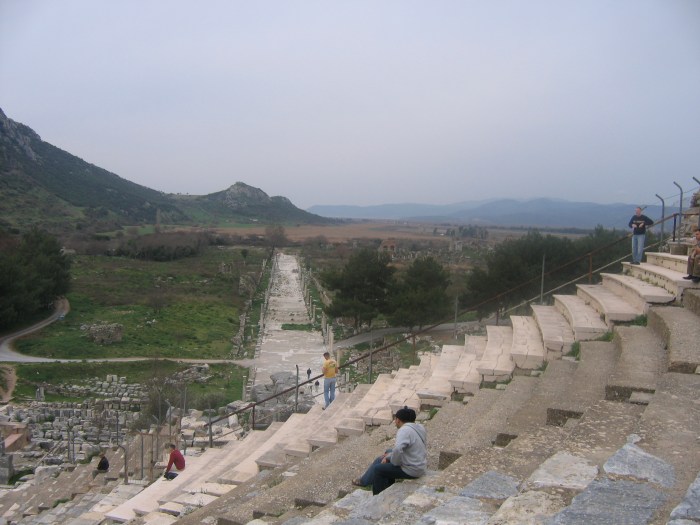
Grand Theater of Ephesus. Likely the largest theater in the ancient world, it could hold a crowd of 25,000 people. Greek theater was probably performed through its history and in the later Roman years people died there for the amusement of their fellow humans. I can’t begin to describe to you, but hope to loosely capture in pictures, just how big this place is. It rivals modern stadiums in its size and scale.

grand-theater-stands

harbor-street-above

From the Grand Theater seats looking west down Harbor Street. This must have been quite the view with all the buildings and the ships back in the day. The inlet to the Aegean and the Harbor Gate would have been at the end of this road.

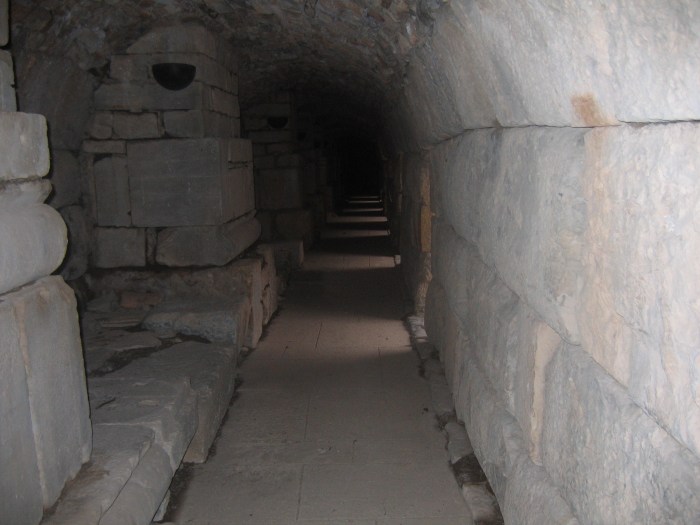
Theater Stage.jpg

theater-backstage

Backstage of the Grand Theater.

Harbor Street.jpg

Harbor Street. Not much is left, and so your brain is left to imagine what it would have looked like. All the way down to the harbor and the ships. The tens-of-thousands of people who walked this street and lived out their lives.

Mosaic.jpg

Turkey – Mount Koressos, House of Mary

When you travel in groups compromises are always necessary. When the group disagrees you can sometimes divide up or sneak off on your own for a while. Other times you just have to deal with it. When you share hotels, cars, buses, trains, and meals with your companions, it’s generally not a good idea to fight all the time. I’ve been on trips where this happens and it truly kills everything.

Being in Turkey I had about five-hundred things I wanted to do, history being at the top of my list. So when we were headed to Ephesus I was fired up. We only had one day there. I could spend six days in Ephesus and not get bored. But then, other members of the group wanted to take most of that one morning and visit the supposed House of Mary which is near Ephesus. I hear this and I’m like, “Oh, uh, …” [checks watch] (I did indeed wear a watch then, which seems strange now.)

I was raised Irish / English / Sicilian Catholic, so you know it’s seriously in my blood. But I was also raised with a light touch of it. My own Grandmother would frequently talk with us about this or that doctrine, Pope, etc, that she disagreed with, alongside her own take on life. It’s a very liberating American take on religion. Nowadays, depending on the barometric pressure outside, I can either truly believe or am an atheist or whatever. A lot of it depends on my mood. So basically I would not consider myself very religious, but I really do try. In this Turkey travel group though were several ultra-hyper religious types. So they wanted to go see the House of Mary and were very set upon it.

Given how much of Ephesus was on my brain I could have protested. I let it go in the name of cohesion. This was the right choice. I figured it would be nice to see the mountains, maybe say a prayer, and generally just enjoy the ride. This was exactly what happened. I don’t regret it.

The full titled House of the Virgin Mary sits atop Mount Koressos which is a few miles from Ephesus. It’s a small house and religious shrine. By which I mean it’s a religious shrine that reminded me a lot of the shrines in Asia, specially Japan. As in, it’s a commercial tourist destination. There’s very little religion about it. In say Japan, sometimes you’ll be walking around temple grounds and there’ll be these people hocking Hello Kitty fascism toys from stalls. I always found this odd, to me a dead quiet church is my pinnacle of prayer. But in many cultures it’s not a big deal to meld commercial and religious ideas on the same site. This is the case with Mount Koressos.

It’s like going to the Mary exhibit at Disneyland. There are several cafes, a wishing wall, tourist buses everywhere, magic water, it’s quite the atmosphere. And this place has quite the crazy tale as well. My first thought was, “There’s no way Mary was there.” I mean, what do I know? But still, it didn’t seem quite likely to me. I get it, Popes have visited this place, but still. Feast your brains upon this tale of discovery:

– Anne Catherine Emmerich, German nun, mystic, and later saint, has a bunch of visions which she imparts to the brains of others.

– Clemens Brentano, author, writes books based upon her visions about Jesus, etc, etc.

– In 1852, Brentano provides a rough description from a vision of a house near Ephesus that John supposedly built for Mary where she lived out her days.

– In 1881, French priest, Indiana Jones copycat, and lunatic Julien Gouyet uses this book’s description to find and identify the house on top of Mount Koressos. Nobody believes him.

– But by 1891 at the urgings of Sister Marie de Mandat-Grancey, folks get onboard with this idea and the house is made a shrine and taken under management. The first Pope shows up within a decade. Half-a-dozen other Popes have also visited.

So is one to believe this tale of visions, translated through a kook author, and a bunch of people wandering around the 19th century Ottoman countryside with a book in their hand? I’d have to say I don’t. I’m pretty sure that whatever Mary was that she died close to her birthplace and is buried out there. But whatever, it’s all good, people can pray anywhere. That’s the cool part about prayer.

And whatever the house is, it is indeed neat to visit. It’s very old and probably a good example of the style and architecture of ancient dwellings in this part of the planet.


Mary House.jpg

Side of the House of the Virgin Mary


When there, I kind of separated myself from the group and puttered around. When you go inside the house it’s a converted chapel, very small. I didn’t take a picture inside as it didn’t seem right. I prayed for a short bit and then was on my way. It was a nice moment, but not what I would call any kind of religious experience.


800px-House_of_Virgin_Mary2.jpg

Not my shot, taken from Wikipedia. Note the very ancient hallowed c-grade velvet rope, two Apostle endorsed codex plastic information placards, and Papal holy water blessed exit sign


Outside there is a wishing / prayer wall that folks can leave notes on. There are thousands of notes. There is also a water source that is said to heal or grant wishes or whatever. I did not drink the water

For me, the ground was the better experience. This was my chapel visit.  This was my Mount Koressos:

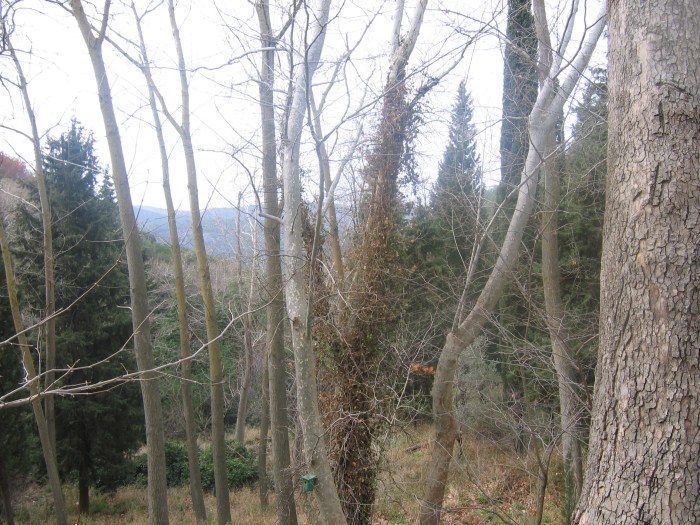
Forest.jpg

I’ve got dozens of various shots of nothing but the woods from all across the world. Two of my favorites are on my desk, one from American and one from Japan. I’m always struck by the differences and similarities between them. Wherever you are, the woods are always similar enough that you can recognize ideas, feelings, trends that join you to that remote location. In the sense that the woods near your own home and country do much the same. It’s that spark of fellowship and belonging that most closely identifies us as part of one human race and planet. It’s only there for a moment, but it’s a good feeling. Nature, God, whatever, does that to you. Amen.

Turkey – Marmaris harbor

The next three posts are going to be about my trip to Turkey and it’s history.  These will be a little personal for a variety of reasons.  This below shot is of my first day there, specifically Marmaris, which is where we landed.

Marmaris used to be a small fishing village but has essentially turned into the most tourist of tourist destinations.  It’s not a bad place, we had a good time, but it’s among the most aggressive I’ve seen in terms of fleecing the visitors.

For example, one of the best meals I’ve ever had was in Marmaris.  Turkish meats, prawns, the thing where they cook the fish inside a salt shell, Turkish beer, it was awesome.  Unfortunately the owner lied to our faces about his prices and tried to fleece us at the register.  We had to negotiate him down which was tiresome.  Overall, well worth the meal, just silly.

Marmaris has a pretty decent harbor and throughout history it’s been used by Greeks, Persians, Macedonians, Romans, Turks, and so on for both trade and military purposes.  Today’s it’s all tourism though, specifically Russians.

I would imagine that after Turkish pilots shot down the Russian jet and Putin cancelled tourist visas that Marmaris’ economy suffered immensely.  With Putin and Erdogan’s dictator’s détente, I figure they’re looking forward to a profitable upcoming tourist season.

marmaris-005

Sunset over Marmaris harbor