Alexander Part II: The journey aboard the Memnon

memnon.jpg

Years later, we would often debate on who had made such a grave mistake.  With the remains of the previous night’s raki still fogging our brains every memory was clouded by nonsense.  And so each version of events was as different as the personalities in our party.  But I for one, regardless of whose mistake it was, am always reminded of a tenant of life: Never ask a thief to buy something for you.

And so after an expert, hearty breakfast prepared by one of Zeki’s men, we prepared to depart Istanbul bound for our adventure.  Stelios met us at the central terminal having bought the tickets that (somebody) had volunteered him to procure.  With glee, and a slap upon his packet of papers did Stelios state with a flourish, “Granicus.  Let’s go!”

All of us stared at Stelios without comprehension.  Until Mut offered, simply, “Granicus is Ottoman.”

“Yes!” Stelios lit a cigarette and dragged with pleasure.

“We’re going to Greece,” said George wearily.

Stelios waved his lit cigarette, “Why would we…”

“Greece is where Alexander started…”, George implored.

“…but to find Alexander,” Stelios clapped his palms together, “we must of course venture to his first great victory against the Persians!”

Mut shook his head, “Greece first.”

“No, Granicus,” Stelios stabbed his cigarette, “We will let you guide us through the oh so many Moslem worlds that await us, but for the moment, this is my part.  My part, and to Granicus we go.”

Mut again, deadpan, “Granicus is Moslem.”

Either out of frustration or sheer drive, Alianna stepped forward and ripped the tickets from the packet, and with the slightest of whispers did state into Stelios’ ear, “Idiot.”  And she was off toward the ticket office.  The rest of us meekly and with resignation followed.  She returned shortly afterwards with the steamer tickets for Chalcis.

Alexander was born in Pella, in theory.  But at that time he was just a baby, a human, and a reasonable calculation would have termed his political future (and his very life) doomed.  We were bound for Chalcis, and then through the dusty background of the Greek countryside we would edge the outskirts of Attica and then cross over the borders into Boeotia.  Finally we would stumble upon a little hamlet, the place where Alexander was born.  Chaeronea.  Granicus would come, but only later.

We bade goodbye to Istanbul, a place we would remain inexplicably linked to throughout our adventures but would not see for a very long time.  Zeki had left me with a great deal of letters and contacts for our forthcoming journeys.

The docks were a mass of humanity.  Shoulder to shoulder we pushed through the crowds for the steamship piers.  All of Istanbul seemed primed to dispense with most of the day’s business before the afternoon, before the heat returned.  Yet surrounded by traders, hackers, herders, moneymen, longshoremen, one quickly heats up anyways.

As always I was glad for my loose traveling clothes which equally fit a sun scorched mountain as a busy dockside.  George’s apparel quite agreed with my style.  I didn’t know how Mut and Stelios did it, with their tailored and pristine suits, saved from a bath only by the handkerchiefs they repeatedly bore.  Or Alianna, who wore her styled intoxicating garb with grace, but seemed to carry no handkerchief nor any sweat upon her brow.

We plowed our way to the jetty and our ride in Memnon, a coastal steamship whose material condition seemed perfectly suited to safely take us the seven-hundred yards across the Bosporus without incident, but not much further.  I made a note to thank my Uncle for teaching me how to swim the next time I found myself compelled to pray at some point in the forthcoming month.

I observed with pleasure the timetables and that our journey south would likely mirror the routes in which the triremes had sailed these waters.  We would hug Ottoman Europe and the Greek coast until we met Chalcis.  We would stop for passengers by choice.  The Ancient Greeks had to stop most nights and pull their vessels ashore just to remain afloat.  Our journey would take two days, theirs took weeks.  We would eat comfortably amongst our fellow passengers.  They would cook along beaches by the fireside.  Despite Memnon’s condition, I felt safe enough to enjoy the forthcoming ride.  They praised the gods every time their journey ended without them consigned to the deep.

As we pulled from the shore we left behind the heat that emanated from the city like a bird fleeing a warm desert rock.  The cool sea breeze dried the moisture from our faces and we drank it in as energy more powerful than the best of coffee.  Though Alianna had already found a mug of that too, and I began to wonder if she would always have some attached to her hand.

Memnon’s captain helmed her with the skill of a man who has done something thousands of times, effortless and with art.  The Bosporus certainly had all the charm of history, but could have done without the filth that clouded its historic waters.  After five thousand years, civilization had taken its toll on the cliffs, the stark beaches, the fishing settlements, and suburbs of the great Ottoman city.

I found my forearms planted upon the rail until the sun reddened the back of my neck.  Mothers dumped buckets of waste across the shore as children played behind them.  Fisherman plied their trade in thumb sized boats unchanged in their design since Alexander.  Bland villages found their way atop bluffs, astride cliffs, all competing pell-mell for access to the sea.

It was difficult, impossible even, to accurately imagine a time with most of this land as barren countryside between the oasis of villages that dotted the desolate landscape like stars in the night sky.  Much to my sickness, I allowed my mind to wander too far, too beyond usefulness.  And my thoughts turned to the reality that all our ship passed as it strode south was now in service to the maw of one singular man in The Sultan.

So much history, so much progress, and yet a poor fisherman still conducted his life driven by base needs, equipped with the minimalist of technology, and still bound by fate of the same kind of ruler as had been in charge for longer than it took the wind to smooth jagged rocks.

Were my adventures, my efforts any different?  I began to regret ever coming upon this journey.  I suddenly found myself wondering what in God’s name I was thinking.  I felt the need to escape.  My Browning, expertly tucked inside my belt at the small of my back, round chambered, began to feel three times as heavy.  I wanted the adventure, but I felt as if I didn’t want to go through the effort to get it.

Only shame kept me from doing anything other than gutting it out.  And the hope that once we really got started, things would begin to feel better.  Though my companions were all volunteers, and certainly knew the danger, I wondered if they understood just how many of those I’d traveled with in the past were by now but dust and bones.

George seemed much the same, only more so.  It seemed Allah’s sight did not progress beyond the brow of the Ottoman ship, and given the large number of Greek passengers, alcohol was served with abandon.  It wasn’t long before George was drunk, and stayed drunk.

Mut gambled, and gambled.  Then he gambled some more.  Cards, dice, dominoes, what bird would get the next fish, what time we’d make our next port, the fate of his daughter (I don’t believe he had one), and whatever else struck his moment.

Stelios seemed glued to the stern, where he had somehow procured the finest of deck chairs.  There he planted his liberated bare feet upon the rail, his jacket off and sleeves rolled, leaned back and read almost anything he could find.  I did not inquire where he got the chair, one that seemed fit for a king, or perhaps a steamboat captain.

I tried, quite hard, to make myself useful in what became an expedition for Alianna to talk to just about anybody who seemed capable of conversation.  It quickly dawned on me that she either relished it or needed it, constantly, it was her alcohol, her gambling, her reading material.

She seemed to select candidates from among the other passengers.  Once she found her mark, whoever was the most interesting, they became her focus to the exclusion of all others.  The Sultan’s detective from Gallipoli who was on the case but bound for the wrong port, the accountant from Alexandroupoli who had just made his fortune, the graceless Thessalonian grandmother who Mut couldn’t beat at anything, and the Albanian child who wrote poetry in pencil on the margins of discarded newspapers.

I couldn’t keep up with her, much to my disappointment.  I didn’t know yet if I wanted her, but any man in the presence of any such woman would be inhuman not to desire at least some attention.  As it was never forthcoming, I found myself retiring to my meager cabin more and more.  Often with the kicker required to relax and sleep with ease, though not nearly at the levels George seemed to require.

Somewhere along our brief time at sea I once again had that feeling of being watched.  But my mood, the drink, or the benign nature of riding a derelict steamship all combined to force my aspect into one of complete disengagement.  If we were watched, I didn’t care.  It didn’t matter to me.  The adventure had just begun, but perhaps had already lost its edge.

It had never been that way for Alexander.  His adventure took half a decade to lose its steam.  Mine lasted three days.

But as with all things, life can turn at any moment.

And in the dark of my cabin, well into the dead of a silent night, was broken by pounding, a sharply opened door, and a wide-eyed-bare-shirted Stelios who scraped, “George went over the side!”

I was out the door in a blink and darting with Stelios towards the stern.  Our bare feet patted the deck in slaps.  “Why didn’t you go in after him?” I fiercely shouted.

Between breaths, “I can’t swim, by God.”

As we made it to the stern and Stelios’ deck chair I nearly vaulted over the rail but found it nearly impossible to see anything other than the whitewash of the wake against black water and a cloudy night sky.  Within a second I came to the overwhelming calculation that a drunk George was a dead man the second he departed the boat and well before he ever hit the water.

And then my eyes caught up with my nerves, and I realized that Stelios’ deck chair hadn’t been vacant, but very much occupied.  I snapped around and behind me, very much seated, was George.  I then received the unbridled laughter of them both.

Out of relief, and remembering things I had done in my past, I began to smile and chuckle, but fueled by anger I grabbed for Stelios’ collar, but got his neck instead forgetting he was without a shirt, “In God’s name are you insane!”

“His face,” Stelios spit to George, “His face was the payoff.”  More laughter.

George, his eyes barely open but hopeful, “We’re out of fuel, have you got any money?”

I turned about, my palms on my head.  Then came about again and rammed a crunch of bills from my pocket into George’s chest.  He was on his feet and headed forward far faster than he should have been able in his condition.  And I suddenly knew I needed a huge pull of whatever he returned with.

Unconsciously, I began to smile, widely.  Then I laughed, and felt alive, so very alive.  Stelios, now clearly intoxicated to my calmed eyes, clapped me on the shoulder and leaned in, “Just so you know, I really can’t swim.  Not a bit.”
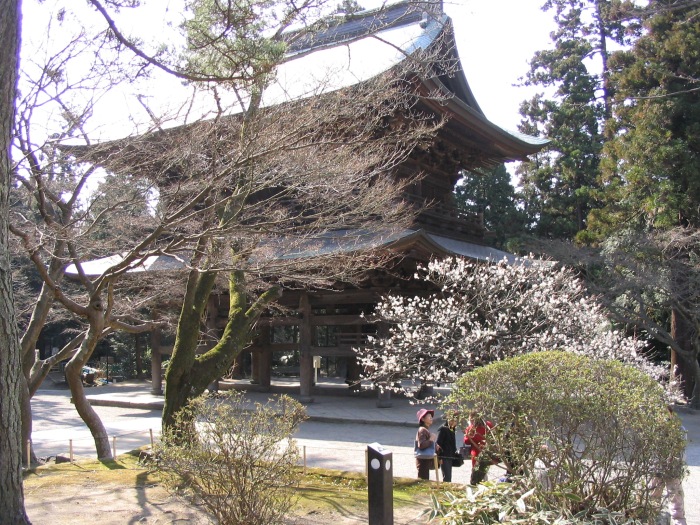
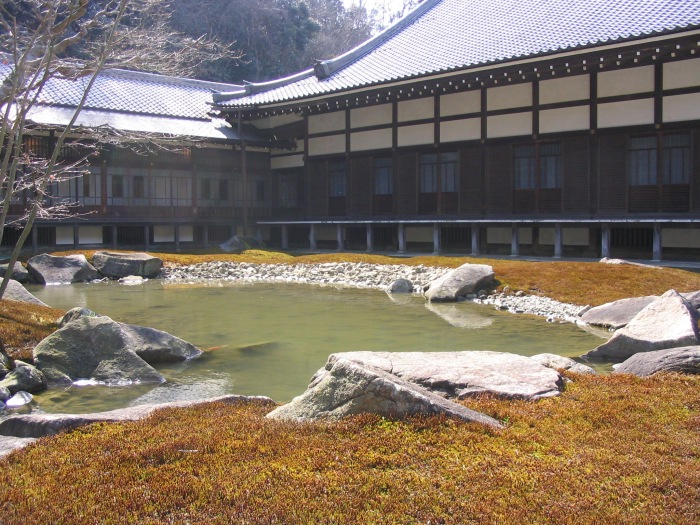
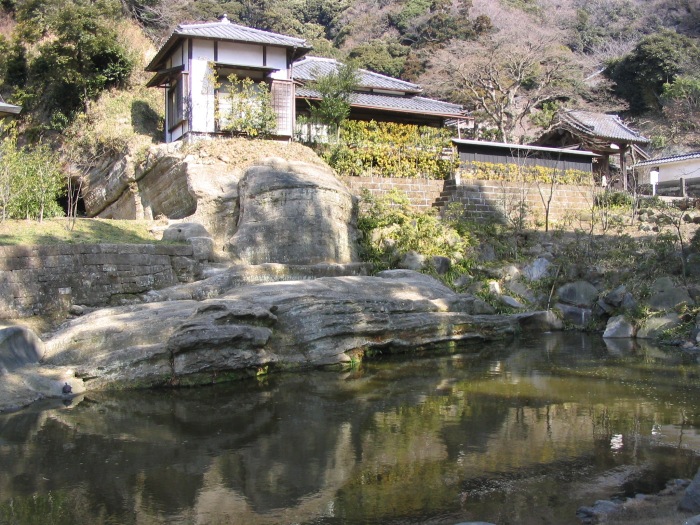
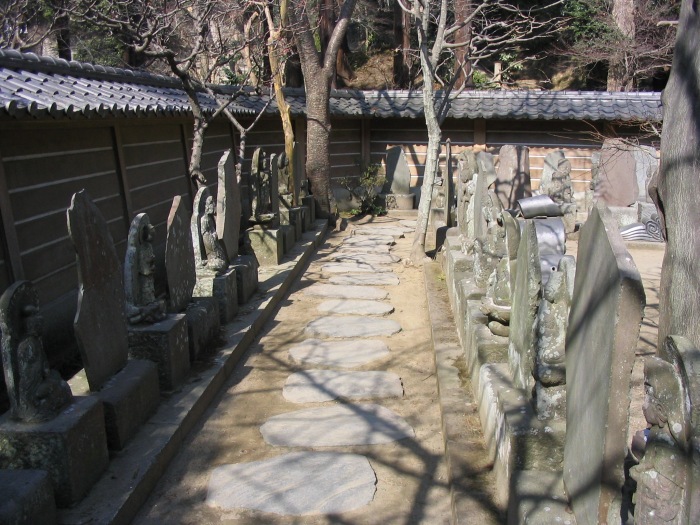
Kamakura – Engaku-ji

Lost amidst the fervent nationalism that’s now the norm in the Western Pacific is how longstanding and deep the ties are between peoples.  From 1274 to 1281 the Mongols, alongside their Chinese and Korean vassals, conducted a series of invasions against Japan.  All failed for a variety of reasons, not least of which was a series of typhoons and the emergence of what would become the samurai warrior class.

In 1282 to commemorate the victories, honor the dead on all sides, and to push forward Zen Buddhism in Japan, the then shōgun Hōjō Tokimune ordered the construction of Engaku-ji.  He enlisted the help of a Chinese monk in Mugaku Sogen.  Zen became a huge part of the ruling culture’s psyche and was integral in the emergence of the samurai and what they were.

In the sense, Hōjō got exactly what he’d wanted.  He’s buried there.  And while the days of the Kamakura Shōgunate long passed it remained a key feature in Japanese Buddhism throughout history.  It’s a must see if you’re anywhere near Kamakura and it couldn’t be easier to get to via JR East’s Yokosuka Line which essentially drops you right at the temple entrance.

Engaku-ji3

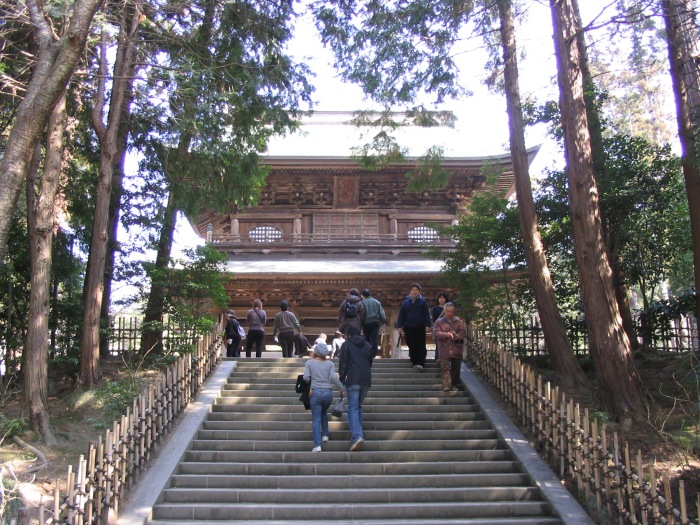
The Sanmon, two story main gate, looking from it’s back towards the entrance.  As is typical for just about any ancient Japanese structure, fire constantly requires rebuilding.  The current version was reconstructed in 1785.

Engaku-ji15

Now walking up from the front of the Sanmon.

Engaku-ji

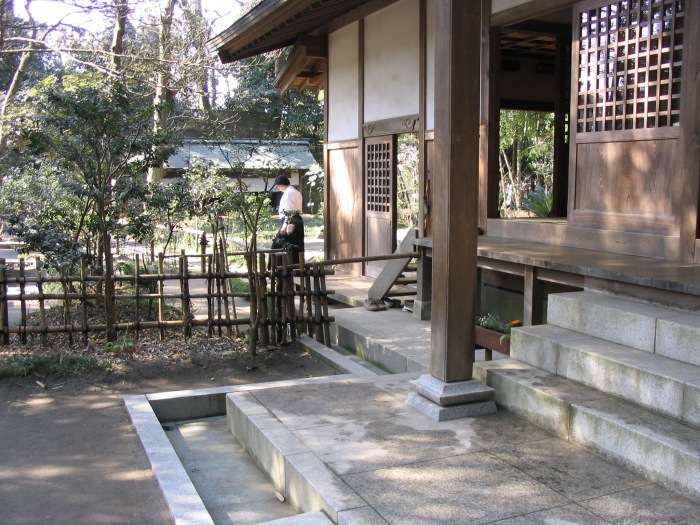
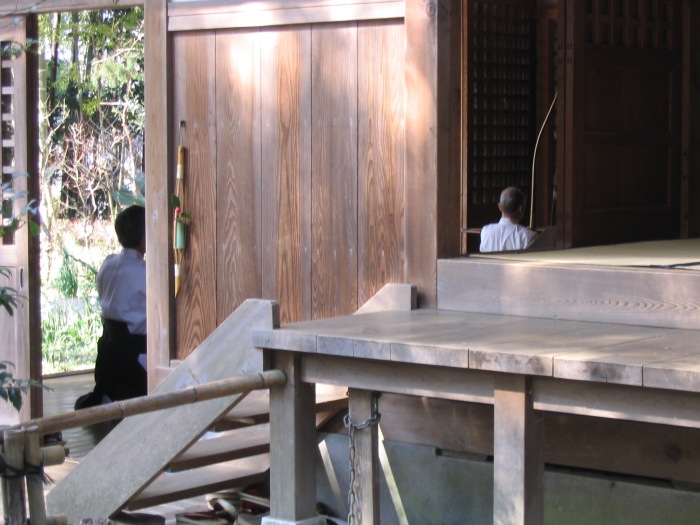
Engaku-ji is still a functioning temple.  I didn’t get too close but there were folks practicing archery.  Note the target in the distance.

Engaku-ji1

Note the guy on the right with a typical Japanese longbow, as tall as a man (he is kneeling).  Despite the reputation of the katana, I suspect the real killers on most Japanese battlefields were the archers.

Engaku-ji2

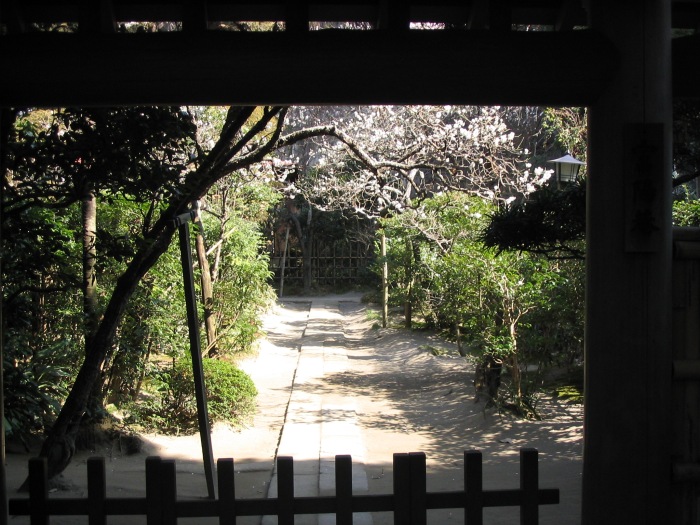
I love the contrast in light on this shot.

Engaku-ji5

Find the fishy.

Engaku-ji6

The monk’s quarters.

Engaku-ji8

Engaku-ji10

Engaku-ji13

Engaku-ji14

The Great Bell, Ogane, cast in 1301.  The largest temple bell in the wider Tokyo area.

“to see more clearly to the end of the business”

242 years ago 56 men signed a document that made them traitors.  This incredibly brave and reckless act changed humanity.  We take their ultimate success as a fact of history.  For them it was far less certain.  Not all of them lived.  All of them suffered.  All of them fought.  And victory was ultimately theirs.

If I can manage to remember, every year we’ll take a look at one of these men and reflect upon their lives.

Thomas McKean – Delaware

Son of a tavern keeper whose parents immigrated from Northern Ireland.  He was a lawyer at age 21 and already on the move.  Like many of his contemporaries he bridged the gap between the law and politics.  In many cases he held jobs in both camps at the same time.

County attorney general, general assembly representative, judge, and ultimately assembly speaker were just some of the titles he held.  He married at 32 and spent ten years with Mary and had six children with her until her early death.

Often forgotten is that the Revolution was as much as civil war as anything else.  McKean was a member of the pro-independence faction of Delaware and spent many years prior to 1776 in the political fencing act with his neighbors who were pro-British.  He remarried in 1774 to Sarah and had four more children.  I would gather he ultimately had a hard time remembering his grandchildren’s names.

As early as 1765 he is already an openly active member of political organizations dedicated to resisting the power of the British crown.  During the crucial years came in 1774-1776 he’s one of the most fervent speakers pushing for Independence.

Immediately after his 1776 Independence vote at Congress he assumed command as colonel of a regiment of militia.  And so bizarrely it’s believed he didn’t actually sign the Declaration in 1776.  It’s thought he signed it many years later as one of the original voting members was permitted to do so.

He spends most of the war in Congress and is it’s leader at the time of the surrender at Yorktown.  He also began service as chief justice of Pennsylvania in 1777 and would hold that title for twenty years.  Apparently back then you could be the ranking judge of one state, represent another in Congress, and lead Congress, all at the same time.  I don’t think any of our jobs are hard by comparison.

He played a key role in the subsequent creation and signing of the Constitution.  By 1799 he settles down for the rest of his life not in Delaware but Pennsylvania and serves three terms as governor there.  He had a rocky time as state boss.

He seems to have had such a fervent view of things that he frequently quarreled even with friends and was known for his temper.  Yet maybe that was what was needed during those chaotic times of change?

John Adams said of him: “one of the three men in the Continental Congress who appeared to me to see more clearly to the end of the business than any others in the body.”

ThomasMcKean7.jpg

Thomas_McKean_Signature.svg.png

Hostiles & Fort Apache – and how to properly capture misery on screen

hostile and fort apache.jpg

Misery seems to be the trend lately with just about anything you can watch on screen.  We’ve written about this a lot lately, including just a few days ago.  It’s everywhere.

Take two movies I watched on my last plane flight.  First off, The Last Jedi.  I remember Star Wars growing up, I loved it.  What fun.  So did we really need a Star Wars movie where Luke was sad, tired, and depressed?  Where Solo is a corpse?  Where all the other main characters are confused, angry, etc, etc?  Forget all the plot controversy, it was just an unhappy movie to watch.

The other airplane flick I caught was Hostiles.  This Western had a reputation as violent and covered with despair.  It was certainly that, the opening scene involves the murder of three children including an infant.

Overall, I didn’t hate Hostiles, I kind of enjoyed it.  But it’s not a great movie.  Why?  Because other than the awfulness, I’m not really sure what the movie was trying to do.  At the end of the movie I was asking myself: “What was the point of all that?”

Instead of running my mouth and complaining about all this malaise and darkness in our entertainment again, I’m instead going to contrast Hostiles with another dark movie in Fort Apache.

Granted, this is unfair.  Hostiles has some top name actors but they’re not legendary.  It’s directed by some random guy.  Fort Apache has two screen legends and probably the guy in the top three of directors all time.  It’s like comparing a rabid panther against a duck in a cage match.  But bear with me, because there are a lot of similarities between these movies.

They’re both traditional Westerns that focus upon the Army, specifically the cavalry.  Both have humanized and sympathetic portrayals of the American Indians.  Each has a substantial number of the main cast die on screen.  And they end with an intent that you reflect upon the misery you’ve just watched.

I’m going to focus on the endings of these movies because otherwise this post would be sixteen pages long.

Hostiles ends with Christian Bale’s character burying Wes Studi in his native land.  Then a stereotypical gang of racists comes up and demands Bale dig up Studi’s corpse.  A gunfight ensues in which everybody dies except Rosamund Pike, Studi’s grandson, and Bale.  Pike and her now adopted son go to Chicago, Bale is going to walk away, but ultimately gets on the train with them as it pulls out.  Roll credits.

Fort Apache ends with Henry Fonda getting most of his regiment wiped out in a foolhardy battle worthy of Custer.  John Wayne actually wants to duel his regimental commander at one point to stop it.  Then Wayne and Miguel Inclan (playing the Apache warlord Cochise) have a poignant conversation about the situation.  Cochise lets Wayne and his remaining soldiers live.  We end with Wayne now the regimental commander and when confronted with the myth of Fonda’s last stand by reporters, Wayne lets the myth live.  As in, Wayne lies.  Roll credits.

So what was the point of Hostiles?  Well, I think what they were going for is at the beginning of the movie Bale hates Studi and only his orders are keeping him from murdering Studi straight up.  Yet by the end of the movie Bale is willing to shoot his own kind to defend Studi’s grave.

Okay, got it.  But the problem is that’s all there is going on.  In the meantime there is the aforementioned on screen murder of three children, three women are raped (off screen), numerous very bloody battles, and the final scene in which pretty much everybody dies horribly.

So if all Hostiles has is Bale simply learns not to hate at least one Indian and his family, then what exactly was the point of all the murder, rape, violence, gore, etc?  Was it to set the scene and mood?  Was it to provide the action and shock that the writers and director seem to think a modern movie demands?  You could have told the story of Hostiles with maybe only one or two people gunned down.

That they didn’t do this means that any character progression in Bale, that he ends up a better person, is simply just lost amidst the gore, the awfulness, the constant death.  It’s why as the viewer I had to actually think about what the point of the movie was afterwards.  Because in the moment all you can feel is the violence shoved right in your face for two hours.

Contrast all of this with Fort Apache.  At it’s heart this movie is a study of Fonda’s character.  It’s about how an otherwise decent, hardworking man can be consumed by arrogance, racism, and narcissism that leads to the unforgivable sin where a military commander loses most of his men in a battle that need not ever have been fought.

It gets even worse with Wayne.  Wayne ends the movie by perpetuating the myth that Fonda’s actions were right, just, and glorious.  Then Wayne takes his regiment and leads them on the attack against the Apache.  All the moments Wayne had where he conversed with Cochise, where he knew Fonda was wrong are blown away by the simple act: Wayne is going to do his duty.

And thus you see the point of Fort Apache is the great wheel that was the Indian wars of the American West.  Everybody gets ground down in what in the end was a series of savage endless wars that lasted decades.  Decent guys in Wayne, Fonda, and Cochise trying to do the right thing, their duty, leads to death where alternatives were still available.  It’s brutal to consider.

Fort Apache accomplishes all of this without a single gory murder, rape, or scene where Wayne and/or Fonda are shown in some kind of vicious traumatic rage, or hatred, or crying or screaming like crazy people, all things in Hostiles repeatedly.  Yeah, this is a movie made in 1948 so of course it’s tamer, but the point remains valid.

I think television and movies are going down two trends.  The idea is that a tale must be an adventure theme park ride or it must shock you.  In both cases, the plot is a side concern.

The Jurassic movie recently came out.  I’m sure that film will make over $1B.  It has a plot that probably makes no sense, but that doesn’t matter.  People see this movie because it’s a theme park ride where dinosaurs eat people.

Where Hostiles could have really taken it’s time with a thick plot full of thought and motives, it instead spends most of its on screen time in the shock category.  And thus, its message gets lost in the darkness.

I don’t need all my entertainment to make me happy.  Dark movies have their important place.  But give me the Fort Apache kind any day.  That’s the way to do it.

science knows nothing; we know everything

Well as it turns out science says there is in fact no new tomb rooms where they buried that Tut guy.  But what does science know?  Ground penetrating radar?  Bah.

Over two years ago we predicted (among other things) that Tut’s new tomb rooms:

“Tut’s new tomb rooms don’t exist”

They could have saved all that radar money and given it to me.  Beer isn’t cheap.

We here at TAP have all the answers.  We know everything.  Science knows nothing.

Why do I repeatedly post about Ancient Egypt stuff throughout the years of this degenerate blog?  Eh, it’s kind of a childhood fad thing.  In another life I’d be an archeologist digging up history.

I’d be solving the mystery of why Pharaoh X murdered Pharaoh Y to get the amulet and retain immortality without the use of the pyramids alongside some insanely beautiful French colleague and our lovable but oafish Dutch translator.

Then a truck bearing a black flag rolls up and I pull my Webley revolver, ready to duel with ISIS.  But it ain’t ISIS, out from the tinted doors rolls Zahi Hawass wearing a pristine three piece suit, his trademark hat, and duel wielding a pair of Yugoslavian machine pistols.

He’s not out for blood.  He’s just there for his plug.  He screams at us, wide eyed:

Ahhh, now that’d be the life.

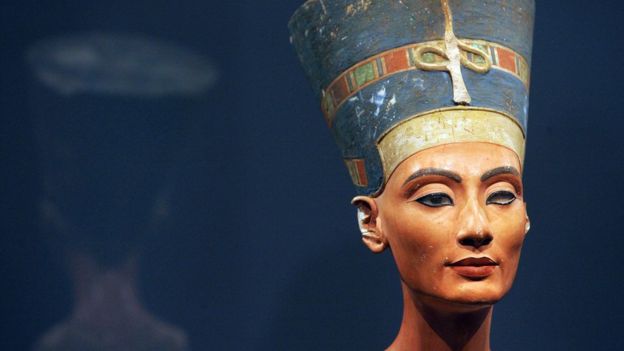
_101201102_gettyimages-53361817

Where be this lady’s corpse?

it’s time to celebrate, unless you’re a broken egg

Great news everybody, celebration is in order.  For yesterday was the 200th birthday of one of history’s greatest thinkers.  But did Marx understand what his ideas would bring about?  That his philosophy would spawn history’s greatest monsters?

All throughout his writings Marx makes it pretty clear what he had in mind.  He certainly got the bloodbath, it just didn’t come with his expected results.  Because basically Marx (lauded as he is) didn’t understand the essentials of human nature.  One of which is: When you give one man, any one man unlimited power, regardless of motivation, the end stage is evil.

For all the people who are ready to shout ‘Nazi’ at Trump, it’s always astounded me that the same argument isn’t made on the Communist side.  As we’ve previously written, the death of Castro was a particular note.

I stand by every word of this:

Castro goes into my column as the consummate example of a guy who pours honey potion into your ear while he rams a stiletto dagger into your kidney.  The dude’s appeal to the bulk of humanity was all talk.  Castro talked a good game of social justice and equality.  Then he turned around and enriched his own personal elite and destroyed his country.  Depending on how you count, thousands or tens-of-thousands of Cubans were executed during his reign.  Tens-of-thousands more died at sea fleeing his utopia.  Also depending on how you count, perhaps 10-20% of Cubans left during the last five decades.  The equivalent number is if around 30 million Americans felt the country was so bad they moved to Canada, with the understanding that say two million would die during the journey.

The end result of Marx to me is not the idea of social justice or class struggle.  It’s the idea that humans can do just about anything to their fellow humans provided they use social justice as the justification of their cause.  That’s the great evil of Marx.  You can liquidate a few million fellow humans, but as long as your end goals were supposedly noble, folks will let you get away with it and apologize for your actions.  That’s an interesting construct, unless you’re one of the broken eggs.

Marx was a pretty smart guy with a lot of interesting ideas.  But, ultimately he didn’t understand the end game of his ideas.  You can have whatever motivation you want, but when all you do is place all power into the hands of the few, and then provide them with the false moral cover of utopian progress, there is no limit on how cruel and ultimately evil a person can get.  It’s why history’s two greatest serial killers are Stalin and Mao, and Hitler doesn’t even come close to their number of murders.

Marx wasn’t alive when all this happened.  So you can possibly give him a pass for what subsequently occurred.  He wasn’t around to potentially call bullshit to evil men who perverted his ideas and basically used them to do the same evil deeds as one would have seen from an 11th Century Khan.  But still, ideas are ideas and they have power.  Marx, and history, have to own up to what his ideas meant to the course of human history.  Not to blindly celebrate them without deep thought as to the terror they wrought.

This guy.

the joker.jpg

we analyze history to determine Xi’s future

Great news, everybody!  As if the planet didn’t have enough problems, the most powerful man on the planet today just became a dictator.  Now, lots of folks will claim that the title of most powerful should be Trump?

Nope.  First off, Trump is too insane to be powerful, and in any case the power of any American President is severely constrained by the balance between branches of government.

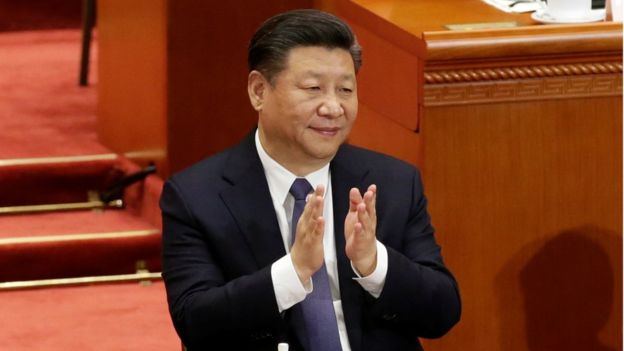
In terms of raw power, the ability of one man to say a word and things immediately happen, it’s Xi.  Here’s Xi applauding his own genius today after the rubber stamp goon squad parliament approved his ‘president for life’ title with a 99% vote.

_100364665_xi

Where will China be or go under one man rule with absolute total power?  Hmm, well, let’s take a look at history to see how dictators actually perform by the track record:

sad hitler

failed artist

stalin

body count higher than Hitler’s

220px-Mao_Zedong_portrait.jpg

greatest serial killer in human history

Roger_Goodell_(cropped).jpg

hated by more Americans than Trump

George_Clooney-4_The_Men_Who_Stare_at_Goats_TIFF09_(cropped)

presided over a Hollywood that molested it’s own women, did nothing about it, but oh man, he’s, he’s just so good looking

maxresdefault.jpg

defenestration extraordinaire

The genius of America’s Founding Fathers was their understanding that no human being is capable of effectively and morally exercising unconstrained power.  Trump is the reason America’s government is slow, ineffective, and dirty.  They wrote the Constitution with the understanding that one day a Trump might be president.

America has had terrible, terrible presidents before too.  I’m looking at you James Buchanan.  But the country in general can move on.  In three years when Trump is gone (unless the Democrats do something unserious, like nominate Oprah) the country will move on mostly the same.

To put it bluntly, humans suck.  We’re a total mess.  No one person is good enough or smart enough or talented enough to rule without checks on their person.  Even Lincoln, who is in the running for greatest human who ever lived, made mistakes and it was fortunate that he had other people (like an aggressive Congress) to challenge him.  It made him better.

Xi seems like a smart guy, but apparently doesn’t understand history.  He thinks China needs one man rule to deal with it’s challenges.  But history is merciless.  And it shows us that dictators fail.  China has many problems that require strong balanced leadership.  But as of today, China’s biggest problem is Xi.

what’s within the ‘big void’?

Great news, everybody!  There’s a front page news story that doesn’t involve politics, sexual assault, destroyed human flesh, or politics.  It’s the question of what’s up with this supposed big empty space discovered inside of Khufu’s giant ode to human waste, aka the Pyramids.

For the uninitiated, the Pharaohs built the Pyramids as giant teleportation chambers that were intended to take their souls to eternity as gods.  The structures took decades to build and cost countless human lives.  But as I’ll always say, who the hell are we to say this was stupid and didn’t work?  For all we know Khufu is indeed seated upon his throne in Valhalla swilling barley wine from a highball glass shouting, “Foools!”

So basically a bunch of scientists have used new technology to look inside the rock of the Pyramid and have determined there are two empty voids inside the Pyramid, as shown in this diagram I ripped from the BBC:

the void.png

Oh my, what the fuck could those be?  Who knows.  But we’ll speculate here, because why not?  We’ve got nothing better to do.

1) These voids don’t actually exist, the technology is wrong, and instead these areas are just solid rock.  Human hope and adventure are destroyed in agony as we realize all the breadth and scope of the human spirit still can’t develop technology capable of scanning a five-thousand year old piece of stone.

2) The bigger void is actually the Valhalla Purgatory Sexual Assault Branch Clinic.  It was established by Pharaoh Apophis II after his demise in 2867 BC at the hands of an aggrieved female attendant.  Weinstein, Spacey, Trump, and Clinton are all bound to do time there.  They all get there down the road, and they find Louis XIV is seated in a wicker chair at the entrance.  Louis pulls on his cigarette, and wryly states, “Welcome Gentlemen, pull up a chair, you’re going to be here for a while.”  [pulls on cigarette]

3) The rock in the voids has crumbled for some reason due to the Pyramid settling, or natural erosion, or through mistakes by the original builders.  In ancient times these weren’t voids but solid stone, but now they’ve emerged over the thousands of years since construction.

4) The voids were created in 2008 in secret by Jeff Bezos.  It houses the “Arcane Division” of Amazon Web Services.  Held on the bank of servers within is the hopes, dreams, fears, and buying habits of every man, woman, and child on Earth, to include whether the most destitute man alive wants to buy a comb or not.  Bezos figured the Pyramid was the safest place to build this as, “No matter how crooked I am, how many politicians I bribe, or how hated I am, they can’t possibly blow up the Pyramids, right?” [lights cigar with Ben Franklin; puffs on cigar]

5) Khufu had a handball court built in there, just because he could.  3K slaves died to make it happen.  It was sealed inside the rock.  He never played on it once.  This amused him every time he thought about it.

6) It’s where the aliens hid the bomb.

7) The Pharaoh’s builders made the voids to account for star fluctuation based upon their astronomical measurements (yes, they did this) and mathematical calculations.  The intent to was to mass accelerate the Pharaoh’s divine journey into oblivion.

8) Beer repository for the afterlife.  Khufu had 9K years of beer stored in there so he could swill in Valhalla with glorious abandon.  What happens after the beer runs out in 4K years?  Khufu hasn’t thought that far ahead, it makes him sad when he does.  And in any case, all things being equal, Khufu never thought humanity would last this long anyways without blowing ourselves up.

9) Khufu had the chamber built just to mess with people’s brains.  They’re entirely empty.  They serve no purpose.

10) The chambers were hand carved from the bare rock by one time Minister of State for Antiquities Affairs, closet Bayern Munich fan, amateur bridge player, and perverse sexual deviant Zahi Hawass.  Within the confines of the void he toils on a daily basis to supplement his meager millions of previous income with his own line of Indiana Jones custom hats, archeology lectures, commentary upon the Jewish race, boom mike operator temp assignment business for the National Geographic, Discovery, and History Channels, and his own independent line of male perfume “Pharaoh’s Shaft”.  None of this is a lie, just ask the great man himself!  @ZahiHawass “TUTANKHAMUN – HIS TOMB & HIS TREASURES is in Sweden! Come to my lecture on Jan 31st at the Oscarsteatern, Stockholm”  [Editor’s Note: the ALL CAPS is ALL ZAHI! ALL THE TIME!]

Khufu_0

FOOOLS!  AHAHAHAHAHAHAHAAHAHA!  [swigs barley wine]

we set off on our great adventure to discover the truth of Alexander

Late last summer, the haze still hung heavy over the alleyways of Istanbul. It was shortly after the most recent coup against the Sultan. The oppressive humidity matched the overbearing nature with which the Sultan’s men patrolled the streets. Fear hung heavy as teachers, professors, writers, and many others were wrapped up in the Sultan’s timed overreactions.

I found myself weary after arriving on the Express and eagerly sought refuge in a small but busy pub recommended by a friend. The journey on the Express was rather tiresome. I was constantly hassled by a Serb (or possibly a closet Moldovan) named Nikolai who was a far less interesting man than he thought.

Most seats in Zeki’s were taken, but I found enough open space at the bar. Smoke, conversation, Istanbul surrounded the place. It was good to be back on the road. It warmed me even before my first sip. But my first drink of scotch proved to be a poor choice. Even the most delicious of beverages can be drilled through by the worst of heat. At the barkeep’s recommendation, I switched to the raki, an inferior liquid but much preferable given the weather. Even the hint of ice, normally hated, was more than welcome to me.

“Good enough?” said the barkeep.

“Quite,” I replied, hoisting the glass toward him, “And your place I take it?”

He nodded, “Indeed, for many years now. May I ask how you found it back here, foreigner that you are.” “A friend,” I replied scantly.

“Ah,” Zeki scanned his establishment, “But what brings you to this city of life in these dark times?”

“Are these really dark times?” I asked.

“What? Oh,” he chuckled deeply, “No, no not really. What’s another coup?”

I smiled, looking down at my drink, “Just another day.”

He swiped his finger through the air, “Precisely!” He shrugged, “And after all, life doesn’t change, not even here.”

“No?”

“No, no, the Sultan shall be the Sultan, whoever that is, and life goes on. After all, the Sultan’s men do not change.”

“No?”

“They are the same, whoever they are,” he shrugged, “ I pay my bribes, the protection if offered, life goes on,” he said as if discussing why summers were considered hot. “But you Sir, you are here…”

I sipped deeply, “I seek Alexander.”

“Oh,” Zeki laughed heartedly, as if I’d just stated I intended to find The Prophet himself, “Well then, here he is, here he is, Sir.” Zeki mockingly pointed to a crusted framed picture, one of many, that adorned the wall atop the bar. And indeed, there among the many of history’s great faces was the greatest general himself. And off Zeki was, to another customer down the bar.

“Alexander’s dead,” from nowhere offered the man next to me. A man I’d not noticed thus far, so unassuming he was. He was far older than I, and also not a local. He slumped deeply at the bar, tired, his eyes closed, but not drunk, not wholly yet anyways.

“Yes,” I cautiously offered, “very much dead. But I seek the truth of him.” “Yeah, why, where?”

Not knowing this man, or his motives, I sought to learn more about him before ever speaking further. “And you Sir, I cannot place your accent for certain, though I can guess.” Without a shadow of guile the man gave himself forth, to a total stranger as I, “I’m Cornish.”

“Oh,” I said, shaking my head in pity and disgust, “I am sorry.”

He shrugged, resigned. And without any hesitation, he opened his life to me. “If you’re going after Alexander I’ll go too.”

So taken aback I was by his statement that I was dumbfounded. Seeking refuge in my glass, I found it empty. And so to pass the thought, I simply asked, “And your name?” “George,” he flatly stated.

“And where from George?”

“Cornwall…”

“No, no,…”

“Ah, Afghanistan,” he said, “a terrible place, and one that was equally as kind to Alexander as it was to me.”

And thus it all began to add up for me fairly quickly. The broken demeanor, the drinks, the resignation, and then, the pistol, carefully and professionally concealed within his clothing. The long look in his eyes, the old, but still strong frame of this man of the people of the English sea. I could use him, why not. Clearly here was a man in need of purpose. And men in need of purpose are the most useful of men.

“Not to Afghanistan, not yet, but certainly, if you need something to do, I’d welcome such a man as you.”

He nodded, slowly, pleased, grunted, and briefly hoisted his glass to me, emptied it, and motioned to Zeki for another. And another found him, and I as well.

“I hear all in my bar,” said Zeki to me as he poured.

“As any good bar should,” I responded.

“Our part of the world is generally unkind, especially to two foreign, eh, men, such as yourself,” Zeki capped the bottle with force.

I nodded, not knowing why.

Zeki leaned against the rail, his ear halfheartedly to mine. He drew incompressible designs on the bar’s surface, “Help, help is always helpful to those who need help.” I said nothing.

“A man on his travels in this part of the world needs friends, friends not in the fray,” Zeki spoke relatively softly, “I could perhaps…”

“I know you not.”

“Oh,” he smiled in a way that cleared my throat, “but even your presence here came at the recommendation of a, friend, yes?” Zeki scanned his pub briefly, “And in the end, I know who you are. And you shall thus see that I know your Guests, and have done business with them in the past. And yet,” he leaned back, proudly, “I have not presented you to the Sultan’s men. Though this would benefit me greatly.”

Sometimes knowing a man takes a lifetime. Sometimes you never actually know a man. Sometimes you have to take risks on men. Sometimes they take risks on you. And yet besides all this, I found not the need, but the desire to take a risk upon this Zeki. Here was a man, indeed recommended by my friend, but for what, a drink, or a chance? And here was this Zeki, self-assured, honest, even reckless to having met me a few minutes ago had yet already chanced to inform me that he had the Sultan’s men in his pay. That he thought nothing of the Sultan’s rule itself. Yes, yes why not risk this man, why not risk it when I had nothing else on offer. After all, even Alexander himself knew the importance of never venturing into the darkness without securing one’s rear area and homefront.

“And for you, so what?” I asked cautiously.

“Nothing,” he leaned back, “Not yet. But write to me,” he said, “when it is my time, you will know, and you will answer.”

Always the risk, but I nodded, once, hoping one day, I did not regret it. I could sense George’s uneasiness. He was back against his stool, one hand now always free. But it was my decision. Not George’s. And if George was to journey with me, he should understand this.

“But in the meantime,” Zeki held out his palm to behind me, “help, help for the two foreign dogs.” Behind us stepped forth two men. My attention first turned to the larger man, cloaked, and certainly a predator. “Mut,” (he pronounced it ‘moot’) Zeki named him, “And at your service. The finest of Oran’s backstreets.”

Mut fit his name’s spelling if not pronunciation well. His face and body, Berber, Arab, even if (dare I never have mentioned to him) perhaps a touch of Algérie in his complexion.

When confronted with an attack dog, directness is either the worst or best of options. I chanced best, simply stating, “And what is your talent, Sir.”

Mut opened his cloak, and contained therein was as throng of blades, edged weapons, decorated, sharp, beautiful. He closed his cloak. Joined his hands before him, and said nothing.

I chuckled, “Okay, you’ll do.” Surprisingly, George nodded, though I was unsure what George saw in this man that did not take his thoughts back to similar men he had undoubtedly met, and met sportingly or not, in Afghanistan.

The second man quickly stepped forward without giving Zeki an chance to introduce him. He thrust his small delicate hand forward to I, then to George, shaking with a brisk but firm strength, “Stelios, at your service,” he offered with a smile. “My talent? Quite simply,” he grunted softly, “is to relieve others of their possessions by my actions.” He clicked his heals. George shook his head in repulsion.

There could not have been a more Greek looking man on all the Earth. Short, solidly built, but with a deep refinement. His lengthy curled air, oiled, hung over a suit, tie, and shoes that if I had been told cost more than everything in this bar combined, would not have surprised me. But what use to us was he? Was there any meaningful nature behind the immaculate man? With such men, there is always an easy way to find out.

Off in one of the darker corners of the bar, sat a janissary and a few companions. Out of uniform, poorly armed, and looking deject, I could only assume they were now unemployed, perhaps even unemployed recently having found themselves on the wrong side of the coup. Now here, to drink their way to a future that was never coming. To the one closest to me I motioned with the greatest of care to Stelios, “I don’t like your kind, but see that man, go bring me one of his pistols.” Without waiting for a response, I returned to my drink.

Without offering a response, Stelios was off. It took him some time, but eventually I noticed he had found his way to the janissary’s table. And they talked, and talked, Stelios pulled up a chair, and he talked more. Mut became bored, sat down next to George, and drank, and drank again. After a good long while, I sighed, remarking wryly to George, “Theft is always far more boring in reality than in fiction.”

“Quite,” said George, deadpan.

So it went for a long, long time. Zeki was engrossed in conversation with men at the other end of the bar. The light outside began to fade. And perhaps, just perhaps the heat began to fade too. And I chanced a glance over my shoulder, and the janissary and his friends were gone and so was Stelios. Either Stelios had followed them out, or had given up and fled in shame. Either way, I cared not. I hated thieves anyways.

I grunted, sipped again, and then my eyes darted left, and next to me was Stelios. Shocked, I nearly reached within my coat, but before I could he planted before me with a delighted flourish a silver pistol of the janissary. He laughed out loud, took my glass, and finished my drink, his pristine teeth gleamed with the liquor’s remains and pride. “Oh,” he quipped, “and this too.” And he did plop atop the pistol my pocketwatch. George cackled with a partially inebriated humor. I looked down mournfully at my chest, and smiled without teeth.

“Okay,” I nodded slowly, “you’ll do.” And I clapped Stelios on the shoulder and guided him to the stool next to mine. And thus the four of us we drank for a while, as we resolved to depart on our adventure in the morning. For the night was ending, and when one starts to drink raki in Istanbul, one does not stop while the night is young.

And as often happens, but so rarely turns out to be the case, I felt myself being watched. And I wondered if this adventure was doomed to fail before its start. But I appraised Zeki, who was still involved in boisterous conversation down the bar. Mut and George were trying out their French, George by far the poorer of the exchange. Stelios was buried in a newspaper. I glanced about, subtly as possible, to see if only I could perceive the danger.

It took time, far too much time, blame the raki, to notice her. Off to the other corner, by the open bay window which led toward the busy alley. She was there alone, at the smallest of the window’s tables. I didn’t know her, I hadn’t seen her, but I instantly knew that she knew whatever I knew. It was written through the glean in her deep dark eyes. Without thinking, without fear, I rose from my stool and began to walk toward her. Was she a threat? Figure it out, immediately.

Yet as a approached her more and more I began to appreciate the inherent raw beauty that she was. And I began to unconsciously feel myself standing straighter, less drunk than I might have been, and intended to approach her with the greatest class possible. A threat she might have been, I was still a man, much to my detriment if she meant to end our adventure before it’s birth.

And in this state did I thus collide with a small dog that was darting across the floor. And thus did I partially tumble to the floor, only bracing myself on an occupied chair. Pulling myself up, I endeavored to appear the classy subject of a cruel joke played by the sharpest & wittiest of men, and not the victim of a scampering four pound nonsentient canine.

If I failed she did not show it. I sat down slowly, her eyes never moving from me at any point. Not alcohol for her, but coffee, Turkish black, black as her hair. The steam from the mug rose above to her face which gave her an ethereal quality which matched her beauty. Surely here was a face that matched the goddesses that Alexander would have sacrificed to. She drank her steaming coffee, not with delicacy, but with long deep sips like a barbarian Northman.

And thus with this thought on my mind, did she simply state, with the most delicate of slurs, “Alexander.” No lies, no lack of understanding, but I could say nothing. I knew not which way to respond, damned the raki and the heat which had taken all cunning from my brain. Or was it the way she looked, that I didn’t care to joust. Not at all. “I’ll go,” she stated flatly.

“Why?” I stated without resistance and even a slight desperation, “what are your talents?”

She smiled deeply, and I partially melted even more in the heat, “Many.”

I shrugged, she could have stolen one of my eyes if she’d wanted, I would not have cared, “Certainly.”

She smiled, even deeper, but perhaps, less genuinely as she hummed, “I might betray you.”

Ever the fool that I was, and beyond care, I blurted out, “Not if I betray you first.”

She cackled, rose swiftly, drained her coffee, slapped her palm on the table, “I am Alianna of Provence. And we, we shall find Alexander.” And before I was ably out of my chair she was already passed me, and at the bar. And Zeki was pouring more drinks. And I slugged over, smiling, suppressing all fear, and replacing it with optimism. Too much risk? For certain. But for the moment, I truly didn’t care.

And thus it began, this great adventure, as we set off to discover the truth of Alexander. I, the degenerate, George the Soldier, Mut of Oran, Stelios the Thief, and Alianna of Provence. And there Zeki, Zeki of Zeki’s.

And with the great Alexándrou Anábasis, the finest of all the works ever written about Alexander as our guide, did we thus begin. But not yet, for there was more raki, and Zeki was not charging, not yet anyways. And we drank until the day was gone, and even the streets of Istanbul began to cool down, a very long time.

Join us!

20170805_102210.jpg

when heroes turn to evil

In these very strange times it’s helpful to listen to some words from history:

The wrongs of the past must now stand forgiven and forgotten. If ever we look to the past, let us do so for the lesson the past has taught us, namely that oppression and racism are inequalities that must never find scope in our political and social system. It could never be a correct justification that just because the whites oppressed us yesterday when they had power, the blacks must oppress them today because they have power. An evil remains an evil whether practised by white against black or black against white.

And who was the wise and just man that said this? Robert Mugabe, as in the guy who utterly destroyed and ruined an entire country to feed his desires for expensive wines, prostitutes, and fine cheese.

Believe it or not once upon a time Planetary-Stormtrooper-Goons such as the Castros or Mugabe were considered, and in some cases actually were, real heroes. They said and did many of the right things. They battled evil dictatorships, helped the poor, at least gave lip service to democratic principles, and so on.

Well that sure didn’t last. If you built a top ten list of history’s great monsters of the last century you could make a fair argument that Mugabe and Castro need their faces in the queue. These men who freed millions, provided hope to an entire country, and were recognized worldwide as potential icons of freedom ultimately turned to darkness, straight evil, perhaps even far more evil than the one they replaced.


This is sadly a theme you see all throughout history with revolutions and rebellions. But, still: What the hell happened?

Was it because folks like Castro and Mugabe were always evil from the start, or that they only became evil after they gained absolute power? I’m inclined to think it’s a little bit of both.

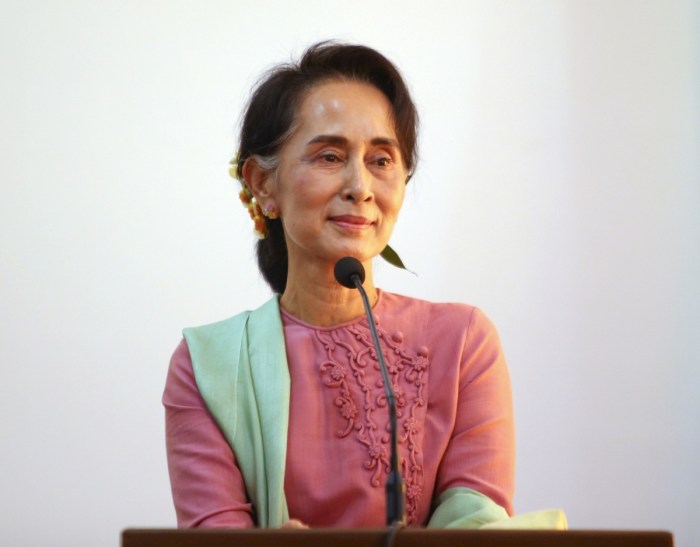
And so now enters upon this very troubled stage Aung San Suu Kyi who for all the political confusion, essentially holds political power in Myanmar. Once the darling of freedom and democracy throughout the globe Aung San Suu Kyi has seen her reputation and reality destroyed almost overnight as she’s presided over one of the more stark and brutal genocide campaigns in modern history.

For the uninitiated (or those focused on Dancing With The Stars or what Taylor Swift had for lunch yesterday) here’s what’s been going on:

– In Burma, about 1% of the population is Rohingya Muslim who live mostly on the northwest coast next to Bangladesh. This is in contrast to the nearly 2/3 who are Bamar Buddhist, the majority of the population. There are dozens of other minority ethnic groups in Burma beyond the Rohingya. Some parts of the country have essentially been in a state of civil war for five decades.

– After decades of house arrest for pro-democracy efforts, Aung San Suu Kyi is now State Counselor of Burma. She can’t be President because the Army rigged the qualification rules. So her party has a figurehead president, but Aung San Suu Kyi calls the shots. She holds executive power in Myanmar.

– There’s been ethnic turmoil in the west between Rohingya Muslim and Buddhists for decades with the last large scale violence in 2012.

– A few weeks ago Rohingya rebels and/or terrorists (depends on your point of view) struck various police and Army barracks killing about a dozen uniformed personnel. In response the Army did what it does best, it went wild. If you thought the scenes with the Myanmar Army in Rambo IV were part of the movie’s action packed nonsense, I assure you, the Myanmar Army got this reputation for a reason.

– Hundreds-of-thousands have fled to the border of Bangladesh. Untold thousands have been murdered, raped, whole villages razed. It’s humanity at its worst.

I think what essentially happened is at Myanmar Army Headquarters they had this plan on the shelf. It was printed on nice clean official paper and on the front it said “Rohingya Liquidation Campaign”. When the Rohingya rebels conducted their attacks a few weeks ago, Senior General Min Aung Hlaing (a historically known miller of innocent human flesh) opened his desk drawer, took a swig of whiskey from a solid gold flask, said “Thank you very much, assholes,” and took the plan off the shelf and gave it to his goons to execute.

Everything after that has been on autopilot. The Army, assisted by local Buddhist militias, has done what one would expect them to do when ordered to exterminate a whole people. And where is Aung San Suu Kyi? Nowhere.

Apologists will make the argument that it’s not Aung San Suu Kyi’s fault. That the Army is actually calling the shots in Myanmar and she’s unable to stop the violence as she’s a figurehead. This ignores the apparent political power she wielded since the last election and which she’s been widely praised for using. It also doesn’t explain her essential silence and denials that anything remotely approaching genocide is occurring.

Nothing is stopping Aung San Suu Kyi from simply saying the violence has to stop. Instead, she’s made various inexplicable claims such as the Rohingya burned their own villages or are fleeing to Bangladesh at their own initiative.

Any reasonable person can only come to one conclusion. Aung San Suu Kyi supports the Army’s mission, thus genocide. Why? What the hell happened to this women? To me, when you really think about it, it’s actually rather simple:

1) Aung San Suu Kyi spent decades as a dissident and democracy campaigner. But, until recently she never actually held political power. She never ruled or ran anything. Nobody actually had a resume of hers to look at and say, this is who she really is.

2) Since the end of her exile, the restart of politics, and the last election a reputation has emerged that Aung San Suu Kyi runs her political party, the National League for Democracy, in an autocratic and closed manner. She doesn’t tolerate dissent or rivals, party policy is done at her whim behind closed doors, those who speak out are silenced or removed from the party.

3) Aung San Suu Kyi was born into, is, part of the central Bamar Buddhist establishment. Daddy helped found the country before he was assassinated. Daddy also founded the Myanmar Army. This was after Daddy had served in that oh so merciful organization known as the Imperial Japanese Army.

4) It was widely reported in the years leading up to the election that Aung San Suu Kyi could do business with the Army because (among other reasons) she still had an enormous amount of respect for the Army seeing as how Daddy founded the organization. In other words, despite decades of repression against her own person, Aung San Suu Kyi never checked out of the ruling Buddhist establishment.

5) Oh by the way, the majority of her voters are Bamar Buddhist and some of her most blowhard fervent supporters are Buddhist religious militants.

So what we have is a political newcomer, who already has autocratic tendencies, who was raised by a military man with a questionable background and record, who has always been a card carrying member of the establishment. And thus we get the picture of a woman who can very much share the vision of the Army that Myanmar is in fact a Buddhist nation, run by and for the Buddhist majority, with the Army as the cricket bat that enforces and maintains it.

It’s a very, very sad picture. And one that isn’t going to change any time soon. Aung San Suu Kyi is ruined in the international world. She didn’t even attend the United Nations meetings last week, so fearful was she of the criticism she would face. But does she really care? I doubt it.

Myanmar’s generals have been international pariahs for decades. They’re still rich, they’re still in power. And just like Castro or Mugabe, I suspect that a decade or two from now Aung San Suu Kyi will still be around. Disrespected, disgraced, and yet still calling the shots.

myanmar-aung-san-suu-kyi.jpg