Osaka – Shitennō-ji

I just didn’t take as many photos back then, I guess. Go to a temple, take only two shots? I’ve talked about how this can be a good thing. But when I don’t remember all that much about the visit, I guess it can also be a bad thing.

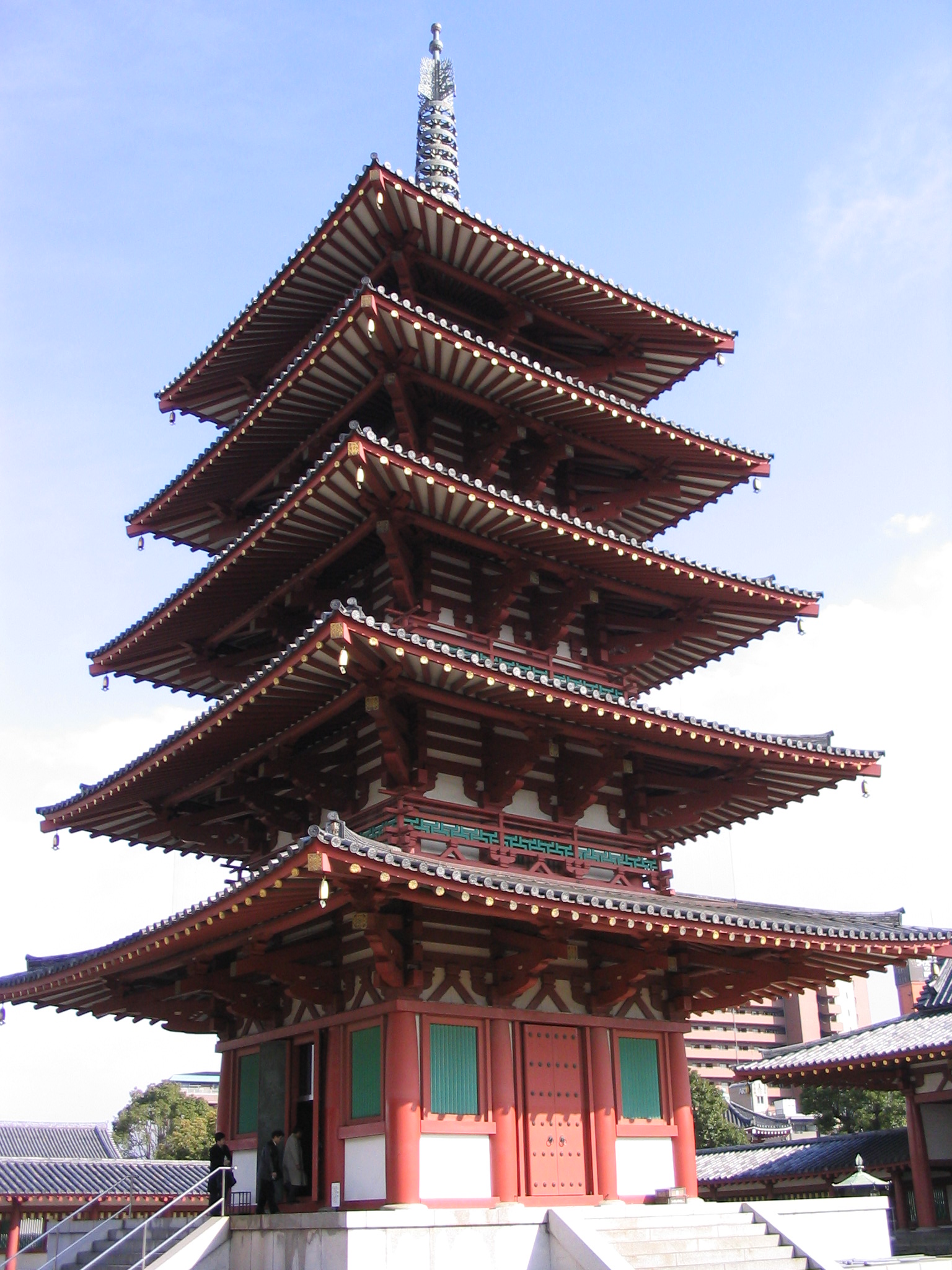
About an hour’s walk from Sumiyoshi-taisha is Shitennō-ji, another very old temple with a long history. It’s beyond my memory, but this is an excellent summary.

Shitennō-ji is said to be the oldest Buddhist temple in Japan but sadly all the buildings date from a 1960’s rebuild. Still worth a short visit.

Osaka – Sumiyoshi Taisha

If you’re in Osaka, you kind of just have to. Osaka’s most famous shrine, seat of all Japan’s Sumiyoshi shrines, and the subject of many legends, Sumiyoshi Taisha is said to have been originally built in 211. Founded by Empress Jingu it’s a shrine to the sea, dedicated to the Sumiyoshi Sanjin or the sea’s three gods. Back then, the shrine was right against the sea itself whereas today it’s somewhat inland.

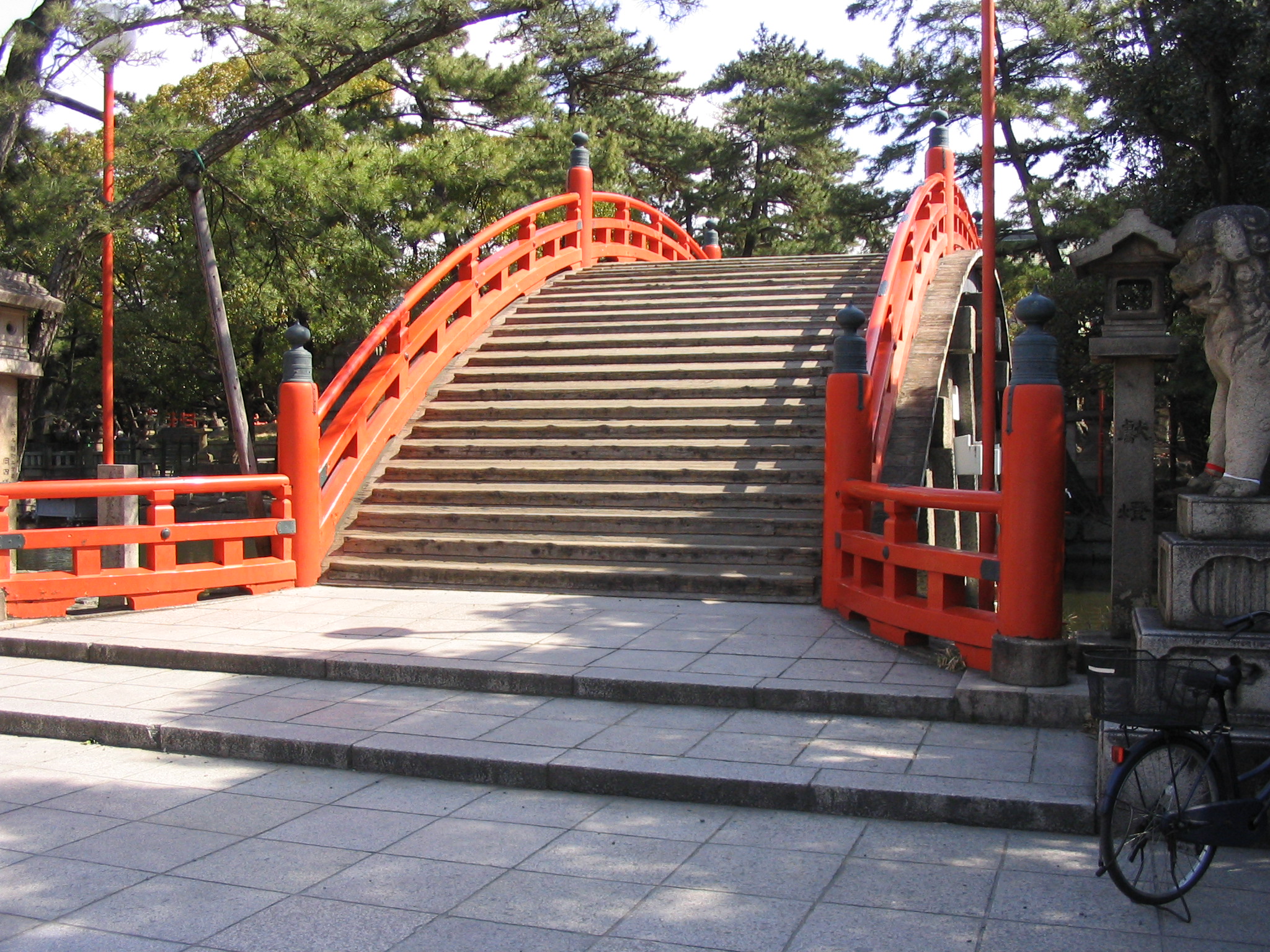
The appropriately, galactically famous Sorihashi Bridge, one of the most beautiful and quintessential of Japan’s taiko bashi or drum bridges. This is one of my most favorite shots of all time, it was done with my old bad camera, and has its flaws but I still dig it.

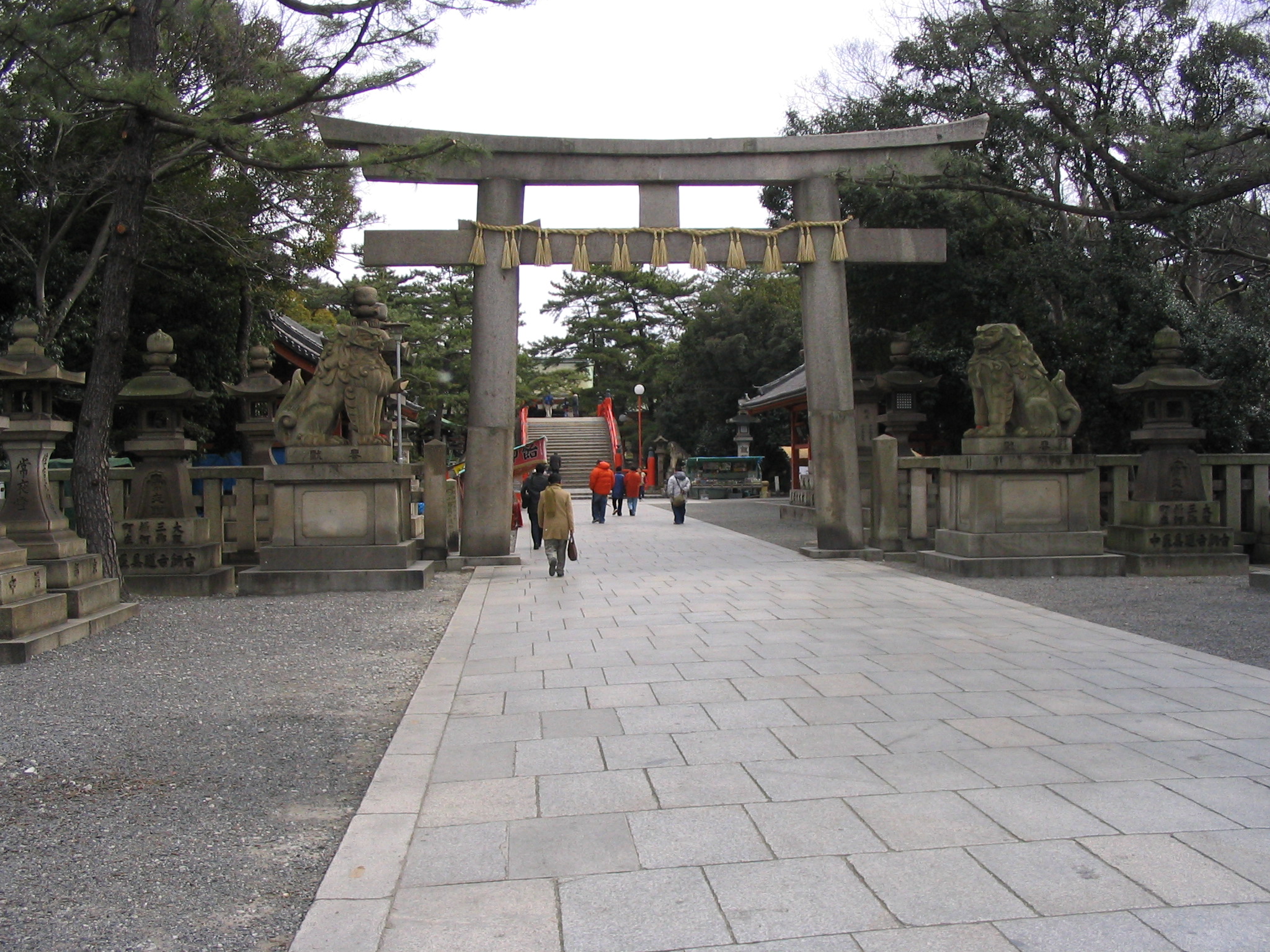
The shrine’s west entrance, looking from west to east, with the gate up front, and the bridge in the background.

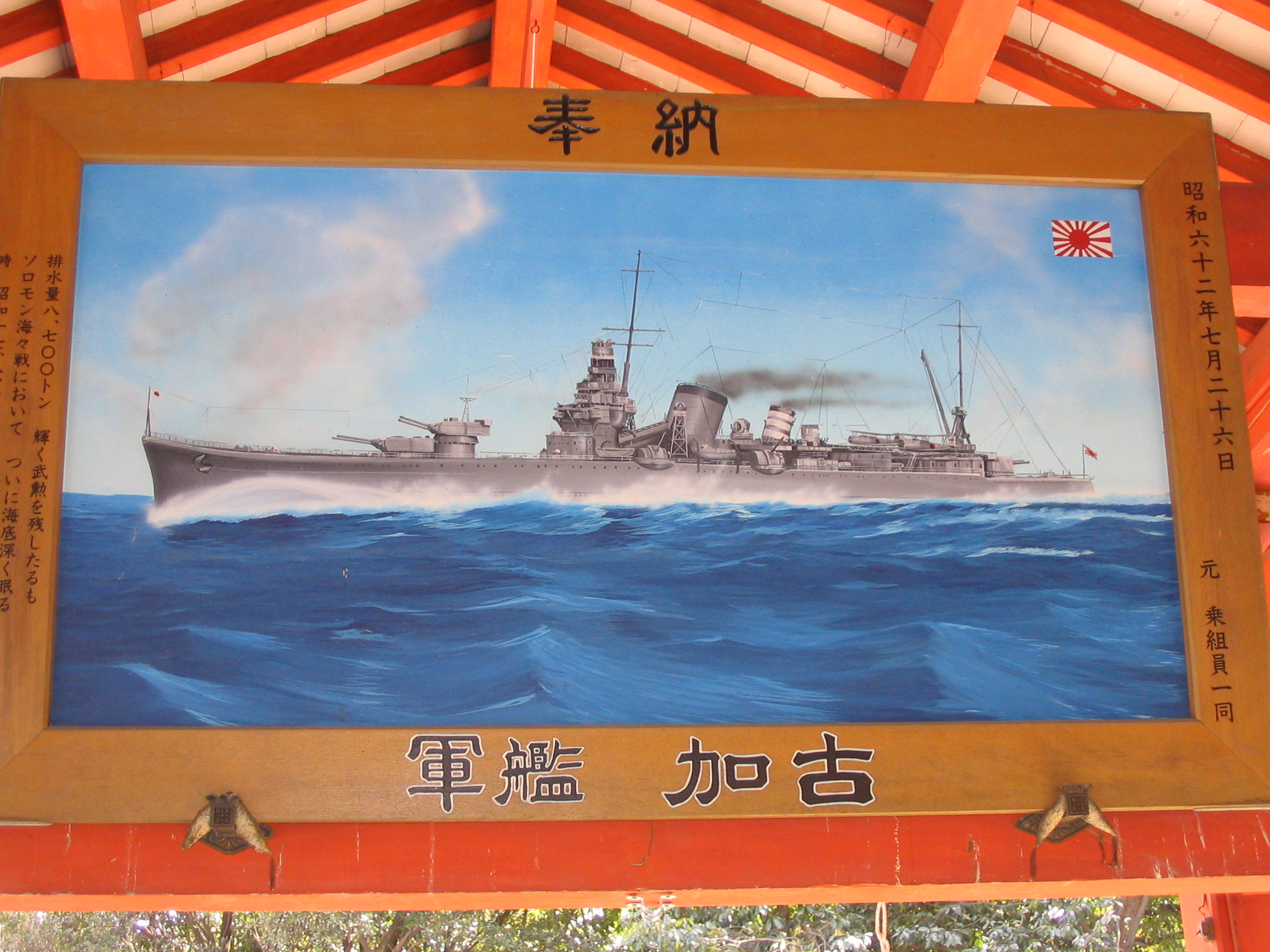
One of the rarest things I ever saw in Japan, a legit memorial for World War II. The shrine being dedicated to the sea, this of course makes sense. This was tucked away in a corner area and I kind of stumbled into it. I sadly don’t read Japanese in any form anymore, but this is a heavy cruiser. I don’t know the ship name or class, but the painting is an older version of the ship, I think, since the heavy cruiser has only two forward turrets instead of the later installed three.

The secondary temple.

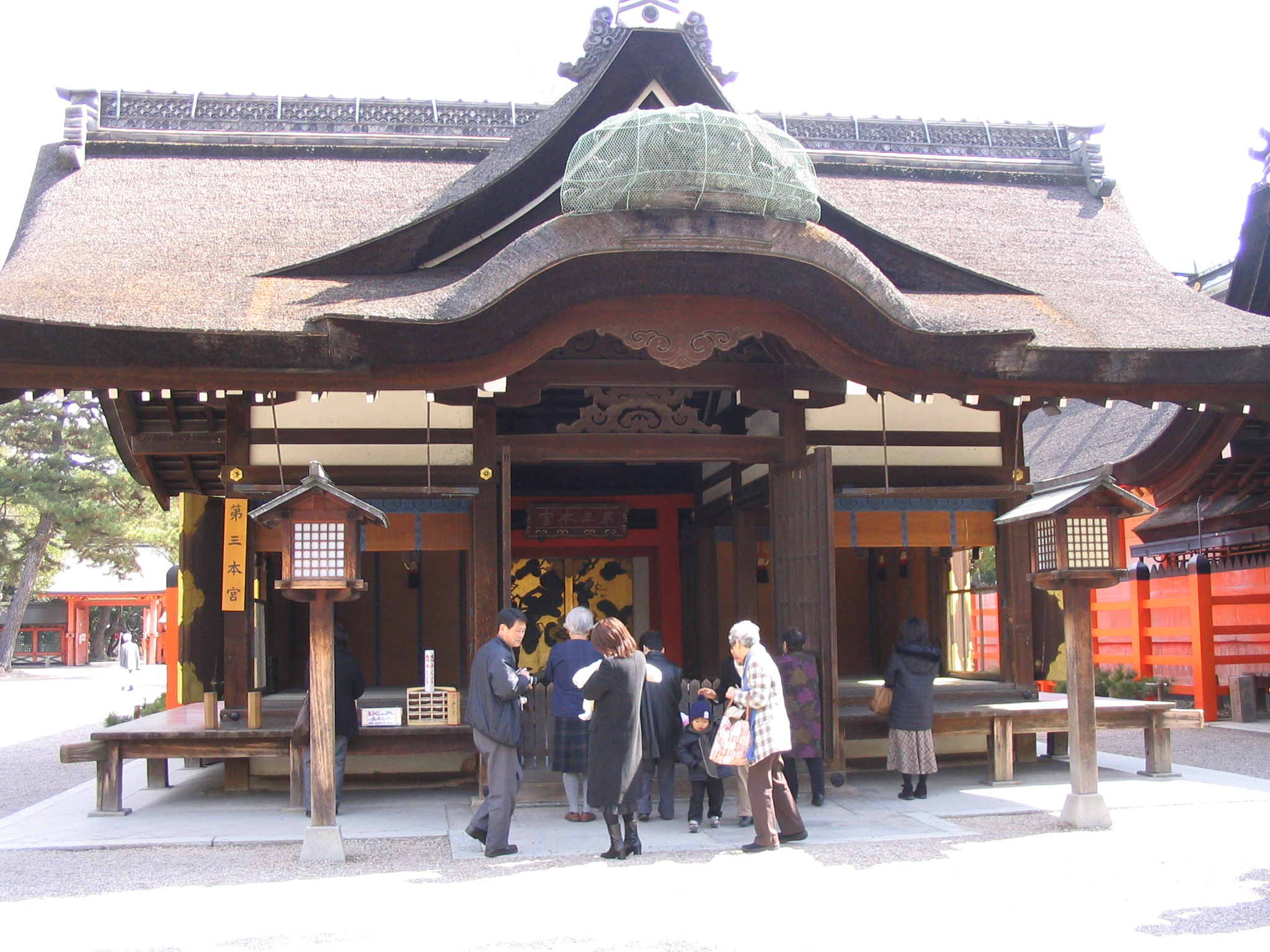
If I’ve got my bearings right, this is the north side of the trio of the three main sanctuary structures. I always love the candid shots I get of just ordinary people happening along their daily lives, unaware or uncaring that this weird dude is taking very serious (bad amateur) photography.

Ōsaka-jō – and why building expensive castles usually doesn’t work

So you want to build a castle. You’re a powerful man but you have a boss. And his castle is awesome. So you want to build one that’s even better than his. So your tower is taller, you throw some gold leaf on there, and you probably think you’ve done an awesome thing.

Problem is, your boss dies, and you’re left hanging with this big, huge, expensive castle while your enemy instead has a massive killing machine of a mobile field army. Oh, and sorry, fixed defenses are generally of only limited value during a long running military conflict. Just ask China how well the Great Wall was at keeping out those dastardly Mongols.

Ōsaka-jō was built from 1583-1597 by Toyotomi Hideyoshi who wanted to mirror the digs of his boss (at the time, everybody’s boss) in Oda Nobunaga. But then Oda died. And soon the son in Toyotomi Hideyori gets Ōsaka-jō.

Then one day in 1600 this ordinary, average, nondescript guy named Tokugawa Ieyasu wins arguably one of the devastating and decisive battles in military history at Sekigahara. Toyotomi loses badly, but it takes Tokugawa until 1615 to acquire enough balance of power to finally settle the score. Tokugawa’s army of several hundred thousand men overpowers Ōsaka-jō, burns it to the ground, Toyotomi dies by his own hand, and Japan’s history is essentially written for the next two hundred years.

Tokugawa rebuilds the castle, because of course. In the subsequent centuries it does what a lot of wooden buildings do throughout history, it burns repeatedly. Gets rebuilt. Then burns again. Then the castle is rebuilt with public contributions. Then during the Boshin War it’s taken and burned again. Then it’s rebuilt, but this time as an arsenal. And so the the Americans carpet bomb the place into oblivion in August 1945.

Only in the late 1990’s is the castle itself restored. But in typical Japanese fashion, it’s done in concrete and not wood. Every time, it still gives me a lack of understanding chuckle at the lack of authenticity and reverence the Japanese have for historical sites and buildings. Nothing quite like the calm, religious experience of a glorious temple, when you can buy hello kitty right inside the door from one of my merchant stalls.

This was a neat visit, it’s cool to look at and the ground themselves are beautiful more as a garden or a park. The tower is interesting, but it feels stale and not real. Probably because it’s concrete and not real. It’s not one of my favorite Japan locations, by far, but it’s worth a short trip if you’re in town.

And also, if you have a Bond style villain demi-god level of power in your future somewhere, don’t build a castle or a god-like evil lair. Building expensive castles usually doesn’t work, see Ōsaka-jō. Or Bond will blow up your lair. Focus on mobile field armies or goons instead.

Civil War – 22 April 1862 – a visit from Uncle

The Battle of Shiloh was fought 06-07 April 1862 and was the first truly massive battle in the Western Theater and up to that point the largest of the war.  Its ferocity must have shocked the civilian population on both sides who even though the war was almost a year old probably still assumed somehow that massive bloodshed could have been avoided.

Instead, the stakes of the war and how strongly the individual soldier believed in their view of it shone through.  Entire units would fight nearly to the last man rather than retreat.  Men who were exhausted from the worst day of their lives yesterday, would show up today and do it all over again.  It wouldn’t be for the last time.

Two weeks later the Union Army remained encamped on their victorious battlefield at Shiloh.  Private Lucius Barber, then 22, was in Company D of the 15th Illinois Volunteer Infantry:

I was agreeably surprised one morning when I awoke to find Uncle Washington in my tent.  My friends had sent him down to see if anything was needed.  Although his services were not required, his company was very acceptable.  He stayed a couple of weeks with us and then returned home.  The roads were in an awful condition at the time and it was impossible for the army to move…

You’re in the bloodiest war in American history (though nobody knew that yet) and your Uncle shows up just to check on you.  Note a few things from this short passage:

– A walk (or he could have rode) from Illinois to Shiloh and a multi-week stay is not a minor amount of time, one wonders what, if any, employment Uncle Washington had

– Note that his friends, undoubtedly shocked by what they had read of the battle, sent Barber’s Uncle to check on him

– His friends were still at home, not yet enlisted in the Army, over the years this would have changed as the war turned into mass mobilization for both sides

– The roads were impossible for movement by armies, but apparently not by one Uncle checking in on his family

In wouldn’t be the last the war would hear from Private Barber.

we present our axe throwing business plan

So the latest urban gentrified hipster recreational activity is axe throwing. And so, um, uh, … what? Essentially people go to what is in any sense a bar/club, only while you get pasted you throw axes at wooden boards. Although it seems not all venues permit alcohol while you throw, I think it depends on the jurisdiction’s laws.

Don’t get me wrong, I’m all about the use of any kind of weapon and the proficiency that comes with it. Throughout most of human history, the ability to expertly wield (at a minimum) a small dagger was considered necessary to remain alive. Now we’re lucky if people can chop an onion. But I just don’t get why this is a thing?

First off, how is this even legal? In today’s bubble wrapped society this is one that somehow got past the government nanny filters. Is it like those infernal scooters where regulation just doesn’t address it? I suppose there’s no law that says you can’t run an axe club, but if you tried to open a throwing knives club I bet that’d be illegal. Or heavily regulated.

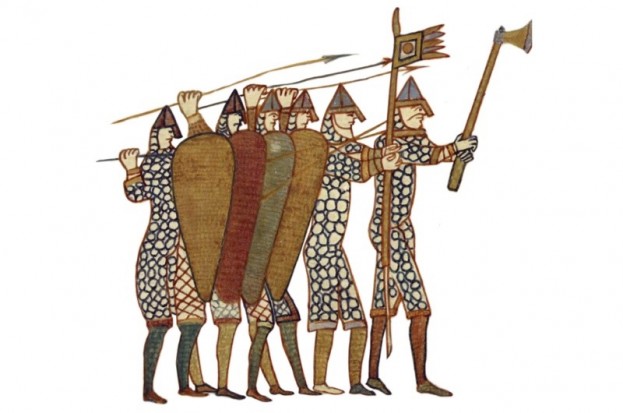
As a weapons example, the axes these clubs use most closely resembles the Francisca; the quintessential battlefield throwing axe first perfected by the Franks and later used to spread mayhem by other such warlike races such as the Vikings. It was essentially an attempt to break the deadlock that was the spear and shield wall warfare of the period. The age of the longbow and armored heavy cavalry came later, but for a few hundred years it was spears, shields, and axes; backed up by limited and essentially ineffective archery.

So if you’re throwing an axe at a club with your mates, this might be cool, but you don’t get the real experience. So we at TAP are here to help. We’ll open our own axe club. Let us know what you think. We always get lots of feedback to the posts on this degenerate blog.

Here are the guidelines:

– Intoxication is mandatory, as it likely was on most medieval battlefields; the customer may choose whatever beverage they desire, but before beginning, a BAC test will verify the customer is above the legal limit to operate a motor vehicle.

– Axe throwing will not be done individually, but in a group via the shield wall. The inexperience of the customer is irrelevant. Armor and shield will be used. Those who refuse or cannot wear armor or lift shield will be ejected from the venue without refund.

– Customers will submit to a short training rehearsal on shield wall tactics so as to experience abject suffering and shocking reality of being one minor cog in a mass of human meat meant for the medieval grinder. Training mistakes will be met with physical correction with a ferocity as determined by venue management and training staff.

– Actual axe throwing is conducted from the shield wall with environmental conditions necessary to fully simulate the medieval battlefield experience. Noise generators will produce human screaming and shouting at decibel levels prohibited for airport runway employees. The building’s heat will be at a level considered medically negligent to induce dehydration. Despite the level of intoxication, no substance fitting the proper definition of food will be offered to the customer. And so on.

– Axes will be thrown by the shield wall at wooden walls simulating an opposing shield wall. Customers will be ranked by the number of axe hits assessed by venue management as solid kills or crippling blows enough to have removed the target from the fight.

– Customers with the lowest scores would normally have become medieval battlefield casualties. To simulate this for the customer, before departing the venue they will receive a single bare-knuckled punch to the face via a former, jaded heavyweight boxer. Physical injury and its associated potential medical costs are the responsibility of the customer.

– Customers with the highest scores will receive free alcohol for the remainder of the evening, a refund of their fee (paid in gold coins), diligent (legal) attention and adoration from venue employees from the gender of the customer’s choice, ample roasted meats for consumption, and several musical templates which they can sing with their fellow high score patrons.

That is all. Please carry on. Enjoy your day!
iu5EIZ50O0.jpg

everything is not a sound byte

Depending on what bad news article you read this week, you probably got the wrong idea of what was going on in Jamestown. This is understandable when the goal of a writer, or television presenter, or whoever is not to inform you but to shape your brain, one way or the other. There is no history anymore, I guess, it’s just what can be used to shape contemporary politics. Well, sorry, everything is not a sound bite. History matters.

But when you look at the insanity of it, it’s quite wonderful in how depressing it is. It is (despite bad news) not the 400th anniversary of Jamestown. It’s the 400th anniversary of the establishment of the first General Assembly of Virginia. Some news articles have called this the birth of democracy in America. I’m not sure I’d go that far, but it’s a rough approximation.

Accordingly, Virginia went ahead and held an event. After all, the Virginia General Assembly can trace its roots to this original creation. So, if you were into history, and wanted to commemorate an event in today’s hyper insane world, why would you invite anybody of consequence? Instead, they went ahead and invited the most toxic president since Franklin Buchanan and Virginia’s governor (a guy who either has amnesia or is a liar or both).

Hmm, maybe instead, maybe just leave both those guys on the bench for this event, eh? Maybe not? Oh, they did it anyways? And it turned into a big political event and shitstorm? Gee, who ever could have foreseen that? Isn’t there like a firefighter who’s a mayor somewhere in all of Virginia. Like some guy who once pulled three urchins from a burning orphanage and as a farewell life tour he ran for mayor at 73? Get that guy to give the speech! For fuck’s sake.

What you have to remember about Jamestown goes beyond sound bites. Per the info garden of Wikipedia: “Of the 6,000 people who came to the settlement between 1608 and 1624, only 3,400 survived.” Hey anybody want to go to Antarctica with me, with some dogs and a sled, and we’ll set up a colony there and play with penguins. You’ve got a 43% chance of fatality within 15 years. Interested?

Jamestown was a failed business venture established on one of the worst sites for human habitation you could imagine. So much so that the original site was eventually abandoned completely. The only reason Jamestown survived was a sheer stubborn force of will and contempt for death which would serve the British Empire rather well (and also rather poorly) throughout its history.

By 1776, Virginia was the most populous and richest of the 13 colonies. Don’t think that didn’t come without a commensurate level of nightmare. Between disease, a challenged food supply, constant warfare, disease, and a health care system that still thought bleeding helped it’s a wonder anybody survived. Colonial America was many things, it was also a big meat grinder.

It’s worth remembering just how precious life was back then. Particularly when so many can’t see beyond the latest tweet. The act of establishing a General Assembly in the middle of a failed colony where everybody was walking death is quite the act of community. It’s a challenge to life itself, that despite all the hardships, they would survive and prosper. That they had a future.

Quite the gamble. But none of them could have done it alone. It’s worth remembering when everybody apparently hates everybody else that a sense of community is likely one of the only things that allowed them all to survive. In most ways, what America is traces its roots to these very early, first, dangerous steps. It’s worth our time to ponder it. Because we became that future.

1280px-Jamestown_Island_(1958_base_map).png

75 years into what?

One of the most striking things I find from D Day commemorations is the implicit understanding among most who attend that victory was not inevitable. I think it’s what makes the drama of D Day still so compelling after all these years. The letter of failure prewritten by Eisenhower, how Hitler slept late while panzers sat idle, the blinding courage that seized Omaha Beach before the day ended with elite Nazi infantry separating the Allied beachheads. It all could have gone very differently.

This (and the Eurocentric mindset that permeates a war that essentially began in 1914) makes D Day something more than say, the invasion of Okinawa. Depending on how you count troop or ship numbers, the Allied invasion of Okinawa can be considered the larger and certainly far bloodier affair. But victory in Okinawa was essentially inevitable. It was simply a matter of how many Allied and Japanese would die in battle (alongside a near tragic 50% fatality rate of Okinawan civilians).

D Day is different, a great gambit, one of the most consequential risks in the history of war. Without it, it’s conceivable to consider the ideas of a separate peace with Germany, something less than total victory. A Europe and a world that would look very different. A massive failure of democracy against the worst of totalitarianism.

But to me, the seeds of victory lie in the differing systems at war, the different visions of humanity. Put in the bluntest of military of terms, the Allies win because democracy allows the battlefield flexibility of thought, leadership, and initiative required. Conversely, Rommel has to wait for a dictator to give him the most basic and common sense of tactical orders. One system was doomed to fail, to fall apart under its own contradictions. Something similar happens in the political realm with the Soviets Circa 1989.

So it’s a victory rightly celebrated, honored, and remembered. But I’m always given pause when considering these sorts of events. That was then, a generation guided by a singular purpose to keep their societies free. My own family was among them. How does that stack up with today?

Today speech laws in Britain can get you jailed if you publicly quote the “wrong” words of Churchill. Since that day the vaunted Allied coalition has lost more wars than it’s won, it will soon be in Afghanistan five times longer than it took to win World War II. 75 years after a war to preserve freedom across the globe, very few bat an eye when the Sudanese military guns down over 100 unarmed protestors; because they can, because they know nobody cares.

So D Day into what? I think a much narrower purpose than one would wish for. Perhaps less about freedom or democracy for the globe, but rather the very narrow goal for the planet’s Western powers to defeat the Imperial Japanese and Nazi threat that sought to supplant them. And then immediately after, to confront a Soviet threat that sought to do the same. If you don’t have nuclear weapons, eventually the very opposite Soviet and Western visions would have had to resolve their conflict in battle. But, the threat of mutual destruction left the Soviets to fall politically in 1989, albeit with a miserly amount of proxy wars that broke dozens of the planet’s other nations.

One out of every nine Americans wore a military uniform during this war. The equivalent number is if 30 million Americans were in the military today. Instead, there are more Americans in jail or prison at this very moment than are on active duty service. More Americans are likely to know their smartphone in greater detail than the most basic considerations of D Day. Whole sections of the modern culture think history has nothing to offer us at all, that it needs revision, or even destruction to rebuild society into something new.

It gives one pause, and a wonder about what D Day bought the world 75 years ago. A journey, into what? Toward victory, yes. But then what? That still, even today, is for us to decide. They bought us the chance we all have today. Today, as then, it’s up to us what we do with it.

d day.jpg

ordinary, average, human experience

Boss tells you to do something. You do it. Boss comes back, apologies, and says they wanted something different. Boss walks away. Boss then comes back, and yells at everybody for doing it wrong in the first place. Boss then sends an inflammatory e-mail to all impacted colleagues demanding said product now and asking why it’s late.

I would gather for most, this is not an uncommon experience.

You know, in so many different ways, part of me wants to take us back to the stone age. Back then, things like this could be handled so much more simply. I could just challenge the boss to a fight to the death. Only the strong, wise, or guileful got to lead. Now, anybody can lead, and be permitted by society’s ‘rules’ to fail and fail again and lead for years and years thus increasing the overall misery of others without consequence.

iuC4D9ZM2J

Give me back my drunken club fights!

Notre-Dame matters and it doesn’t

Notre-Dame de Paris has stood for over eight hundred years.  During that time, Paris has been sacked, occupied, or bombed four times.  During the Hundred Years War, The Revolution, the Franco-Prussian War, and the Nazis.  Notre-Dame had rough moments, but essentially stood firm.  Now’s it’s gutted by flame.  What society and culture could accomplish and protect over eight centuries, we cannot.

In separate but unrelated news, the Washington Monument’s reopening was delayed until this August.  It was damaged in an earthquake in 2011 and has been mostly closed since.  It took America less than four years to win the Second World War.  It will take over twice that length of time to repair a single monument.

Here are two clear shining examples of the failures of modern society and government.  We have fancy little smartphones in our pockets, we can access all the knowledge of humanity, but we can’t seem to do anything right anymore.  This is more than just failed government, it’s society’s failure in general.

Does Notre-Dame even still matter?  I think like probably 13% of French attend church each week.  I wonder how many Americans beneath the age of 25 could write say one page about George Washington and why he’s important?

We’ve lost the big picture, we’re without purpose.  Notre-Dame defined a civilization.  The smartphone is ours: and it’s shallow, baseless, and ultimately nothing more than future environmentally damaging landfill.

In this sense, Notre-Dame matters because it reminds us of what we lost, and what we can no longer even protect.  But in another more dark sense, Notre-Dame doesn’t even matter.  Let it burn to the ground, and in the end sadly nothing about us is going to change.

_106469308_hi053453863

so I guess bread is back in; but juice is now out?

There’s a neat little statement as Edward Gibbon compares the doomed Romans to their future steppe tribe conquerors.  Gibbon makes the point that the tribes are composed of folks who had likely never tasted bread.

Granted, this is a pretty blatant stereotype.  Not every Hun or Vandal spent their lives drinking only goat milk and eating fire roasted meat right off the bone.  Gibbon is only using the idea to make a point about how a hard living martial culture can destroy a weak culture, even one as old as the Romans.

I think this is roughly what the paleo goons are going for.  It’s more a hardcore thing than a nutrition thing.  It’s a fad, a selling point to display generally how folks choose to live their lives.  The concept of living one’s life and food intake in the hard living martial culture category.  Rather than reaching for a box in the cereal aisle.

But I’d always found it weird when the paleo goons adopted the Gibbon model and shut down bread or grains or glucose in their diets.  Now the news reports that bread has been in the human diet for over 10K years and the headlines question whether the paleo folks can now eat bread again?

Well, sure, why not.  I guess?  But really, whatever, who cares?  Because honestly, please keep in mind the key thing the paleo folks should remember is that cars are only about a 100 years old.  So since humans weren’t using cars in 3746 BC, the paleo crowd should probably stop driving cars.

I’ve also begun seeing more and more ‘advice’ from ‘experts’ that humans beings have no business drinking straight juice.  The summary of this wisdom is that take an orange.  You can eat an orange or two and that’s a pretty decent sized snack.  But a glass of orange juice comes from like seven oranges.  The idea is that no human would ever be able to eat the natural sugars of seven oranges in one sitting.  So a person has no business drinking juice, at least in any large quantity whatsoever.

This is all well and good except that like bread, humans have been drinking juice for thousands of years and somehow we all haven’t burst into flames.  Hey I’m all for progress in culture and our diets, after all, life saving surgery is a pretty cool thing.

But I guess all this paleo or anti-juice stuff just kind of rubs me the wrong way.  Our lives and modern culture is pretty cool, but to think that all of a sudden we’ve got all the answers is pretty darn arrogant.  That somehow after say 5K years of food and drink, that we’re the first generation to be wise enough to forgo bread and juice.

If folks want to eat, drink, or not bread and juice then whatever.  That’s a personal choice.  I just can’t stand the self righteousness of it.  Or the need to redefine arbitrary standards when they’re confronted with reality.

Eat what they want.  Drink what they want.  Or not.  It’s all good.  Just don’t wear it on the sleeve, shove it in other folks faces, and think they’re better than others (and all of human history).