Kamakura – Engaku-ji

Lost amidst the fervent nationalism that’s now the norm in the Western Pacific is how longstanding and deep the ties are between peoples.  From 1274 to 1281 the Mongols, alongside their Chinese and Korean vassals, conducted a series of invasions against Japan.  All failed for a variety of reasons, not least of which was a series of typhoons and the emergence of what would become the samurai warrior class.

In 1282 to commemorate the victories, honor the dead on all sides, and to push forward Zen Buddhism in Japan, the then shōgun Hōjō Tokimune ordered the construction of Engaku-ji.  He enlisted the help of a Chinese monk in Mugaku Sogen.  Zen became a huge part of the ruling culture’s psyche and was integral in the emergence of the samurai and what they were.

In the sense, Hōjō got exactly what he’d wanted.  He’s buried there.  And while the days of the Kamakura Shōgunate long passed it remained a key feature in Japanese Buddhism throughout history.  It’s a must see if you’re anywhere near Kamakura and it couldn’t be easier to get to via JR East’s Yokosuka Line which essentially drops you right at the temple entrance.

Engaku-ji3

The Sanmon, two story main gate, looking from it’s back towards the entrance.  As is typical for just about any ancient Japanese structure, fire constantly requires rebuilding.  The current version was reconstructed in 1785.

Engaku-ji15

Now walking up from the front of the Sanmon.

Engaku-ji

Engaku-ji is still a functioning temple.  I didn’t get too close but there were folks practicing archery.  Note the target in the distance.

Engaku-ji1

Note the guy on the right with a typical Japanese longbow, as tall as a man (he is kneeling).  Despite the reputation of the katana, I suspect the real killers on most Japanese battlefields were the archers.

Engaku-ji2

I love the contrast in light on this shot.

Engaku-ji5

Find the fishy.

Engaku-ji6

The monk’s quarters.

Engaku-ji8

Engaku-ji10

Engaku-ji13

Engaku-ji14

The Great Bell, Ogane, cast in 1301.  The largest temple bell in the wider Tokyo area.

Hostiles & Fort Apache – and how to properly capture misery on screen

hostile and fort apache.jpg

Misery seems to be the trend lately with just about anything you can watch on screen.  We’ve written about this a lot lately, including just a few days ago.  It’s everywhere.

Take two movies I watched on my last plane flight.  First off, The Last Jedi.  I remember Star Wars growing up, I loved it.  What fun.  So did we really need a Star Wars movie where Luke was sad, tired, and depressed?  Where Solo is a corpse?  Where all the other main characters are confused, angry, etc, etc?  Forget all the plot controversy, it was just an unhappy movie to watch.

The other airplane flick I caught was Hostiles.  This Western had a reputation as violent and covered with despair.  It was certainly that, the opening scene involves the murder of three children including an infant.

Overall, I didn’t hate Hostiles, I kind of enjoyed it.  But it’s not a great movie.  Why?  Because other than the awfulness, I’m not really sure what the movie was trying to do.  At the end of the movie I was asking myself: “What was the point of all that?”

Instead of running my mouth and complaining about all this malaise and darkness in our entertainment again, I’m instead going to contrast Hostiles with another dark movie in Fort Apache.

Granted, this is unfair.  Hostiles has some top name actors but they’re not legendary.  It’s directed by some random guy.  Fort Apache has two screen legends and probably the guy in the top three of directors all time.  It’s like comparing a rabid panther against a duck in a cage match.  But bear with me, because there are a lot of similarities between these movies.

They’re both traditional Westerns that focus upon the Army, specifically the cavalry.  Both have humanized and sympathetic portrayals of the American Indians.  Each has a substantial number of the main cast die on screen.  And they end with an intent that you reflect upon the misery you’ve just watched.

I’m going to focus on the endings of these movies because otherwise this post would be sixteen pages long.

Hostiles ends with Christian Bale’s character burying Wes Studi in his native land.  Then a stereotypical gang of racists comes up and demands Bale dig up Studi’s corpse.  A gunfight ensues in which everybody dies except Rosamund Pike, Studi’s grandson, and Bale.  Pike and her now adopted son go to Chicago, Bale is going to walk away, but ultimately gets on the train with them as it pulls out.  Roll credits.

Fort Apache ends with Henry Fonda getting most of his regiment wiped out in a foolhardy battle worthy of Custer.  John Wayne actually wants to duel his regimental commander at one point to stop it.  Then Wayne and Miguel Inclan (playing the Apache warlord Cochise) have a poignant conversation about the situation.  Cochise lets Wayne and his remaining soldiers live.  We end with Wayne now the regimental commander and when confronted with the myth of Fonda’s last stand by reporters, Wayne lets the myth live.  As in, Wayne lies.  Roll credits.

So what was the point of Hostiles?  Well, I think what they were going for is at the beginning of the movie Bale hates Studi and only his orders are keeping him from murdering Studi straight up.  Yet by the end of the movie Bale is willing to shoot his own kind to defend Studi’s grave.

Okay, got it.  But the problem is that’s all there is going on.  In the meantime there is the aforementioned on screen murder of three children, three women are raped (off screen), numerous very bloody battles, and the final scene in which pretty much everybody dies horribly.

So if all Hostiles has is Bale simply learns not to hate at least one Indian and his family, then what exactly was the point of all the murder, rape, violence, gore, etc?  Was it to set the scene and mood?  Was it to provide the action and shock that the writers and director seem to think a modern movie demands?  You could have told the story of Hostiles with maybe only one or two people gunned down.

That they didn’t do this means that any character progression in Bale, that he ends up a better person, is simply just lost amidst the gore, the awfulness, the constant death.  It’s why as the viewer I had to actually think about what the point of the movie was afterwards.  Because in the moment all you can feel is the violence shoved right in your face for two hours.

Contrast all of this with Fort Apache.  At it’s heart this movie is a study of Fonda’s character.  It’s about how an otherwise decent, hardworking man can be consumed by arrogance, racism, and narcissism that leads to the unforgivable sin where a military commander loses most of his men in a battle that need not ever have been fought.

It gets even worse with Wayne.  Wayne ends the movie by perpetuating the myth that Fonda’s actions were right, just, and glorious.  Then Wayne takes his regiment and leads them on the attack against the Apache.  All the moments Wayne had where he conversed with Cochise, where he knew Fonda was wrong are blown away by the simple act: Wayne is going to do his duty.

And thus you see the point of Fort Apache is the great wheel that was the Indian wars of the American West.  Everybody gets ground down in what in the end was a series of savage endless wars that lasted decades.  Decent guys in Wayne, Fonda, and Cochise trying to do the right thing, their duty, leads to death where alternatives were still available.  It’s brutal to consider.

Fort Apache accomplishes all of this without a single gory murder, rape, or scene where Wayne and/or Fonda are shown in some kind of vicious traumatic rage, or hatred, or crying or screaming like crazy people, all things in Hostiles repeatedly.  Yeah, this is a movie made in 1948 so of course it’s tamer, but the point remains valid.

I think television and movies are going down two trends.  The idea is that a tale must be an adventure theme park ride or it must shock you.  In both cases, the plot is a side concern.

The Jurassic movie recently came out.  I’m sure that film will make over $1B.  It has a plot that probably makes no sense, but that doesn’t matter.  People see this movie because it’s a theme park ride where dinosaurs eat people.

Where Hostiles could have really taken it’s time with a thick plot full of thought and motives, it instead spends most of its on screen time in the shock category.  And thus, its message gets lost in the darkness.

I don’t need all my entertainment to make me happy.  Dark movies have their important place.  But give me the Fort Apache kind any day.  That’s the way to do it.

video games are hazardous to your health; ebola is not

We’re back!  After an unexplained 17 week absence.  We got a little turned around lately.  But we’re here again and ready to go.  Did you miss us?  No?  Oh.  We, ah, we thought folks missed us.  [cricket; cricket; cricket]

But you have to understand that even for the most jaded degenerate blog author, life has to take priority and can get out of hand.  We finally got divorced (there is a God) and I lost one of my dog buddies.  He will be missed, and is currently barking in Valhalla where he belongs.  Eh, it’s been a long few weeks.

So we’re here to write about what important topic to all humanity today?

– The World Cup (aka Uncle Vlad’s Guide to Effective Bribery of International Organizations 101)?

– The fact that immigration policies, procedures, and methods employed during the Obama administration are suddenly beyond the pale?

– The creation of Space Force (aka that thing that will never actually happen)?

– Chronic forthcoming global instability created by manic squirrels?

Wrong.

We’re here instead to briefly rant about the World Health Organization’s decision to state that playing video games is a classifiable addiction disorder.  Long term readers of this blog will be aware of two key facts:

1) I play a lot of video games.

2) I have a very low opinion of the WHO.

Granted, the WHO’s response to the recent ebola outbreak in Congo has been pretty good.  It seems they learned their lessons from the outbreak in West Africa a few years ago.  What could easily have turned into an even bigger nightmare if ebola had made its way down the river to Kinshasa (aka one of the biggest cities on Earth) seems to have been stopped in its tracks.  Good on them.

But then every once and a while the WHO reminds people how much money they burn on stupidity that could be spent vaccinating people against [insert anything here].  Hell, if video games are now an addictive disorder (as in the same category as nicotine) then we might as well classify drinking water as addictive.

Ever hear the term ‘everything in moderation’?  This is a pretty good term to live by.  Just about anything can be bad if you go at it too often.  You can even drink so much water that it kills you.  And your body is made up mostly of water.  But does that mean something is so powerful it can literally alter your body?

For example, I’m pretty sure if you play video games for a year your physical brain chemistry isn’t going to change.  If however, you decide to smoke crack for a year, I’m pretty sure you come out the back end of that year an entirely different person.

If you still don’t get where I’m going with this, just go ahead and put a crack addict and stand them next to even the most extreme South Korean player of StarCraft II.  I’m pretty sure you’ll see what I’m getting it.

Focus on ebola WHO, stop wasting my time.

geralt.jpg

“Hey there kiddies.  Wanna get high?”

Chasing the Chinese pink dragon

Great news everybody!  Chairman Xi’s new tome is out.  Entitled “The Governance of China II” it supposedly lays out all the answers you’ve been looking for in life, including:

1) How to interpret your place in a materialistic, existential world when your true calling is to become one with Xi Jinping Thought.

2) What happens to you when you assume your bleached skeleton status.

3) How Capitalism with Chinese Characteristics is the new Master Plan for Eternal Global One Man Rule.

4) Why The Walking Dead remains an active television show.

5) How thirteen year old Chinese girls who profess their love for K-Pop will be liquidated for crimes against the Party.

6) Why folks care about celebrities who they will never meet and who will never give them a single moment’s thought.

7) Obey.

8) Why royal weddings are a thing, even for people who are not British.  As a coworker said to us the other say, this is downright creepy.

And so on.

Please hold your applause at the awesomeness of all this.

xi clapping

[perfunctory clapping from crowd ensues, clapping continues incessantly until permission to stop clapping is given by a ringing bell]

But it’s all good, because estimates state that Xi has sold less than 100 copies of the hardcover version (the soul infused version is offered free) in Britain.  This means there are more people in Britain who are attempting to brew their own homemade Celtic barley wine in bathtubs than bought this book.

But don’t fret!  For a few weeks ago a big London shindig involved several hundred honored guests with the keynote address from Prince Andrew himself.  His Highness (not Highness) called Xi’s piece a “milestone”.  Oh my, what praise!

Now I’ve briefly met folks who have directly worked with Andrew and did not have a very high opinion of him to say the least.  So it could be that Andrew simply sold out.  Xi gave him straight cash to make a guest appearance at this event.  Kind of like how celebrities endorse deodorant.

But, let’s go ahead and give Andrew some credit and say that didn’t happen (cue laugh track).  What I think is happening is Andrew is either a complete idiot and actually likes Xi’s book (possible).  Or, he is sucking up to Xi in order to further Britain’s goal to get a post Brexit free trade deal with China.

Which brings us to the real point (cue laugh track) of this post.  Everybody is chasing the Chinese pink dragon.

For the uninitiated, the pink dragon is a reference to the use of narcotics in the 60’s.  As I was not alive then, I was first introduced to this concept by South Park where Stan literally chases a pink dragon in the video game Heroin Hero.

pink dragon.jpg

Everybody wants in on that sweet, sweet Chinese heroin.  Oh, I mean gold, yeah, gold.  Not heroin.  Or fentanyl.  [cricket; cricket; cricket]  So what you’re seeing more and more in the modern world is people losing their minds over a market of 1B people essentially commanded by one man.  Folks drool over it.  So much freaking money.

This is why Britain rolled out the gilded carpet last year when Xi visited and the world’s second true liberal democracy was left to shame itself by placing the flags of a dictatorship outside it’s royal palace.  Thus Andrew is just continuing the theme.

One of the video games I play is Gwent, which is an online card game published by CD Projekt Red.  It’s based on The Witcher 3 which many folks (myself included) consider the greatest video game of all time.  Gwent (to abbreviate) is your standard warriors and spells kind of card game.

Anyways, Marcin Iwiński is the co-founder and CEO of CD Projekt.  When interviewed in a documentary for Noclip, what did Iwiński say his number one priority was for Gwent?   What was his goal?  Wait for it: He wants Gwent to be a success in China.

I literally had to rewind the interview to make sure I’d heard him right.  Man, to be blunt:

– There are no Asians, let alone Chinese, in Gwent or The Witcher

Andrzej Sapkowsk wrote The Witcher series with a background of Polish culture, this culture is relatable even to dumb Americans like me because it’s still a part of our shared Western culture

– China has it’s own unique and special culture which does not easily translate to the Western mindset, and when you really try it hurts your head, trust me

And yet, Iwiński seems to think Gwent can win in China?  Iwiński even went to live in China for six months so he could learn the language and generally live there and get the culture.  He’s now back in Poland, I think because his family rebelled.

Iwiński is just like Andrew though, he’s chasing that dragon.  Even if it doesn’t make sense.  Other folks have tried chasing the dragon too.  How has that worked out for Uber, academic apologists, Google, Hollywood, Facebook, and so on.  Not so good.

I’m not saying folks in the West can’t influence or pull gold from China, I’m just saying it’s really, really hard.  My take is that certain people in the West might be interested in Xi and China, but that Xi and China aren’t interested in them.  China’s on it’s own very carefully crated plan and agenda, like it or hate it.  And Xi and China don’t give a shit what anybody thinks about it.

Good luck to Andrew and Britain, but they’re not getting a post Brexit deal out of China.  Good luck to Iwiński, but I don’t see Gwent working in China.

You never catch the dragon.  Even Stan eventually figured this out, even after Randy Marsh is caught playing Heroin Hero too.  Stan: “You don’t ever catch the dragon, Dad!”

we let smarter people take over for a moment

We recently wrote against the concept of cultural appropriation.  I think I wrote that post in 18 seconds and it shows.  I stand by every word, but sometimes it’s better to let smarter (or at least better written) people take over for a moment.  And so over to the goons at The Economist who make the point far better than I:

PS: They also talk about the Met Gala which I foolishly just wrote about as well.  I didn’t know it at the time but the ticket costs $30,000?!  That’s the dumbest thing I’ve heard all day.  Humanity is doomed.


When respect for diversity is taken to crazy extremes

The idea of “cultural appropriation” is a silly, harmful concept. Bin it

Open Future

May 15th 2018

by I.K. | WASHINGTON, DC

EVERY year the Costume Institute of the Metropolitan Museum of Art hosts a gala. A single ticket costs $30,000. New York’s A-listers and wannabes deck themselves in overwrought garments designed for the party’s theme. Three years ago “China: Through the Looking Glass” inspired dresses with dragons, hair held in place with chopsticks and, from a few sartorially confused celebrities, kimonos.

The attire prompted an outcry over “cultural appropriation”—an elastic, ill-defined gripe. No such furore arose over the outfits at this year’s gala, “Heavenly Bodies: Fashion and the Catholic Imagination”, even though they included a stilettoed and sequinned pope, Jesus Christ in a gold tiara, and a spectacularly winged angel. Why not?

It is not as though the concept of cultural appropriation has fallen out of use. Gonzaga University issued a firmly worded statement warning “non-Mexican individuals” against celebrating Cinco de Mayo; the campus multicultural centre published a minatory infographic ordering, “Don’t you dare try on that ‘sombrero’.” About a week earlier an 18-year-old white student in Utah received hundreds of hostile comments after she wore a Chinese-inspired dress to her school prom.

The accusation is great at stirring up Twitter outrage. But what is cultural appropriation?

There is no agreed definition. Generally speaking, it’s the idea that a “dominant culture” wearing or using things from a “minority culture”—say, white American college kids in Brazilian bombachas or baggy trousers—is inherently disrespectful because the objects are taken out of their native context.

It’s not a completely new idea. More than two centuries ago it was popular for upper-class British and French to have their portraits painted dressed as Turkish sultans, which the historian Edward Said called “orientalism”. More recently some black Americans griped when Elvis Presley filched classic rhythm-and-blues riffs and sold them back to white, mainstream society.

Yet today the idea has expanded to new extremes—and obstructs free expression. In American colleges and universities, a vocal minority of students are pushing for official policies banning the practice—by, for example, disciplining students who wear Halloween costumes deemed inappropriate.

The threat here is quite overt. Offence is inherently subjective; university bureaucrats should not punish one student simply because her clothes hurt the feelings of another. Beyond the threat of punishment lies the threat of social stigma—that students, fearful of being accused, will censor themselves or feel themselves censored.

Had the Met gala opted for an Islamic theme (say, “Arabian Nights: Magic and Islam”), accusations of appropriation would have surely followed. This year Jared Leto, an actor, dressed as Jesus; had he dressed as Muhammad, even if in a plain and historically accurate thobe and turban, he would provoke all manner of disgust and denunciation. One can conjure any number of nightmare scenarios for galas themed around Judaism, blackness or, say, Aztecs—none of whom remain alive to be offended—no matter how sartorially sensitive the dresses.

That is because cultural appropriation is less about cultural disrespect or intolerance—for which much clearer terminology already exists—than about reinforcing the oppressor-oppressed binary through which social-justice advocates see the world. Because Christians and whites are groups deemed to have power, all manner of borrowing or parody is intolerable. And the inverse gets a free pass: nobody is upset when Asians wear European clothes, for instance.

The remedy for the selective application of the cultural appropriation label is not its expansion—as this would sweep in all manner of innocuous social interactions—but its retirement. The phrase stigmatises the beneficial cultural exchanges that happen in art, music, dance, cooking and language. The very idea is self-defeating. To declare black culture off-limits to non-blacks, for example, is to segregate it.

The term also fundamentally misunderstands the process by which all cultures form and progress: through creolisation and intermixing. To appropriate the words of John Donne, no culture is an island entirely of itself.

we take the time to learn about a topic on which we knew nothing

I like to consider myself a fairly well read dude.  But every once and a while I come across something insane, and yet I know nothing about it.

In this case it had to do with a big celebrity event.  This explains my ignorance.  Because I care not about celebrities or their lives.

But still, for whatever reason (I’m in idiot) I had to break this down in my mind.  Please bear with us as we discuss this most inconsequential of topics.

Every year a bunch of very, very rich people go to an annual fundraising event called the Met Gala.  It’s a charity (cue laugh track) event at the Met.  It supposedly benefits the Met’s Costume Institute, a subsection of the Met that does clothing exhibits.

According to the BBC, this event “is considered the highlight of New York’s social calendar”.  And they have themes, I guess.

This year’s theme was “Heavenly Bodies: Fashion and the Catholic Imagination, which showcases how Catholicism has influenced fashion throughout history.”  Uh, okay.

So as best as I can figure, celebrities are probably 98% atheist.  But for whatever reason all these people are going to dress up in a religious style.  Sort of.

As an example, here is a picture of Rihanna dressed up like a pope.

rihanna.jpg

Here is a picture of Katy Perry with angel wings.

katy perry.jpg

Do you get it?  You see, the pope and angel inspiration are like religious things.  So that’s why they did that.

Here is Olivia Munn (who to me will only ever been known as Aaron Rogers destructive girlfriend) with supposed chain mail on her scalp.  As in, The Crusades.  DO YOU GET IT?

_101212981_hi046624558.jpg

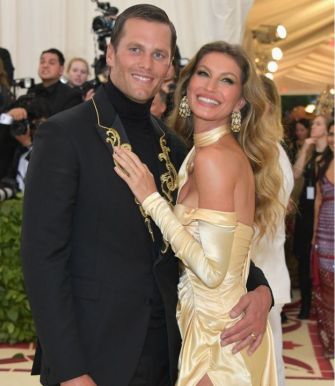
Here’s Tommy “The Ventilator” Brady doing his best impression of being a Redanian mage from The Witcher 3.

tommy.jpg

Here is a picture of Ordinary Average Gentleman Stan Winslow, he repairs cars for his neighbors and coaches his kid’s soccer team.

clooney.jpg

So all these folks show up.  They get their picture taken.  Then they go in and eat, gossip, do the rich person socialite thing, and they move on.  Some amount of money goes to the Met to continue operations.  Rinse and repeat annually.

So based on my meticulous research, I have some conclusions and some recommendations to improve the event for next year.

CONCLUSIONS

a) It’s almost like the theme is irrelevant and a bunch of fashion folks just use it as an excuse to come up with wacky costume designs.  If the theme was say, whales, Katy Perry would have had a big whale fin on her back.  DO YOU GET IT?

b) The rich and powerful and celebrity are happy to absorb any excuse to dress up, get their picture taken, feel important, talk to people like them, and so on.  The most comical idea is this is somehow a charity event.  I doubt the Met is hard up for cash.

c) I mean, it’s not like all these people are going to say go with the Catholic theme and raise money for the Society of St. Vincent de Paul in the City of New York, a Catholic charity that helps New York City’s criminally destitute to eat, have a roof over their heads, etc, etc.

d) The fact that this event was international front page news is yet another mark that our culture is bound for the crypt and/or justification for an alien race to conquer us to save us from ourselves.

RECOMMENDATIONS

1) Return next year to the Catholic theme.

2) Demand accurate costumes to reflect the true history of Catholicism.

3) 100% of the proceeds go directly to Society of St. Vincent de Paul in the City of New York.

4) Cameras are not allowed.

5) The rich will be made to sit on wooden benches and eat sludge ala a Catholic monastery Circa 1284.

6) Monks will chant Bible verses focusing on the parts where that weird Dude helps the poor and describes how the meek will inherit everything.

7) Rihanna will dress in authentic full 8th Century papal garb, and be subjected to the full breadth of assassination attempts, Roman intrigue, obscure Holy Roman Empire politics, and baffling disagreements over minor esoteric spiritual interpretations.

8) Katy Perry will dress as a true avenging angel of the Lord God.  From her chain belt will hang on a meat hook the severed head of Abū Bakr al-Baghdadi, former Overlord and Servant of Satan.

9) Olivia Munn will dress as a Knight of Jerusalem and be forced to engage in actual live battle axe fights with the current girlfriend of one Aaron Rogers for the honor of her knight’s house.

10) Tommy will dress as an alter boy.  His wife has to wear the most basic of black shirt and slacks priest garb.

11) The Clooneys have to sit barefoot outside the door and beg for money to buy an Indulgence as a forgiveness for their sin of being born.

12) Please, help me.  No really, please help me.  They made me do this post.  I didn’t want to.  Why on earth did I have to write this?  I don’t know why I did this.  I don’t know where they put the key.  I can’t get out of here.  I threw out all the phone books so they couldn’t keep using them.  And more just appeared the next day.  Where the HELL do you even get a phone book nowadays!


it’s time to celebrate, unless you’re a broken egg

Great news everybody, celebration is in order.  For yesterday was the 200th birthday of one of history’s greatest thinkers.  But did Marx understand what his ideas would bring about?  That his philosophy would spawn history’s greatest monsters?

All throughout his writings Marx makes it pretty clear what he had in mind.  He certainly got the bloodbath, it just didn’t come with his expected results.  Because basically Marx (lauded as he is) didn’t understand the essentials of human nature.  One of which is: When you give one man, any one man unlimited power, regardless of motivation, the end stage is evil.

For all the people who are ready to shout ‘Nazi’ at Trump, it’s always astounded me that the same argument isn’t made on the Communist side.  As we’ve previously written, the death of Castro was a particular note.

I stand by every word of this:

Castro goes into my column as the consummate example of a guy who pours honey potion into your ear while he rams a stiletto dagger into your kidney.  The dude’s appeal to the bulk of humanity was all talk.  Castro talked a good game of social justice and equality.  Then he turned around and enriched his own personal elite and destroyed his country.  Depending on how you count, thousands or tens-of-thousands of Cubans were executed during his reign.  Tens-of-thousands more died at sea fleeing his utopia.  Also depending on how you count, perhaps 10-20% of Cubans left during the last five decades.  The equivalent number is if around 30 million Americans felt the country was so bad they moved to Canada, with the understanding that say two million would die during the journey.

The end result of Marx to me is not the idea of social justice or class struggle.  It’s the idea that humans can do just about anything to their fellow humans provided they use social justice as the justification of their cause.  That’s the great evil of Marx.  You can liquidate a few million fellow humans, but as long as your end goals were supposedly noble, folks will let you get away with it and apologize for your actions.  That’s an interesting construct, unless you’re one of the broken eggs.

Marx was a pretty smart guy with a lot of interesting ideas.  But, ultimately he didn’t understand the end game of his ideas.  You can have whatever motivation you want, but when all you do is place all power into the hands of the few, and then provide them with the false moral cover of utopian progress, there is no limit on how cruel and ultimately evil a person can get.  It’s why history’s two greatest serial killers are Stalin and Mao, and Hitler doesn’t even come close to their number of murders.

Marx wasn’t alive when all this happened.  So you can possibly give him a pass for what subsequently occurred.  He wasn’t around to potentially call bullshit to evil men who perverted his ideas and basically used them to do the same evil deeds as one would have seen from an 11th Century Khan.  But still, ideas are ideas and they have power.  Marx, and history, have to own up to what his ideas meant to the course of human history.  Not to blindly celebrate them without deep thought as to the terror they wrought.

This guy.

the joker.jpg

cultural appropriation is inhuman

More and more I’m seeing this cultural appropriation term.  The latest internet rage is apparently against a teenager (as in, not an adult) who wore a gown to the prom in a Chinese style.  This is apparently a problem for some people (I guess) because she is not Chinese.

So for some people (I guess) the idea is that only Chinese people or people of Chinese background are allowed to wear gowns in the Chinese style.  I think.  Well, if that’s what cultural appropriation is?  Then cultural appropriation is inhuman.

I thought the whole point of our human journey was to bring us all closer together?  I thought that was the whole point of modern progressiveness?  How do we do that by adding yet another redline that nobody can cross without offending somebody else?

I’ve seen this cultural appropriation nonsense in other ways too, like with food.  So I guess I’m not allowed to write a recipe for a Thai curry or Indian rice because I’m not Indian or Thai?  Too bad.  I just did it last week.  You’ll see them posted on this blog soon enough.  If somebody finds it offensive, that’s of course their right, but I won’t give a shit.

I’ve worn a kimono before, and I’m not even Japanese.  Oh my, what horror!

Any person, of any color or creed or religion or favorite football team should  be able to wear whatever gown they want.  I will write whatever recipe I want.  I will not bin humanity into 735 boxes that are not allowed to touch each other.

One of the great gifts of life and our human race is to learn, experience, and grow from experiencing backgrounds that are not our own.  It’s how we mature as humans and enrich our lives.  It makes us better people.

Facebook continues to win

Hey remember when everybody hated Facebook since it trashed their privacy?  That was all of three weeks ago.  Remember THAT?  No?  Apparently folks don’t.  Nobody cares anymore.  Facebook understands that the planet’s attention span (largely because of the internet) is about eight seconds.  So Zucky had to keep his cool, talk like a robot, play it safe, and eventually it would all blow over.

It certainly helped that all the rich, self-inflated, but ultimately dumb people in Congress couldn’t tell the difference between a Facebook algorithm and a ham sandwich.  These are the guys and gals with the power to regulate Facebook so it doesn’t sell your personal data to a KGB backed hedge fund or a bunch of alien overlords who will one day enslave you using Zucky as the turncoat Emperor of all Humanity.

But Zucky banked that Congress is so gridlocked, and so incompetent that he could ride it out.  All he had to do in front of Congress was not stand up, give them all the finger, both barrels, and say, “Fuck you all.  I might be the most powerful man on the planet.  Do your worst.  Foools.”  But since he didn’t do that, Facebook continues to win.

After Congress let Zucky handle them like a seven figure donor, coincidentally Facebook’s stock went up north of 5%.  That means Zucky’s performance over a two day span increased his personal net worth by over $3B.  Never has one human in all of history made so much money so quickly by saying so little to people so incredibly dumb and ineffective at their jobs.  It’s the perfect harbinger for where the planet is headed.

It gets better because of a number of tidbits that STILL inexplicably came out during Zucky’s testimony.  It goes to show you how easy it would have been for competent questioners to hand Zucky his ass.  The guy just doesn’t know how to deal with people getting in his face.  It’s why he (I’m not kidding) walks around with a personal security detail close in number to that of the President.

First, whoever you are, Facebook has a profile on you.  Whether you have a Facebook account or not, Facebook has a profile on you and is tracking you.  They do this in case one day you create an account they already have a head start.  But they really do this so they can connect you into the network of networks which involves your friends, family, coworkers, etc, most of whom have Facebook accounts.

The network of networks is what Facebook, Google, Amazon, etc will need to truly let the future AI algorithms do their magic.  The idea is that the AI knows what you want for breakfast before you know what you want for breakfast.  I’m not joking.  It’ll be the digital voice assistant which is the ultimate end game to engage with you on this.  Whoever can get to you first, gets your money and loyalty.  That’s why the arms race of AI is so hotly contested.  As is the race to get ever more amounts of your personal data into one bag.

Second, Zucky emphasized that he sees Facebook as an international company and not an American company.  He essentially punted on the “only in America” idea when directly asked about it.  As in, Zucky doesn’t believe in the idea that the freedom, entrepreneurial spirit, and rule of law that Facebook was afforded by America makes Facebook an American company.  If he’d been born in China or Egypt or Poland he seems to think Facebook would still exist.  This is kind of a shocking statement from a guy who runs a company that is (in theory) bound by American law.  Especially for a guy who is said to harbor political ambitions.

Third, Zucky also refused to answer Congress on whether or not Facebook tracks its users when the user is not physically logged in.  Zucky said he didn’t know.  Which was of course a blatant, shameless lie.  Facebook tracks its users when they’re not logged in.  Similar to how Google tracks its users credit card purchases via a backdoor agreement with many national retailers.

Again, Facebook needs their user’s offline activity tracked because it further feeds the AI networks.  But since Congress doesn’t understand any of this, and can’t do basic tasks like pass a budget on time, don’t expect things to change.  Facebook will continue to win.

I think folks are waking up to this, that Facebook can’t be stopped.  And in one of the first dominoes to fall is the resignation of Jan Koum, the founder of WhatsApp and for the last four years an employee of Facebook.  Koum has battled with Facebook’s leadership for years over monetization, ads, WhatsApp’s privacy and encryption, you name it.  He’s leaving now.  And most of those who see things his way will undoubtedly follow.  Then Facebook can finally have its way with WhatsApp.

So if you use WhatsApp (as I unfortunately have to do at the moment overseas; I’ll be deleting it one day after I get home) be prepared for some major changes as the program becomes more invasive, less secure, gets ads, and otherwise further links itself into the Facebook hive.  But it’s okay, because in the end it isn’t about you, it’s about the people who will further own your life.

Take Koum for example, he might have lost the battle with Facebook, but in terms of winning the war of life?  He has won.  Quote:

“In his Facebook post, Koum said he would take some time off from technology to focus on other pursuits, “such as collecting rare air-cooled Porsches, working on my cars and playing ultimate frisbee.””

There are serious, long term concerns to the future of humanity with regards to what the internet is going to do to us all.  But to Silicon Valley, in the end, it’s about success.  As in, money.  To Koum, he might genuinely share the same concerns I do about these matters.  But in the end, to Koum, it’s all about those air-cooled Porsches baby!

all of these people have wasted their time

Everyone is welcome to think one way or the other about America’s guns.  But with every shooting, I’m on the side of jaded apathy and cynicism.  There may be a solution, a compromise between sides that can be found on guns.  It’s not going to happen.  Those who marched are pushing with all they’ve got for gun control.  That’s also not going to happen.

1) Those who marched seem to be under the impression that politicians work for them.  That’s supposed to be how it works.  But it doesn’t.  Congress works for the following people:

a) Major campaign donors

b) The extreme fringe 5% of their party that rules their lives during the primary of their heavily gerrymandered district

c) Themselves

d) Ordinary average voter

In that order.  I’m sure there might be a handful of folks in Congress who are decent people who are there primarily to do good.  But I’ve come to believe they’re in the minority.

Ask yourself, what normal person would subject themselves to the vicious cage fight that is modern politics?  The answer is, a normal person wouldn’t.  Congress is not populated with problem solvers looking to compromise or make progress.

It’s why they can’t even conduct basic tasks like pass a budget on time.  They’re on an unhinged two year cycle where their goal is not to do work, but to satisfy the cravings of (a) and (b).  Rinse and repeat.

Anybody expecting that these people are going to be the ones to solve problems is asking too much a system that is (sadly) essentially broken at this point.

2) Think what you will about the NRA’s beliefs, but one cannot deny it is the most successful lobby in American history.  There are two people on the planet who I believe possess the powers of the ancient Aztec demon god Itzpapalotltotec.  They are Bill Belichick and Wayne LaPierre.  These guys are absolute masters of their craft.  Nobody can compete with them.

At this point, if you hired LaPierre and told him to get Congress to pass a law saying all ketchup bottles must be colored pink, he could probably get it done.  The NRA has five million card carrying members.  This is by far one of the largest and most dedicated interest groups in the country.

Unless the people who marched this weekend establish their own singular lobby group, get millions of people to join it, and fund it with a dump truck full of money they’re not going to compete effectively with the NRA.

As an example, after the Vegas shooting I think most people could get onboard with the most basic of gun control arguments, that bump stocks that converted a weapon to fully automatic under the table was not a good thing.  They couldn’t even get that passed into law, they had to do it on the side later.

3) I’m just going to go ahead and say this.  Most Americans simply do not care.  I read an article yesterday that said since 2000 over 600K Americans have died in car crashes.  Go ahead and try and wrap your brain around that number.  In the last 15 years we’ve had more Americans die behind the wheel than in all our 20th Century wars combined.

Throughout my life I’ve known several people who’ve died in car crashes.  I also know a handful of people who’ve died in gun violence.  But, selfishly, or cynically, there just isn’t much I can do about it.

We Americans have a shocking tolerance for mayhem, death, and destruction.  I think it’s in our primal colonial blood.  It’s built into our national psyche.

I’m not going stop driving, or go out and demand that every car come equipped with that goo that saves Stallone from dying in a horrible crash in Demolition Man.  I have personally accepted the risk to myself and to society associated with cars.

I think (whether they admit it or not) the vast majority of Americans have accepted the risk to themselves and to society associated with guns.  Folks might not like it, but it’s the way it is.

Those who marched today think that this mindset is beginning to change, and the march shows it.  I don’t agree.  I’m sure more people have died to gunfire in Chicago since this last shooting than those who died in the Florida school.  People intellectually know this, but essentially don’t care.  They move on with their lives.

Like all this, or hate this, either way, I just don’t believe it’s going to change.

Democracy is a mess, and mostly doesn’t work, but it’s still a beautiful thing.  Agree or disagree with those who marched, it’s still part of our freedom that they believe in a cause and are out there fighting for what they believe in.  But, I do believe, all of these people have wasted their time.march-for-our-lives-washington031.jpg

gun control march in Washington DC, Circa 2029