The world can scare you with its bizarre complexity. So similar and yet so convoluted. Friends, wrap your minds around this one:
Two countries
– Population: 174M & 182M
– Size @ sq/km: 923K & 796K
– GDP @ PPP: $522B & $574B
– Former English colonies
– Multiple major & minor ethnic groups
– Broken & marginally functional democracies
– History of coups
– Constant communal violence
– Active terrorist threat that endangers the state
– Massive corruption
– Widespread poverty
– Battles nature daily
Nigeria & Pakistan
I’m hard pressed to pick two countries that are so close on such measures and yet as different as you can imagine in just about everything else. You could write ten books on this topic. For now I’ll limit it to one lame post and focus upon a question burning in my brain the last few days.
Why is Pakistan’s army fairly decent and Nigeria’s army such a mess?
A little background for those who’ve had their minds on the run up to tomorrow’s Oscars (here’s a hint kids, the academy’s voting is rigged, rigged better than the previous six Nigerian elections combined).
In northeastern Nigeria a group of religious (not religious) degenerates known as Boko Haram and a number of smaller of more radical affiliates have declared war not just on the Nigerian state but essentially humanity in general. They’ve attacked towns, schools, hospitals, executed thousands of people, and so on. Ostensibly they’re in this fight for Islam, but it’s clear that what they really hate is any concept or thing invented after the year 300.
In northwestern Pakistan a group of religious (not religious) degenerates known as the Pakistani Taliban and a number of smaller of more radical affiliates have declared war not just on the Pakistani state but essentially humanity in general. They’ve attacked towns, schools, hospitals, executed thousands of people, and so on. Ostensibly they’re in this fight for Islam, but it’s clear that what they really hate is any concept or thing invented after the year 300.
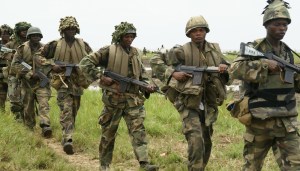
In Nigeria this week Boko Haram got their hands on a boy’s boarding school and did their usual thing by burning it down and executing those who tried to escape. They hacked students to death, burned bodies, and generally showed what it means to behave like an animal instead of a man. It took the Nigerian army five hours to bother to show up. And yet supposedly the army’s been in an active fight for almost a year.
http://www.bbc.com/news/world-africa-26353622
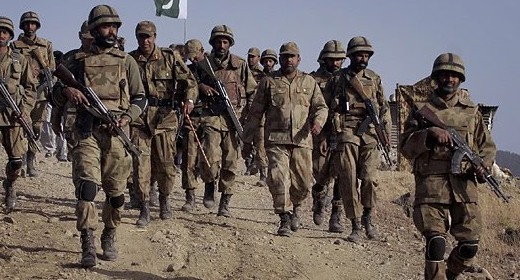
In Pakistan this week the government let slip that they’re prepared to unleash over one-hundred thousand troops to roll up what remains of the Pakistani Taliban’s safe havens in Waziristan. The preliminary airstrikes have already begun in response to the (unsurprising) failure of peace talks. It’s still open whether they’ll actually launch the attack but what is not in dispute is that the Pakistani army would mostly get the job done in a hard fought struggle.
http://www.bbc.com/news/world-asia-26333578
Now of course this is an oversimplification of two very dense situations. The Pakistani’s have had their setbacks too. Some Nigerian units have fought well. But generally this week illustrates broader long term trends in performance. Why such a disparity in execution? Any short answer I can give in a blog post is inadequate (it would take a book) but I’m going to do it anyways because I’m an arrogant idiot.
Last night I consulted with the ghosts of seven of the planet’s greatest military minds. We had a booze fueled roundtable. It was awesome. Patton brought his horse which also drank a lot. Wellington was constantly annoyed at the ‘barbarism’ on display. Washington didn’t say much but looked like he had a good time. Mao kept laughing. Zhukov left on a wooden board. Shaka can out drink the planet and still remain coherent. Batu threw a chair. We also managed to identify three key factors that explain why Pakistan’s army is deserving of the title and why Nigeria’s must reapply for membership.
1) Armies Need a Real Enemy to Thrive
One must ask why every country on the planet needs an army instead of just police. “The vast majority of armies are used not to defend borders but to buttress the state,” Washington scoffed. They exist as an internal vice external security force. Mao laughed, “Nigeria’s a classic example. You use the army to protect the state from the people. I argue this is a far more common use for an army than the ‘traditional’ use.” While Nigerian units are well known for their peacekeeping duties, really the army’s focus is on Nigeria itself.
Shaka nodded and mentioned this came with both good and bad. “That can work, but only as long as you don’t need to act like a real army,” he cursed and waved his hand, “I could do both but most can’t.” Boko Haram has forced the Nigerian army to essentially conduct a complex counterinsurgency operation. Wellington pointed out that this is a hard task for any army to perform, but Nigeria’s has fared worse than most would. “The incompetence on display is far in excess of anything I’d imagined,” he said. “I agree,” Washington added, “remember when the Nigerians were supposedly the best army in Africa?” “Bah,” Batu spit, “that’s probably the Ugandans now because of their Somalia work.”
When an army’s existence is not tied to battle it will not perform well when war is actually required. Patton brought up the example of the junior officer. A young Nigerian lieutenant is raised to conduct peacekeeping, internal politics, and generally sustain the army’s routine matters. Direct combat is not his mindset. Conversely the Pakistani lieutenant is fostered with the expectation that tomorrow he may fight India in the world’s worst war since 1946. Batu found such a war appealing.
Pakistan’s army is equally as absorbed with peacekeeping and internal matters but the ever-present concern of India keeps the army disciplined with the training and knowledge required of full-scale operations. When asked to about-face, cross the country, and clear the tribal areas the army did well. It was a different fight than India, but war is war. Patton expected that any well-trained army should be capable of such transitions.
2) Polite Robbery Only Please
Zhukov offered a story he’d heard a few months back while watching a documentary on the developing world. He was paraphrasing the tale and I’ve altered it to where the players are army guys instead of government officials.
A pair of Nigerian & Pakistani colonels meet in Valhalla. They can both observe their bases and comment upon their regiments while they share glasses of the good stuff. Eventually the topic turns to how they each built their regimental commander’s residence. They want to host each other for a reception with the officers and their wives. The Pakistani colonel claps his brother on the back and points to a lavish mansion. The Nigerian asks him how he did it. The Pakistani points to a ramshackle but functional enlisted barracks, taps his nose, and quips, “80 percent”. The Nigerian cackles with joy, claps his brother on the back. He points to an even more lavish regimental manor and then to an empty field where his men sleep in tents, taps his nose, and quips, “100 percent”. They both laugh and booze it up until the Vikings get pissed off and run them out of Valhalla for the day.
Mao laughed for a great length at the tale. Patton proposed that both men be beaten, Batu that they be executed. Zhukov compared, “There’s corruption and then there’s outright kleptocracy.” Wellington interrupted, “But both armies run businesses, engage in corruption, and are hand-in-hand with thieving politicians.” Washington countered that the level of theft in Nigeria’s army was well above anything that would be acceptable in the Pakistani.
Mao didn’t like this line of thought because Pakistan’s army budget is nearly double that of Nigeria’s. “Nigeria can’t field as good of a force because of funding; corruption alone can’t get you to such a difference.” Wellington refuted that because of India, Pakistan has to buy things the Nigerian’s don’t need such as tank divisions, bombers, and a modern navy. Patton concurred with Wellington and that neither army has an excuse to not field a fully equipped and trained force.

3) The Mirror of the People
At this point Shaka threw his glass across the room in frustration and blurted out, “All this doesn’t matter, it’s about the people!” Mao chuckled and bowed slightly, “Yes, everything else we’re talking about is minor by comparison.” At length Shaka explained that in both cases the state should be expected to generate and employ an army capable of defending against so vital a threat. While Pakistan’s people were somewhat unaligned on how to confront the Taliban, he found the Nigerian people’s apathy against Boko Haram stark by comparison. Washington noted that the army is a much respected institution in Pakistan but not so in Nigeria. Shaka attributed this partially to the theft but also a growing lack of support by ordinary Nigerians for the concept of Nigeria itself. “If the people aren’t behind the country, they aren’t behind the army.”
Zhukov said he found that indicative in the blatant patriotism that occasionally surfaces on the Pakistani street but less so on the Nigerian one. Zhukov declared with pride, “An army is a mirror of a culture, a society, and a country.” When the country itself is in turmoil or its relevance to the citizen in question, then this will equally apply to an army.
“Like a lot of what we’re discussing, it’s about extremes,” Washington cautioned, “Some of this is also applicable to Pakistan, but Nigeria is of greater concern.” Wellington wondered if down the road Nigeria would remain as a country at all and whether Boko Haram was just a symptom of a growing trend of ills. Patton thought this blog’s author should probably write a post about that topic later on. Most of the others agreed but Batu started screaming that he didn’t know he was here to help with, “a shitty blog post!” It was at this point that he threw the chair.
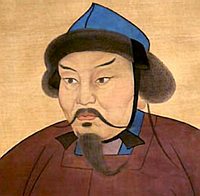
“The Arcturus Project?! (throws chair) The concept of a blog is more offensive to the human race than my sack of Ryazan!”


 The Arcturus Project