You would think that as long as this degenerate blog has been here I would have published hundreds of things on the Civil War. When I was a kid/teenager, I was what was then referred to as a “Civil War buff”. I doubt anybody beneath the age of 30 would even know what that term means nowadays. I’m sure the schools and universities don’t really teach it anymore. Of if they do, they gloss over it get back to the ‘isms. It’s why I gave up being a history major.
Plus (and this should surprise nobody) most university professors (of any discipline) are total weirdos. It’s not fun talking history with a professor when it’s so unsettling you wonder how you didn’t think to walk in their office strapped with a loaded firearm for your own mental and physical safety.
This particular post is meant to try and do this topic more. This one is on Fort Donelson on the Cumberland River. This is another opportunity for Private Barber to provide his prolific words on the conflict.
The Union needed control of all the inland rivers for victory. The railroad age was only just beginning. The rivers and canals moved almost everything until like the 1880’s. Even today, most people are probably unaware of how much of America’s cargo is still moved on riverboat barges.
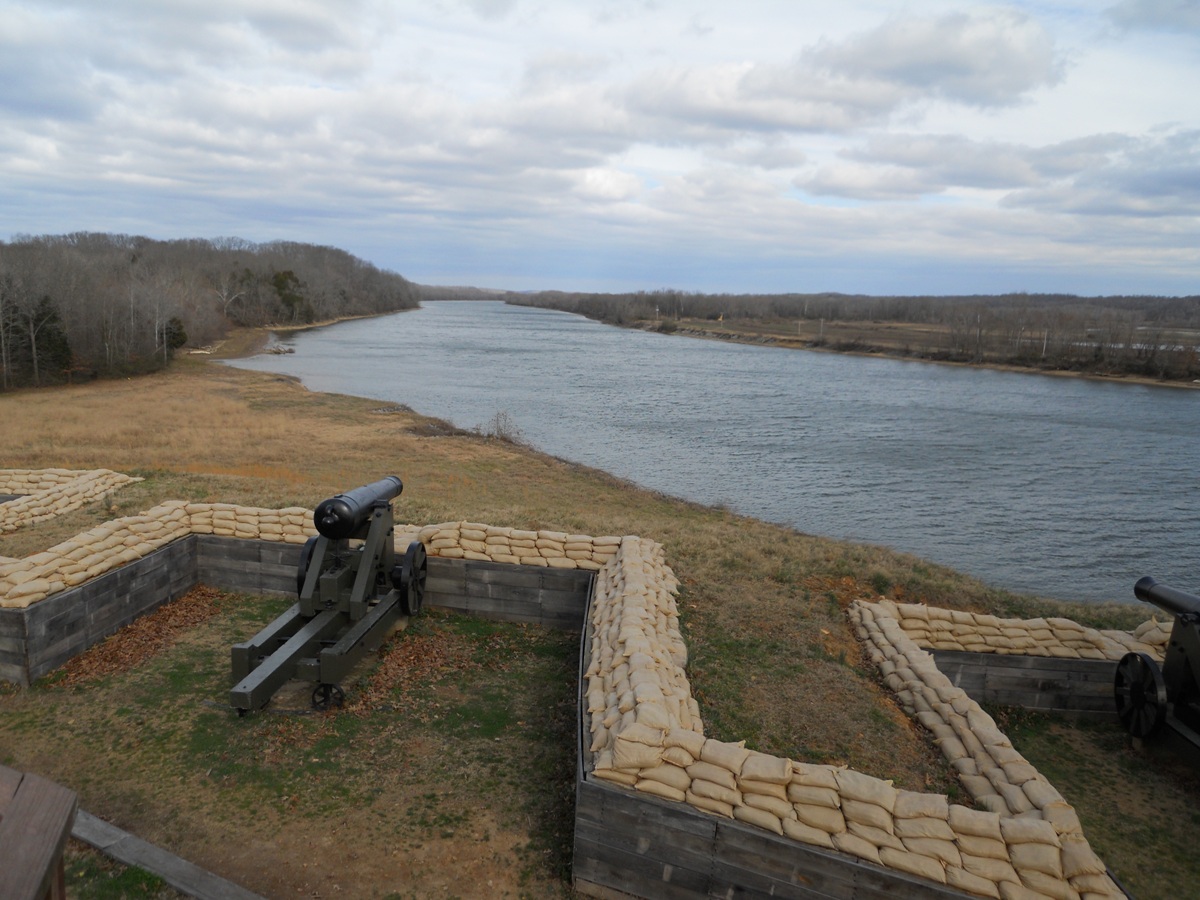
So if you plant a fort along a key river, you own that river and can crush economic and military transport on said river at will. If you still don’t quite get me, just take a gander at this photo and I hope it will help via your eyes to understand what devastating control looks like:
Civil War buff? Yeah, I guess. I was actually on television in text form as a teen. It was the History Channel’s Civil War Journal hosted by Danny Glover. They would post what they thought were the best comments from their audience. Like two or three comments in between commercials for each episode. I can’t really remember what I wrote, but it had to do with why Charleston was so hard for the Union to take until 1865. It just happened that my extended family was already there for a birthday party. And the studio told me in advance they’d do it so we watched and waited. It took five seconds in text form. But it delighted my family.
It was probably kind of like the Eric Cartman Cheesy Poofs commercial. He does all this work in the studio and all they do in the end state of film is have him on screen for one second, but he’s still so, darn, happy.
Over to you Private Barber:
… We now turned our course up the Ohio [River]. When we arrived at Paducah, we learned that a fierce and bloody battle was in progress at Fort Donelson on the Cumberland River. We soon came to the mouth of the Cumberland and turned our course up that stream. We had no doubt now of our destination. We were all eager to get to the scene of action in time to participate in the fight, but the captain of the boat was a rank rebel [a stubborn man; not a Confederate sympathizer] and he refused to run nights, to the shame of Colonel Turner, he refused to use his authority and compel him to run.
– Shiloh was still two months away. The butchery that Shiloh produced shocked the nation; and every soldier on both sides. Nobody in their wildest dreams would have thought the war would be so bloody when it started. Except for guys like Sherman or Forrest.
– Barber is “eager” for action, because he’s never seen it. Like most volunteer infantry regiments on both sides, officers (even regimental commanders) could be elected by their men. It’s important to remember that the United States Army never stopped existing. All throughout the war, you could enlisted the Army with the understanding that even if the war ended, you’d still be in the Army. The volunteer regiments that made up the bulk of both sides (the soldiers still signed two to three year papers) but whence the war ended they went home. You can literally hear Barber’s frustration that their regimental commander isn’t strong enough to speak up for them.
– But, it’s important to remember that Turner was probably just some guy. He was as new to war as Barber and the rest of his regiment. True confidence only comes from experience.
– This was before the Union Navy became a literal river killing machine. It’s early in the war, so this steamboat captain was likely a civilian ship hired by the Union to transport soldiers. He’s not sworn to the Union. He is also just some guy, and this steamboat is either owned by him or by his boss. And he ain’t gonna risk his civilian vessel on the Union’s dime. So if he, as the captain, said he ain’t gonna sail the river at night? That’s it. He knows Colonel Turner can’t do anything about it.
– Donelson was a victory boost for the Union because Grant showed his first spark of genius. Also, as the war was not going for the Union, a victory, any victory was needed to increase overall morale.
– This was before nightmares like Shiloh, when the war probably seemed to both sides of the conflict as relatively quaint. Imagine the Union newspapers. [We captured a fort!] This was big news in a military conflict for the past hundreds of years. In the past thousand years of war, it might take years to besiege a fort and take it. Grant did it quickly, it made his name, and his overall command of the army in the West. Nobody, and I mean nobody, could really realize what was coming. Two months later: Shiloh.
 The Arcturus Project